Geomechanics, Streamlined.
© 2026 Geomechanics.io. All rights reserved.
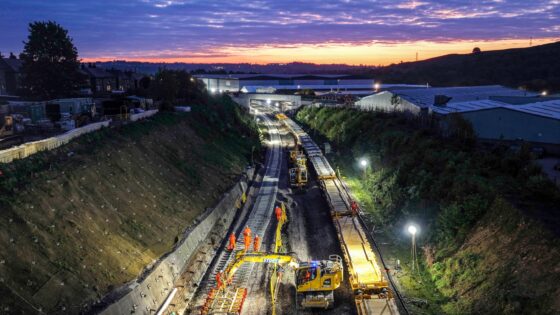
Engineers have begun a major 24/7 blockade on the Transpennine Route Upgrade in Huddersfield, targeting one of the scheme’s most constrained four-track sections between Manchester and Leeds. Works are expected to focus on track realignment, new overhead line equipment and resignalling to increase line speed and capacity through the Huddersfield station throat and adjacent junctions. Continuous working will compress disruptive possessions but will demand tight control of temporary works, track geometry tolerances and interface management with existing Victorian structures.
Completion of the A38(M) Tame Valley Viaduct strengthening scheme in north Birmingham restores full motorway capacity on this key elevated route, with Arcadis acting as project manager and supervisor for Birmingham City Council. The works focused on extending the life of the multi-span concrete viaduct, which carries the A38(M) over rail, industrial land and the River Tame, where access, traffic management and structural condition posed significant constraints. The project signals continued investment in major post-war viaducts that are now reaching critical stages in their fatigue and durability life.
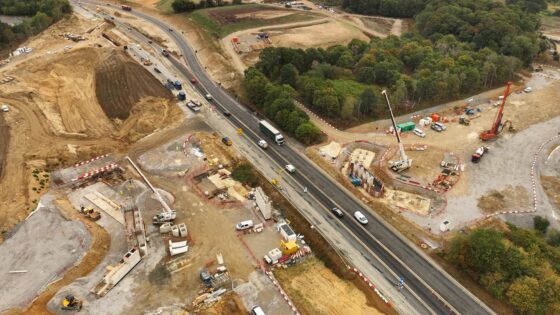
A £153M upgrade of the Thickthorn junction on the A47/A11 south of Norwich is advancing this week with a purpose-built bridge being craned into position to reconfigure one of the region’s busiest strategic road interchanges. The new structure is a key element in separating A11–A47 through traffic from local movements, reducing weaving and short merge lengths that currently constrain capacity and raise collision risk. For designers and contractors, the lift marks the critical transition from earthworks and foundations to full structural integration and subsequent tie-in works under live-traffic conditions.
Black Country Transport, led by City of Wolverhampton Council, has let a £150M (excl. VAT) highways works framework covering multiple Black Country councils for planned maintenance and improvement of local roads. The multi-year framework is expected to package resurfacing, junction upgrades and minor structures works into call-off contracts, giving councils faster procurement for schemes typically below major project thresholds. Contractors will be watching for early work packages involving carriageway strengthening, drainage renewals and footway reconstruction on heavily trafficked urban routes.
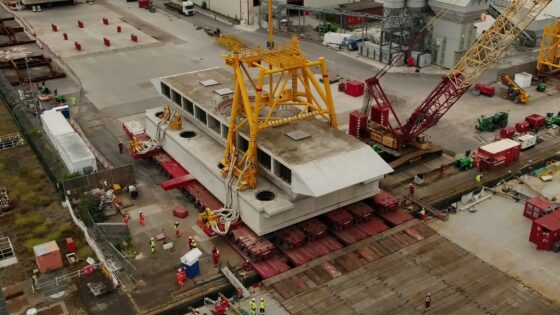
Planning permission has been granted for Sizewell C to build a pre-cast concrete factory at Avonmouth, near Bristol, to produce marine tunnel segments and tunnel heads from 2028. The facility will fabricate large-diameter segmental linings for the nuclear plant’s intake and outfall tunnels, enabling offsite quality control and reducing complex marine construction work offshore. Contractors and designers will need to coordinate segment geometry, reinforcement detailing and marine durability specifications early, as tunnel design will be tightly coupled to the Avonmouth production set-up and logistics.
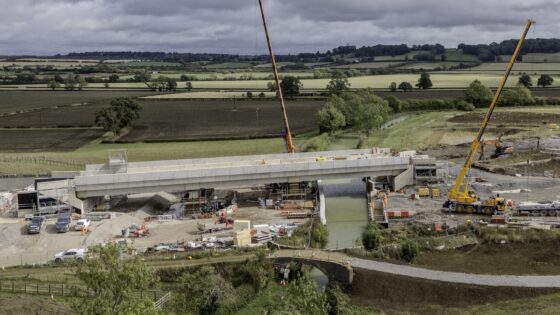
HS2 has started installing locally sourced ironstone cladding on the new Oxford Canal viaduct near Wormleighton in Warwickshire, giving the high-speed rail structure a visual link to traditional canal-side buildings. The cladding is being fixed to the concrete viaduct piers and deck edges as a non-structural facing, designed to weather to a similar colour and texture as historic ironstone masonry in the area. For designers and contractors, the work illustrates how architectural finishes are being integrated with major rail viaducts without altering primary structural design or load paths.
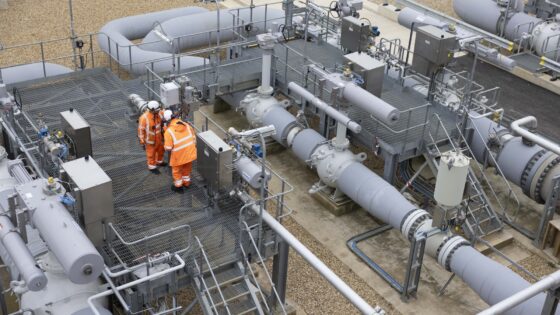
National Gas has advanced the proposed St Fergus–Teesside hydrogen pipeline, part of its 2,414km Project Union network, into the engineering design phase, moving beyond initial feasibility. The section will repurpose existing high-pressure natural gas transmission corridors where possible, with new buried steel pipe only where capacity or routing gaps exist. Designers must address hydrogen embrittlement, fracture control and compressor station modifications, signalling upcoming demand for materials testing, integrity assessment and geotechnical route optimisation along legacy pipeline alignments.
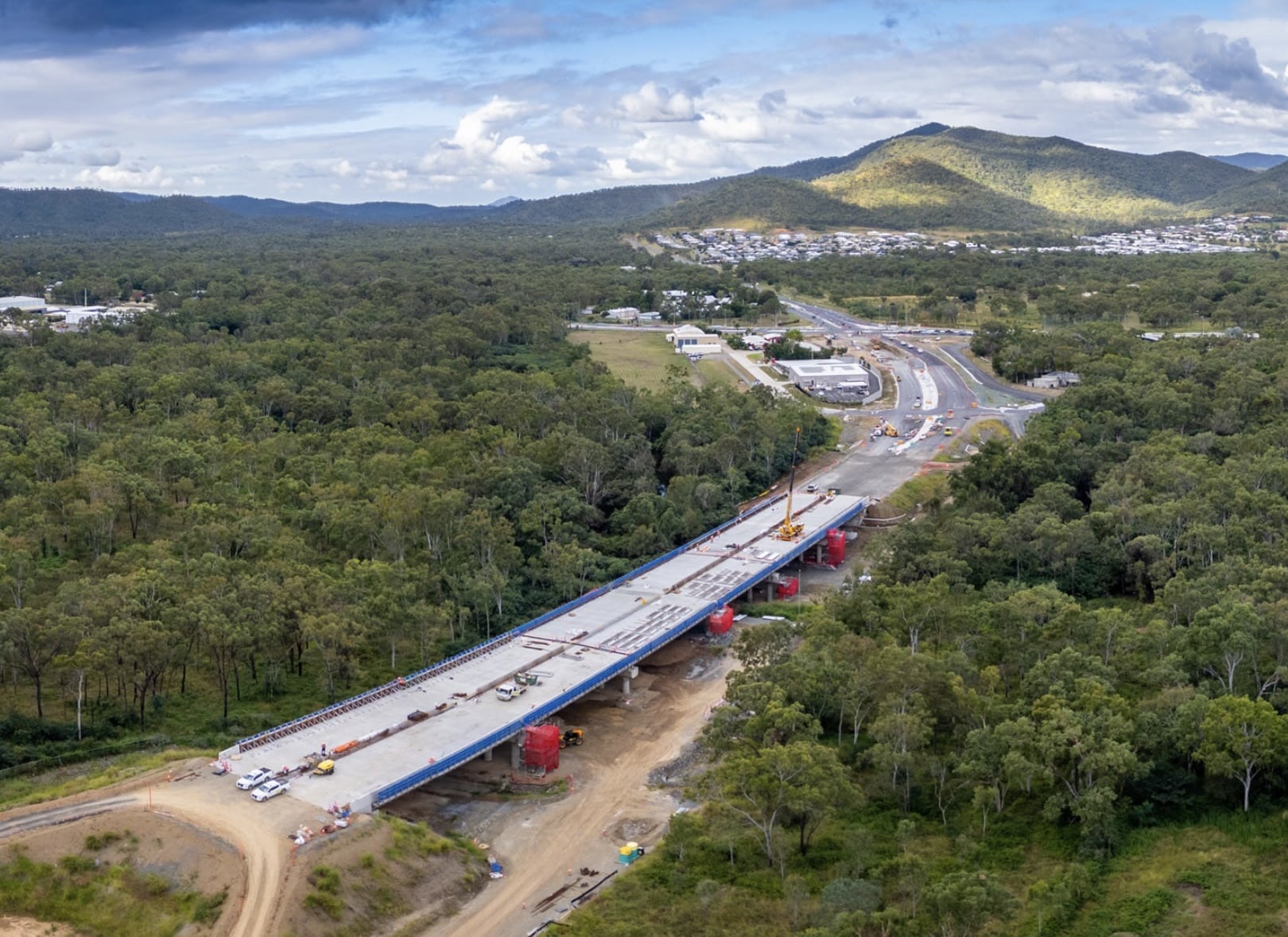
Works on the Lion Creek Bridge are now complete, the first of 18 old timber bridge replacements under the $1.98 billion Rockhampton Ring Road project, which will improve flood resiliency and all-weather access in Central Queensland. The scheme will deliver a 14.7-kilometre western link of the Bruce Highway around Rockhampton, designed to divert heavy freight and through-traffic from urban sections. Progress at the Fitzroy River crossing and other structures signals a shift towards higher, more flood-tolerant bridge levels and more reliable freight travel times on this key north–south corridor.
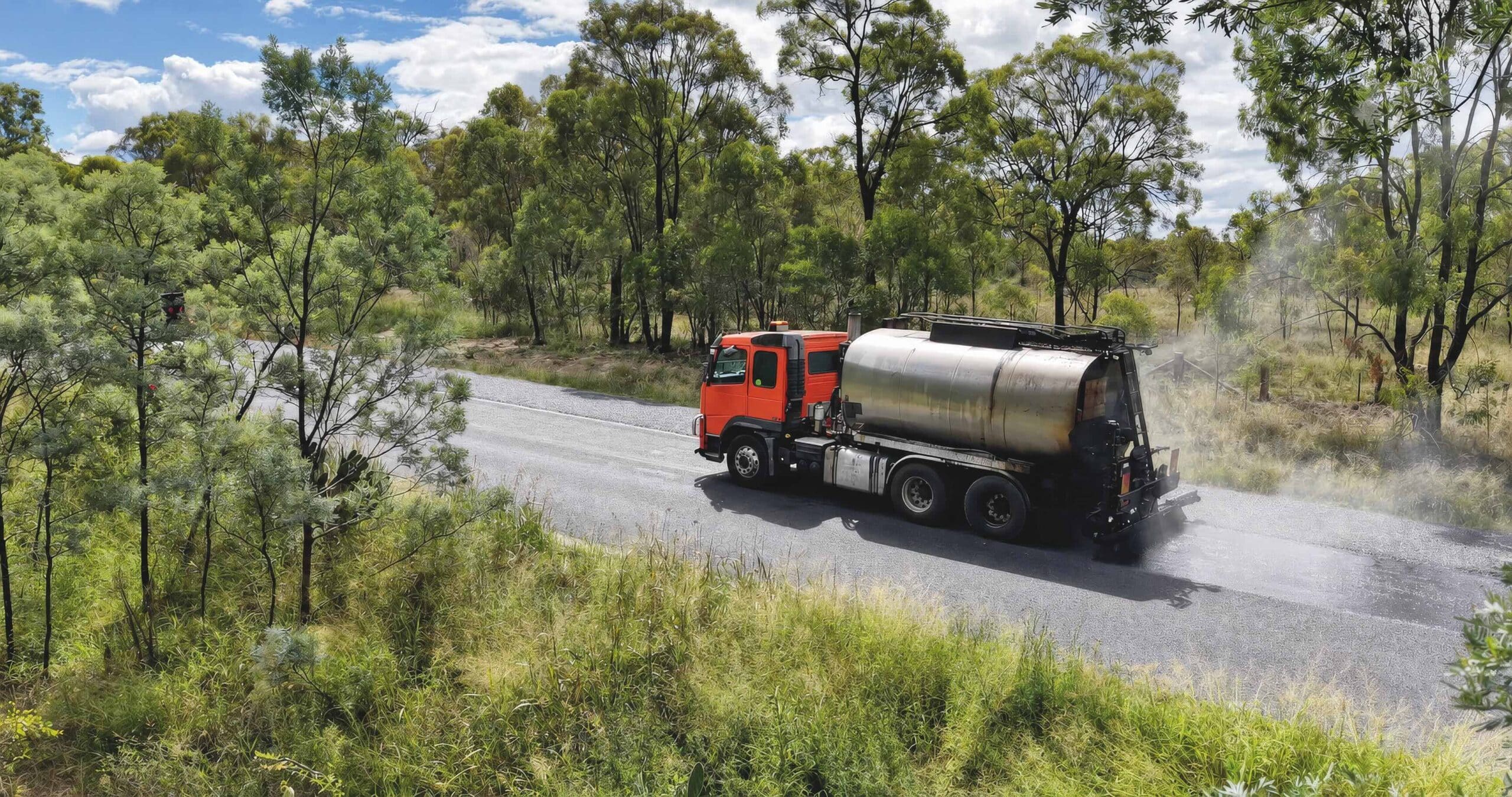
An Australian-first spray seal project delivered by Colas, SAMI Bitumen Technologies and Hutchinson Quarry uses SAMI’s polymer-modified binders and locally sourced aggregates to meet national sustainable procurement guidelines without reducing performance. The seal incorporates higher recycled content and lower embodied carbon materials while maintaining conventional heavy vehicle loading and texture depth requirements for rural arterial roads. For asset owners and contractors, the work shows that guideline-compliant low‑carbon seals can be specified within existing Austroads design frameworks and standard spray equipment.
Construction and fit-out contractor Gilbert-Ash has reported an 11% rise in pre-tax profit to £7.6m for 2025, up from £6.8m, despite a fall in turnover to £227m from £268m. The revenue drop was attributed to the delay of a single major project, indicating a relatively concentrated workload and exposure to programme risk on large schemes. For supply-chain and subcontract partners, the figures suggest the firm is maintaining margin discipline even as project phasing disrupts annual revenue volumes.
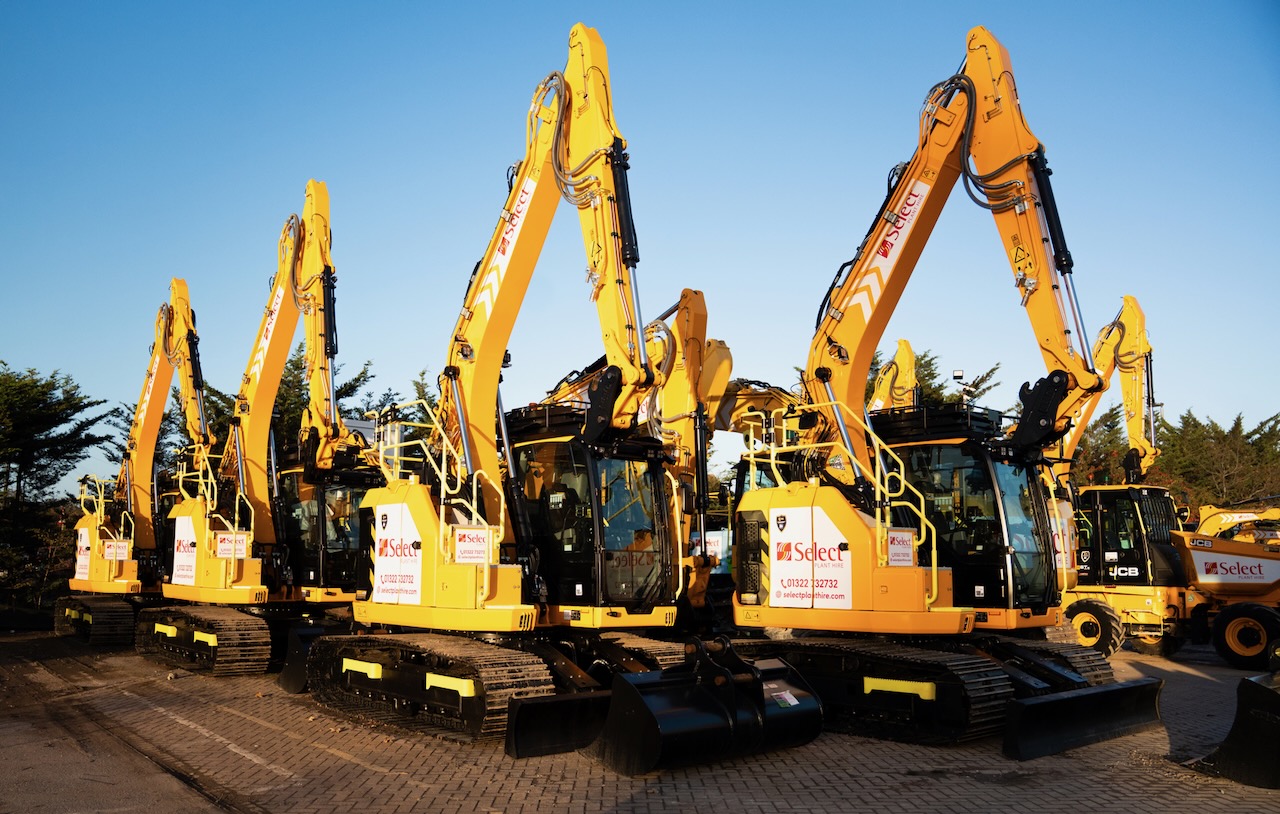
Select Plant Hire is fitting Xwatch XW5 MK2 safety systems to around 30 new JCB machines from its £5m fleet expansion, covering 370X tracked excavators, 245XR and 145XR reduced tailswing excavators, 9‑tonne dual‑drive site dumpers and Loadall telehandlers. The systems provide configurable height and slew limits plus rated capacity indication, allowing rapid adjustment for overhead services, exclusion zones and lifting duties as machines move between very different sites. Xwatch, now part of Hexagon, is also rolling out its XW‑Insite telematics with Select to track location, hours, fuel use, CO2 data, geofencing, faults and safety settings across the mixed fleet.
Willmott Dixon has appointed former Wates operations director Mark Wolverson as North East delivery director to oversee £58m of live civic, defence, transport and education schemes. His current portfolio covers five projects, including the new Durham Academy, re-cladding of Durham Bus Station, the Rivergreen Centre extension and refurbishment of The Dolphin Centre in Darlington, plus the Catterick Town Centre redevelopment. Wolverson will implement the contractor’s “Building our Future” strategy, with emphasis on early client engagement, whole-project support and leveraging local supply chains.
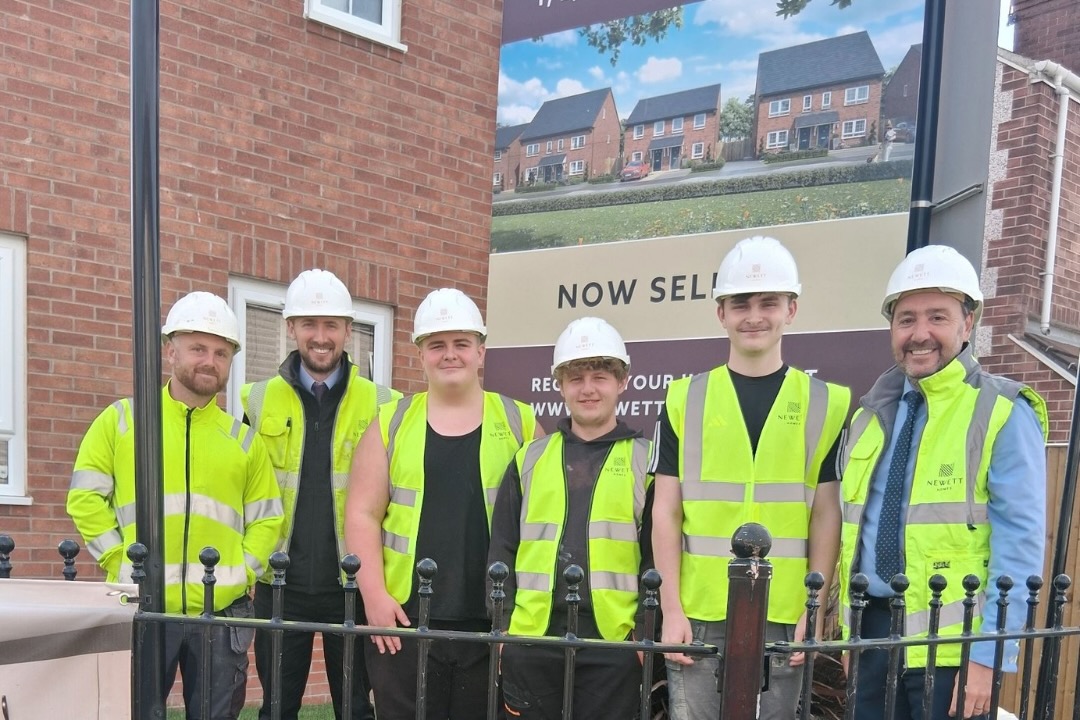
Housebuilder Newett Homes has taken on its first four apprentice bricklayers from Barnsley College, who will split their training between college workshops and live housing sites. The programme is being delivered in partnership with Bond Brickwork, Clover Brickwork, and Matthews and Robinson Construction, giving apprentices exposure to different site management practices and masonry details. For contractors and consultants, this signals a modest but concrete move to bolster bricklaying capacity on residential schemes amid ongoing labour shortages in UK housebuilding.
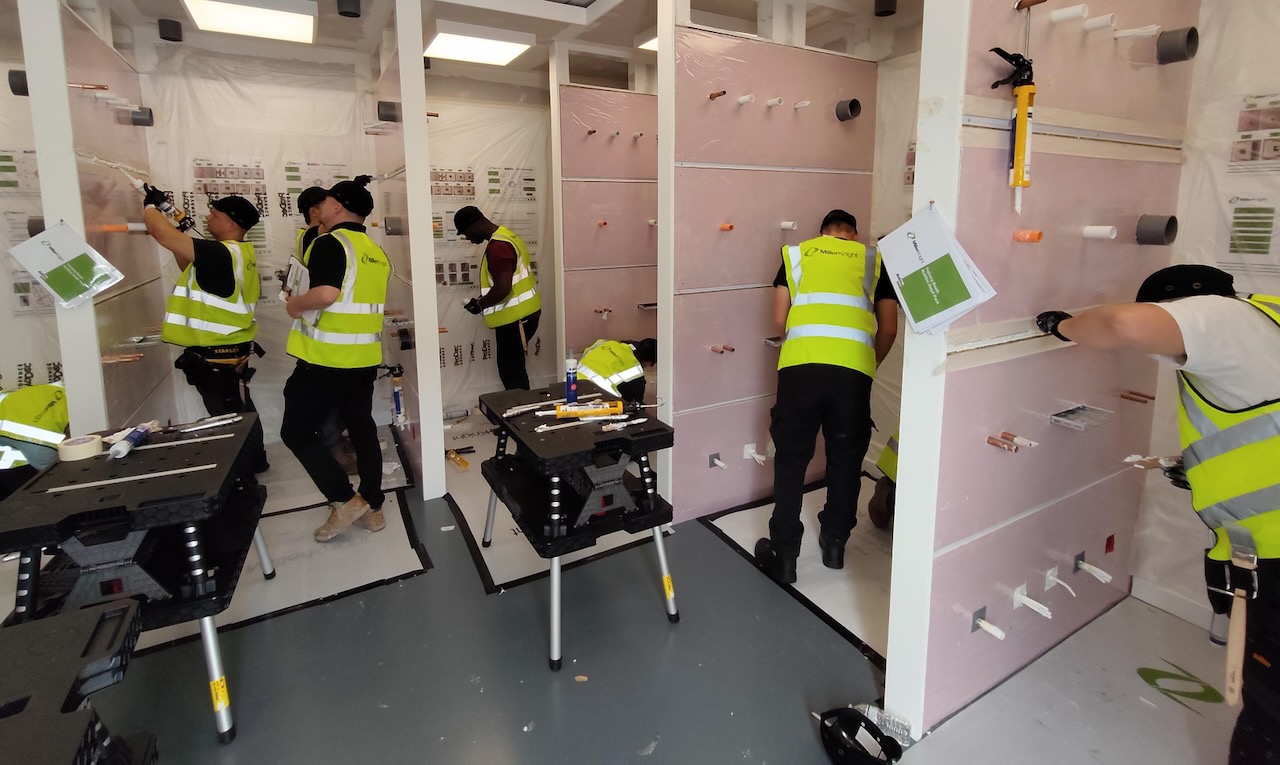
Miller Knight has expanded its Mansfield-based apprentice training academy to run four to six intensive courses a year, taking 12 apprentices per intake and targeting 27 programme completions annually, focused on passive fire protection installations. Each training week combines two days of theory with three days of practical work, followed by six site-based modules over roughly six months, covering tasks such as installing basic fire-stopping seals to tested detail drawings within a set timeframe. The structure gives the contractor a controlled route to build in-house competence in fire-stopping standards and installation quality.
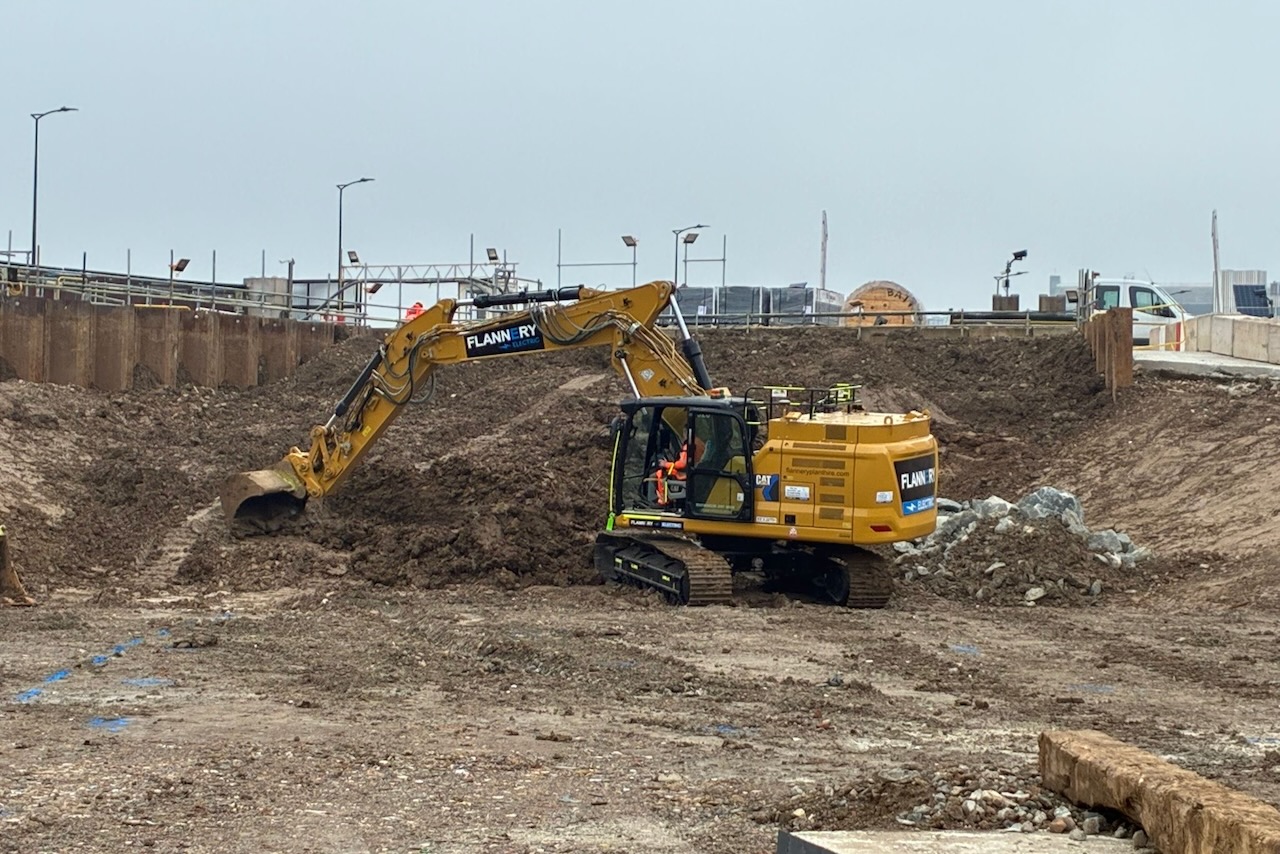
Flannery Plant Hire has put a battery-electric Cat 320 medium excavator, supplied by Finning UK & Ireland, to work on a UK site, with operators reporting like-for-like digging and hydraulic performance compared with diesel units but with lower noise and vibration. Finning ran detailed commissioning support, including electric safety protocols, VisionLink telematics training, and walkaround inspections focused on daily maintenance checkpoints. On-site trials concentrated on charging infrastructure and connection procedures, with operator logbooks and structured feedback used to assess real-world integration and inform Flannery’s wider decarbonisation strategy.
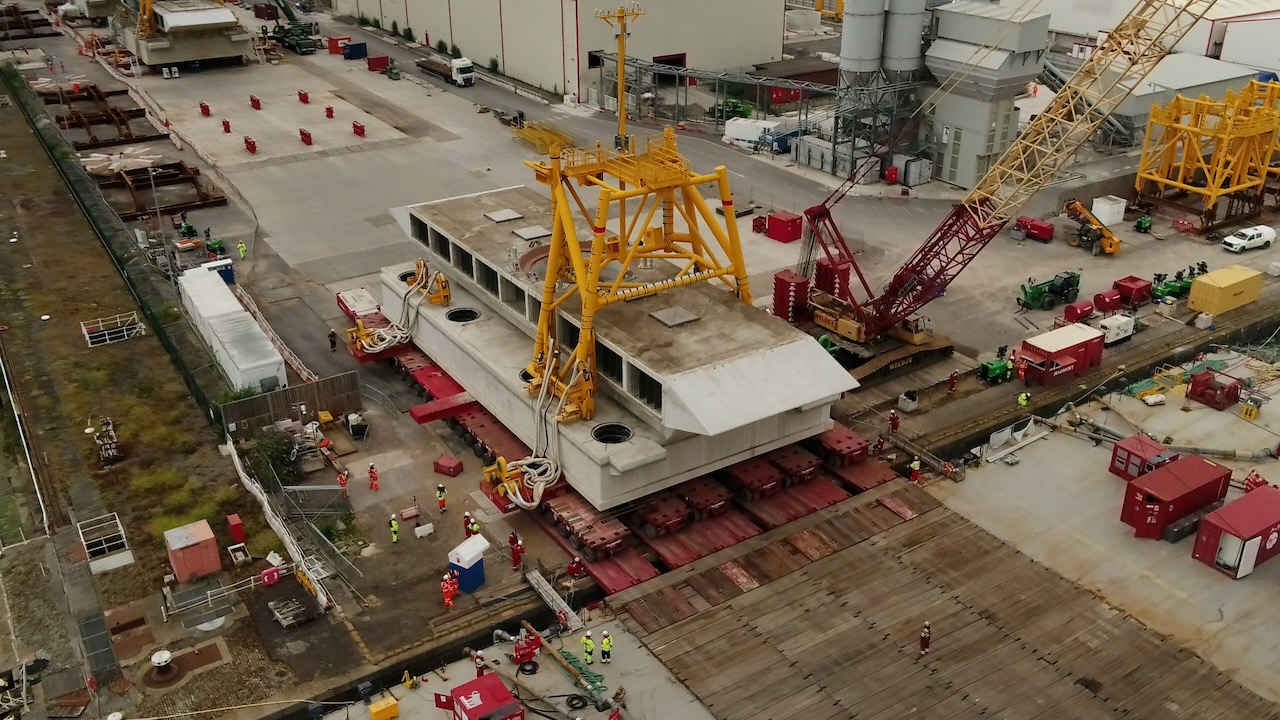
Sizewell C has secured planning approval to manufacture pre-cast concrete tunnel segments and tunnel heads at the former Hinkley Point C facility in Avonmouth, 10 km from Bristol city centre, for installation in marine tunnels at the Suffolk nuclear plant. Components will be shipped by sea to support the project’s commitment to move 80% of materials by rail and sea, reducing heavy vehicle movements around the site. Early works are underway, with 55 CWA staff and 86 supply chain workers on site, and full production targeted for 2028, leveraging existing Hinkley Point C infrastructure and teams.
Mapei’s tiling system has been installed over more than 3,000 sq m at Darlington Station by The Tiling Company (Northern) for BAM UK & Ireland, as part of the £140m upgrade that includes two new platforms linked by a 50-tonne footbridge. The build-up used Mapeproof One Coat epoxy DPM, Eco Prim Grip Plus, Ultraplan Renovation Screed 3240 and Mapetex anti-fracture, with tiles fixed using Keralastic, Keraquick Easy S1, Keraquick XL Fibrelite and Keraflex Maxi S1, then grouted with Ultracolor Plus. R11/R12 slip-rated surfaces and EMICODE EC1 Plus low-VOC, CO2e-offset products address heavy footfall, moisture and indoor air quality demands.
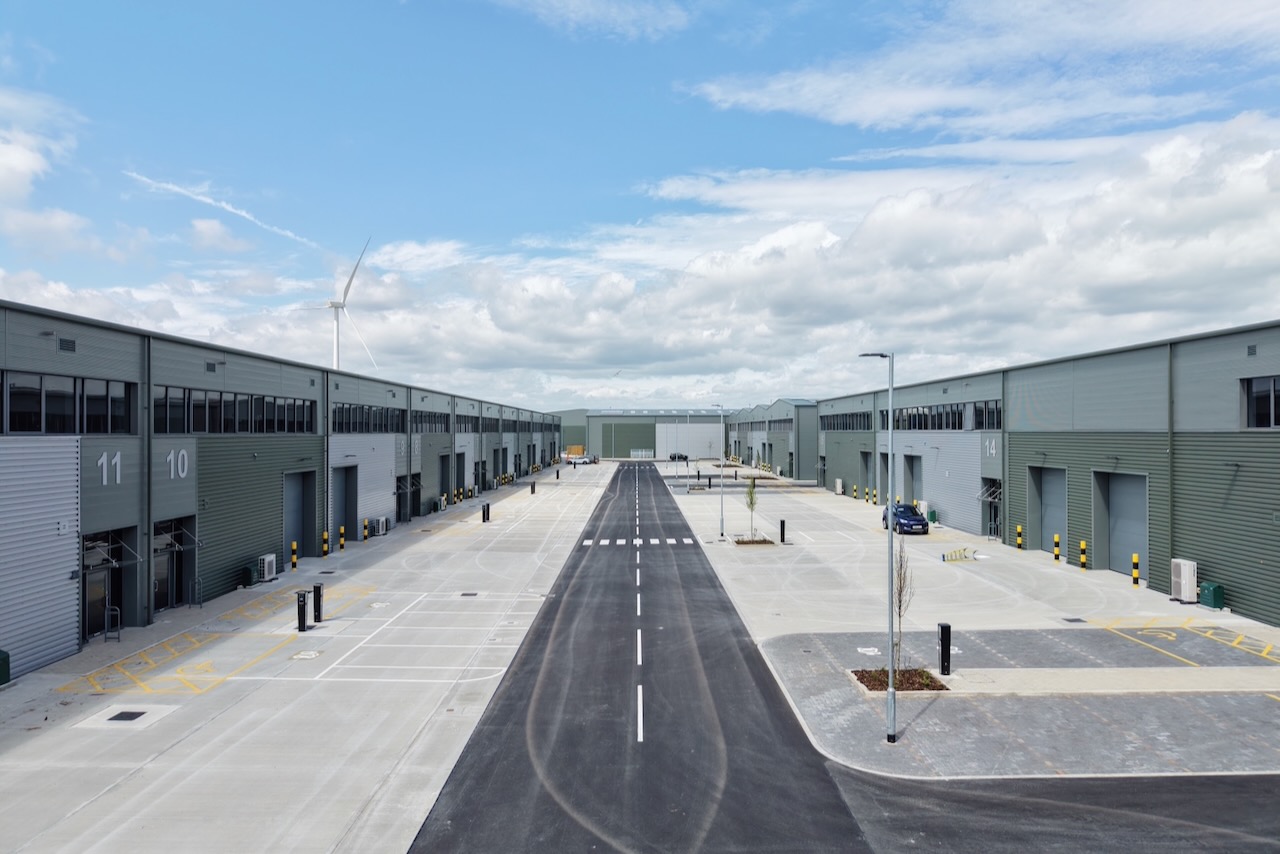
Caddick has completed T45, a new urban logistics scheme on the A63 in Leeds, delivering 23 industrial units ranging from 4,490 sq ft to 32,635 sq ft for developer Chancerygate. All units achieve EPC A, with rooftop PV panels, air source heat pumps, high-performance insulated cladding and roofing, LED lighting, electric vehicle charging points and electric loading doors aimed at cutting operational energy demand. The project also adds fitted office and kitchen space plus landscaped communal and external wellbeing areas, with biodiversity planting integrated into the hardstanding layout.
Daiwa House has acquired a 30% minority stake in UK housebuilder Miller Homes from Apollo-managed funds, with Apollo retaining control and no changes to management, capital structure or day-to-day operations. Miller, founded in 1934 and operating from 11 regional offices across England, Scotland and Wales under the Miller Homes and St. Modwen Homes brands, plans to lift output from about 5,000 to 7,000 homes per year across multiple tenures. The deal, subject to regulatory approvals, is expected to complete later in 2024.
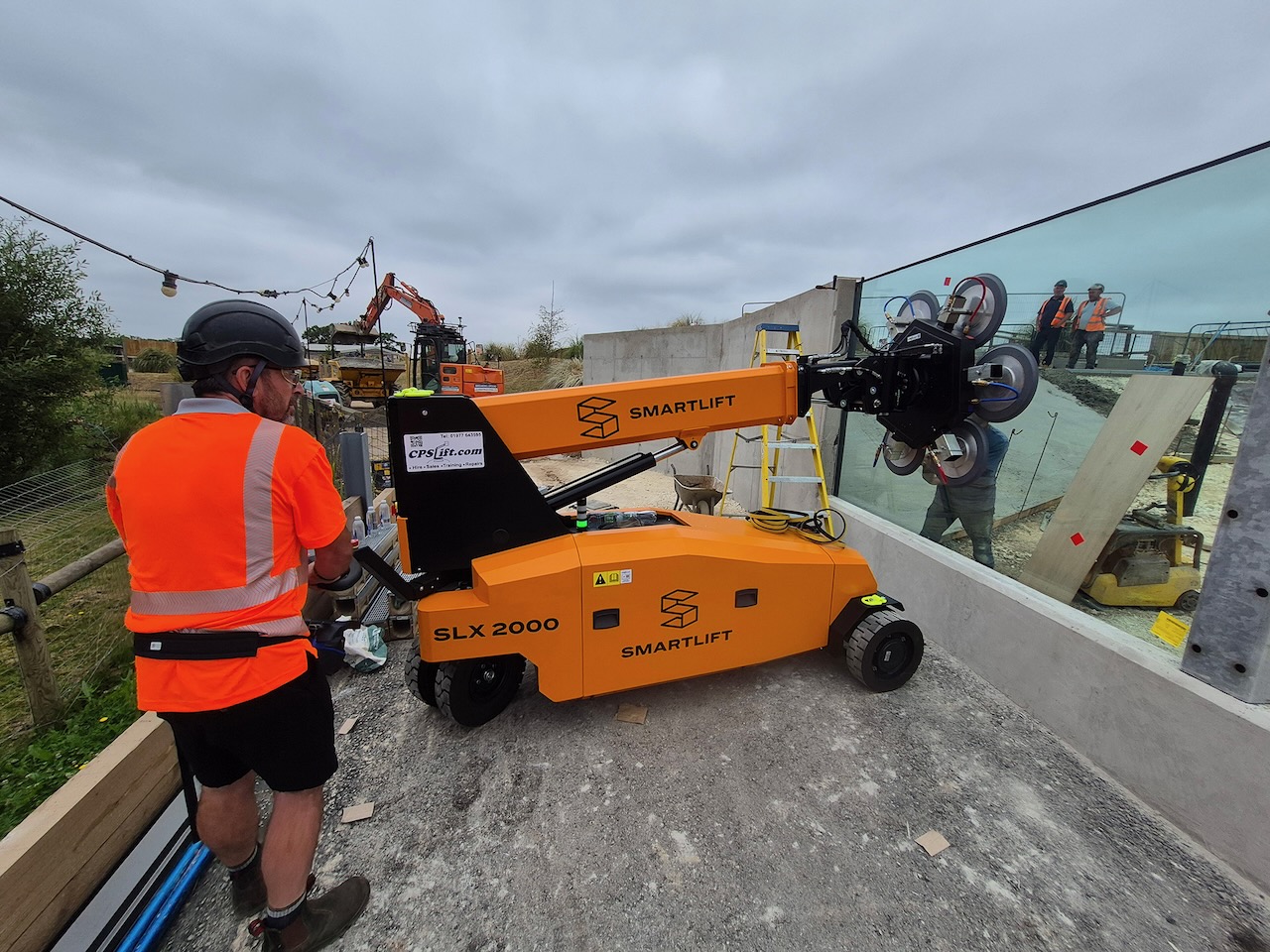
Central Platform Services has used a Smartlift SLX 2000 glazing robot to install 12 structural glass panels, each about 3m x 2m and up to 630kg, at Yorkshire Wildlife Park’s new £1.2m African penguin habitat built by Zooscapes for main contractor Pacy & Wheatley. Over two days, the SLX 2000’s 2,000kg capacity, narrow chassis, power steering and remote control allowed panels to be lifted from stillages, threaded through restricted-access areas and placed over metal framing into recesses with millimetre-scale adjustments. The habitat includes a 552,000-litre pool with rockwork and nesting areas, with glass supplied by Specialist Glass Products in Huddersfield.
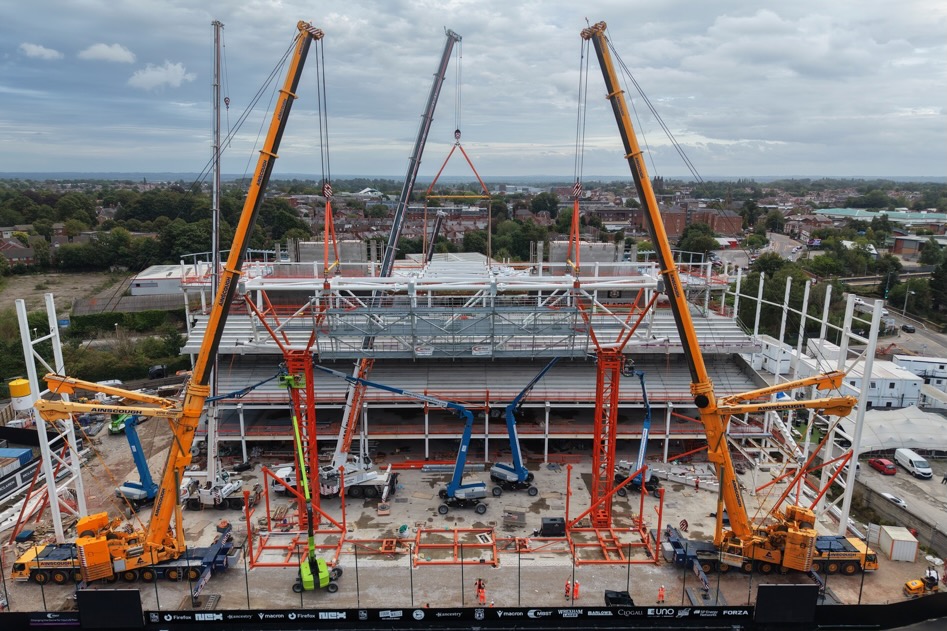
A 125‑tonne inverted ribbon truss has been lifted into place at Wrexham AFC’s Cae Ras, a key step in constructing the new Kop Stand that will take stadium capacity above 18,000 and achieve UEFA Category 4 compliance for the 2027/28 season. The truss, delivered in five sections, was assembled on site and installed using two purpose-designed temporary towers, with de-jacking into its final position to follow once the roof steelwork is fully connected. Principal contractor McLaren Construction and steel specialist J&D Pierce are delivering a 1,500‑tonne steel package with over 31,000 structural bolts, including off-site fabricated, intumescent-coated dolphin beams supporting the upper precast terracing.
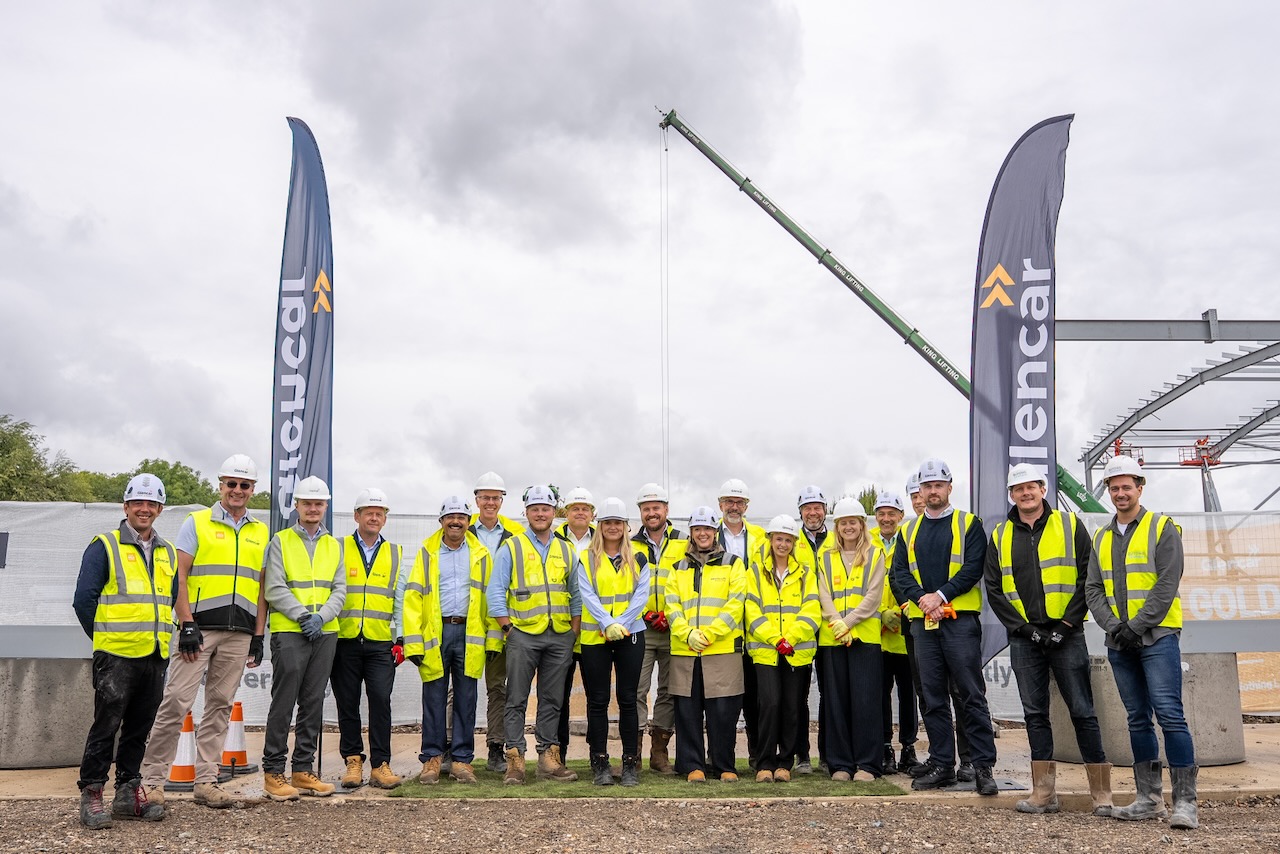
Steel erection is advancing at Link, Aylesbury, where Glencar is constructing a 192,000 sq ft industrial and logistics scheme of five Grade A units at Gatehouse Close for Newlands Developments. Steelwork began on Units 1 and 2 in July, moved to Unit 3 in August, and will extend to Units 4 and 5 later this month as the main construction programme accelerates towards an April 2027 completion. The site targets BREEAM Excellent and EPC A, with EV charging infrastructure and energy‑efficient design, and sits about 0.5 miles from Aylesbury town centre with direct A41/A418 access.
Auckland’s City Rail Link has opened as New Zealand’s first underground railway, creating a new cross-city spine beneath the CBD and linking Britomart with the Western Line via twin bored tunnels. The CRL adds two new underground stations and converts Britomart from a terminus into a through-station, enabling more frequent EMU services and shorter travel times across the regional network. For civil and geotechnical teams, the project sets a national precedent for urban tunnelling under existing high-rise foundations and utilities in soft, seismically active ground.
The winners of the 2026 Inspiring Women in Construction and Engineering Awards were announced in London on 16 September, recognising female leaders across contracting, consulting, client bodies and supply chains. Categories typically span project delivery, digital innovation, site management and early-career professionals, with entrants drawn from major UK infrastructure programmes and tier-one contractors. For geotechnical, civil and materials specialists, the awards signal continued client and contractor emphasis on diverse leadership teams for complex projects such as major rail, highways and water schemes.