York railway overbridge piling: value engineering lessons for project teams
Reviewed by Tom Sullivan
First reported on New Civil Engineer
30 Second Briefing
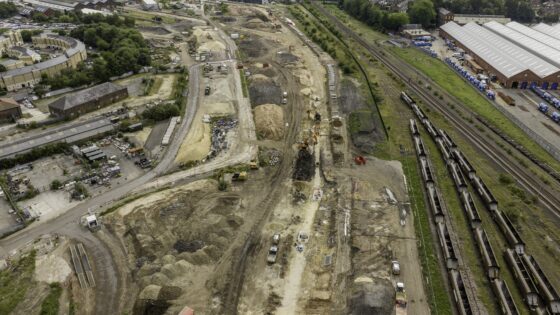
Complex ground conditions around a new railway overbridge in York required 5,669 piles, but value engineering cut a significantly larger initial pile count by rationalising layouts and load paths. Engineers re-optimised pile diameters, lengths and spacing to suit variable strata and rail possession constraints, reducing redundant piles while maintaining settlement and vibration limits for the live railway. The approach shows how early geotechnical–structural integration can materially shrink piling scope, programme risk and embodied carbon on constrained rail infrastructure works.
Technical Brief
- Pile installation planning considered noise and working-hour limits due to proximity of residential and commercial properties.
Our Take
New Civil Engineer’s recent webinar coverage on BIM and common data environments highlights that piling and bridge works like those in York increasingly need digital models structured for long-term asset management, not just construction staging.
With 919 Infrastructure stories and a strong Projects/Sustainability tag set in our database, York-based rail bridge works sit in a cluster of UK case studies where value engineering is being used to cut embodied carbon in foundations rather than only in superstructure design.
The National Bridge Retrofit Library concept reported by New Civil Engineer in July 2026 suggests that detailed piling and substructure solutions from schemes such as this York overbridge could later be codified as reference options for other constrained rail corridors across the United Kingdom.
Prepared by collating external sources, AI-assisted tools, and Geomechanics.io’s proprietary mining database, then reviewed for technical accuracy & edited by our geotechnical team.


