Geomechanics, Streamlined.
© 2026 Geomechanics.io. All rights reserved.
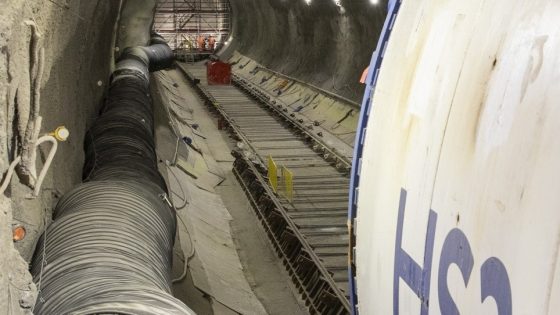
Lower Thames Crossing has ordered a 16.4m-diameter Herrenknecht TBM, the largest ever used in Europe, to drive twin 4.2km tunnels under the Thames from 2028 as part of the £11bn scheme. Early works include complex ground investigation and utility diversions in soft alluvium and Chalk, with strict limits on spoil disposal and construction emissions to meet “UK’s greenest road” targets. Key design choices include cut-and-cover approaches, low-carbon concrete and extensive off-site fabrication to reduce on-site plant hours and traffic disruption.
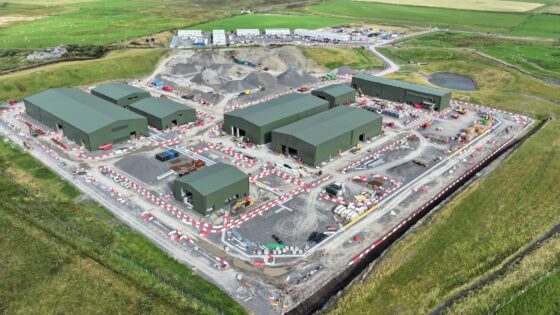
SSEN Transmission’s £1bn Orkney link project will connect the islands to the GB electricity transmission network for the first time via a new subsea high-voltage link and two purpose-built substations. The remote location is driving offsite fabrication, modular substation construction and complex marine logistics for cable installation in challenging North Atlantic conditions. For civil and geotechnical teams, key issues include foundation design on variable island geology, heavy plant access in constrained coastal sites and durability detailing for aggressive marine exposure.
Nuclear Waste Services has issued a prior information notice to test market interest in a future £42M framework for independent assurance services across its UK radioactive waste management and disposal programmes. The contract is expected to cover multi‑year technical assurance on safety cases, design verification and construction quality for facilities such as interim storage, packaging plants and long‑term geological disposal infrastructure. Potential bidders should anticipate requirements for nuclear‑grade quality management systems, independence from existing NWS delivery partners, and capability to audit complex civil, structural and geotechnical designs.
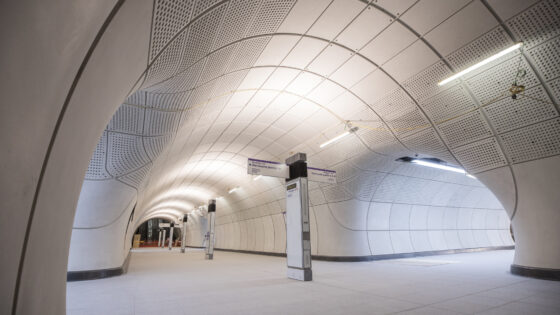
Rail for London Infrastructure is preparing a £19M contract for planned maintenance and repairs to the tunnel ventilation and controls system on the central section of the Elizabeth line between Paddington and Abbey Wood. The package will cover axial fans, dampers, smoke extraction controls and associated SCADA systems that manage airflows and emergency smoke clearance in the deep-level running tunnels and platform tunnels. Contractors will need strong capability in rail systems integration and working within live underground assets with tight access windows and stringent fire and life-safety requirements.
Wiltshire Council has let a new specialist highways framework covering road retexturing, in-situ pavement recycling, surface treatments, minor civil engineering works and traffic data collection across its local road network. The framework consolidates multiple workstreams into a single procurement route, giving term contractors clearer visibility on planned retexturing and surface treatment volumes and enabling coordinated programming with small structures, drainage and junction improvements. For geotechnical and pavement engineers, the inclusion of pavement recycling and data-led traffic monitoring signals continued emphasis on whole-life pavement performance and targeted asset management.
Engineers from nine specialist drainage consultancies have criticised National Highways’ current design rules for road runoff assets, warning that the standards constrain effective sizing and placement of features such as attenuation ponds, swales and filter drains. They argue the prescriptive approach limits designers’ ability to account for site-specific hydrology, climate change allowances and exceedance routing, potentially leaving trunk road schemes with underperforming systems during extreme rainfall. The dispute signals likely revisions to design guidance and may affect ongoing and future highway drainage designs and approvals.
Ireland recording its four warmest years on record consecutively since 2022 is exposing roads, rail and water assets to higher thermal loading, more frequent heat-induced deformation and accelerated material ageing. Asphalt pavements designed for historic temperature envelopes risk rutting and bleeding, while continuously welded rail faces greater buckling risk without upgraded stress management and ballast maintenance. For geotechnical and structural engineers, design and asset management now need explicit allowance for elevated ground temperatures, altered soil moisture regimes and more frequent extreme heat events in line with updated Eurocode-based climate actions.
Transport Scotland has advanced to the final procurement stage on its £1.94bn multi‑lot framework to dual the remaining sections of the A9 between Perth and Inverness, issuing a shortlist of major contractors for the programme. The framework will cover design and construction of the outstanding single‑carriageway stretches to continuous dual two‑lane standard, including earthworks, structures and junction upgrades along the roughly 80km corridor. Geotechnical risk, rock cut stability and drainage design in constrained Highland terrain will be central bid differentiators as teams refine construction phasing and traffic management proposals.
UK Fusion Energy Ltd has become a Tier 1 member of the Manufacturing Technology Centre as it advances procurement for the Spherical Tokamak for Energy Production (STEP) prototype fusion plant at West Burton, Nottinghamshire. The partnership gives STEP access to MTC’s advanced manufacturing testbeds for high-integrity nuclear components, including precision fabrication, remote handling and automated welding of complex vacuum vessel and breeder blanket assemblies. Civil and geotechnical teams can expect early engagement on constructability, modularisation and tolerances for heavy nuclear structures with tight alignment and maintenance access requirements.
Road trauma care in Tasmania will receive an $85 million upgrade, with four dedicated supported accommodation facilities to be renewed under the Motor Accidents Insurance Board’s (MAIB) Supported Accommodation Renewal Project. The MAIB, which administers the State’s compulsory third-party motor accident insurance scheme, will fund works targeting long-term rehabilitation needs for seriously injured road users. For civil and building contractors, the programme signals upcoming medium-scale health infrastructure packages with specialised accessibility, clinical support spaces and resilient services design.
The first road upgrade in a $70 million Federal Government programme to improve access in Kakadu National Park has been completed, involving the realignment and upgrade of a section of Kubara Road to key visitor sites in the Northern Territory. Works focus on safer geometry and more reliable all-weather access for tourist and service vehicles, addressing previous constraints on wet-season traffic. For civil and geotechnical teams, upcoming stages will likely involve similar realignments, pavement strengthening and drainage improvements across other priority park routes.
Housing association Aster Group has spent a record £124.8m in 2025/26 on upgrading and maintaining its 38,000-home estate and is targeting £1bn of improvement works over the next seven years. The programme will focus on existing stock rather than new build, signalling sustained demand for retrofit works, fabric upgrades and building services replacement across a dispersed portfolio. Contractors can expect steady pipelines in planned maintenance, energy-efficiency measures and structural repairs, with long-term frameworks likely to favour firms experienced in occupied-home refurbishment.
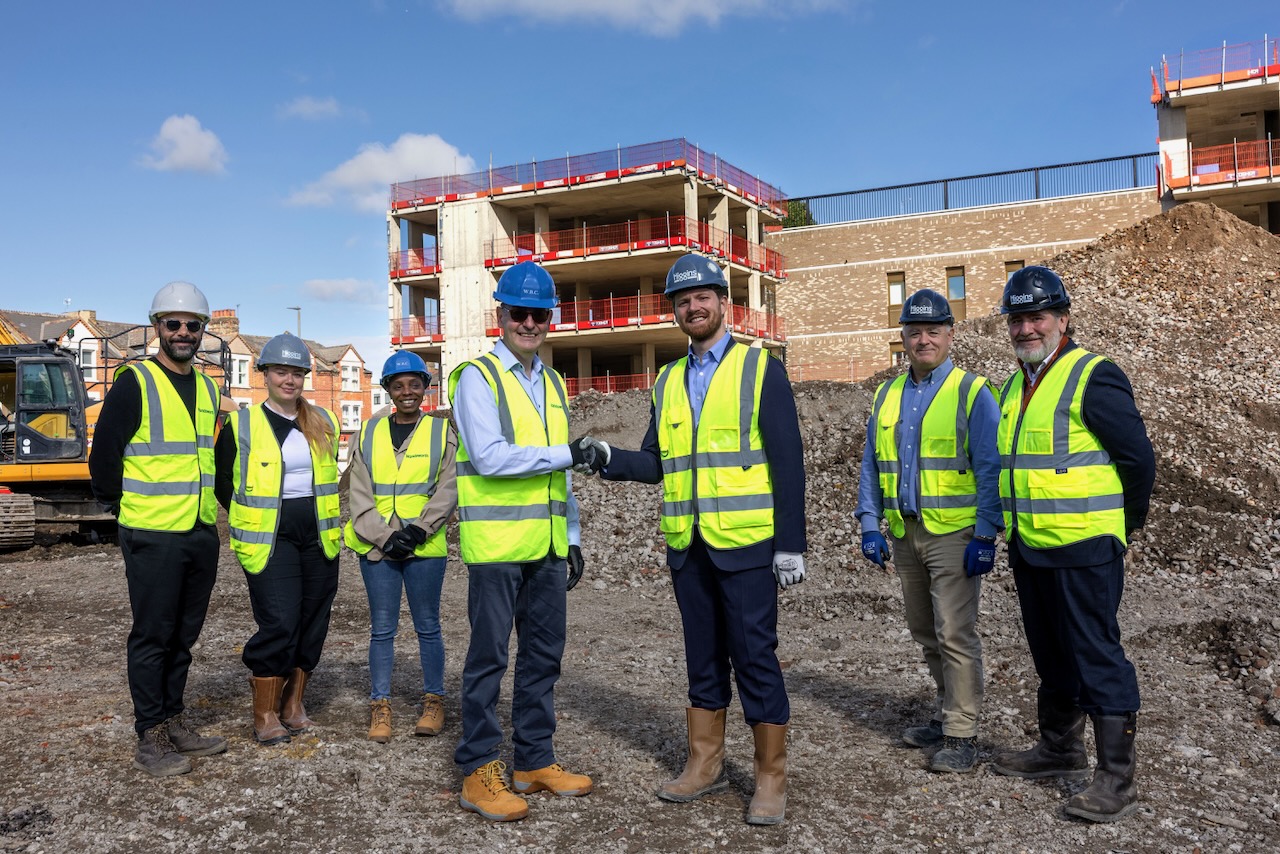
Wandsworth Council and Higgins Partnerships have started construction on Phase 2b of the Garratt Lane scheme, delivering 113 one-, two- and three-bedroom council-rented apartments with 100% affordable tenure plus ground-floor commercial space on Garratt Lane. The residential blocks follow completion of the new three-storey Atheldene Health Centre, which includes GP and pharmacy facilities and freed the former Brocklebank Health Centre site for redevelopment. For civil and building contractors, the phasing shows a clear model of integrating primary healthcare infrastructure with dense, mid-rise affordable housing on constrained urban sites.
The National Underground Assets Register has completed its first year under Ordnance Survey management with data from 400 asset owners and mapping coverage now extending to 3.2m km of buried infrastructure. Around 80% of known underground assets are digitised, giving utilities, highways authorities and contractors a far clearer view of pipes and cables before excavation. Wider adoption could materially cut strike incidents, reduce trial holes and support more accurate planning for streetworks and major civil schemes.
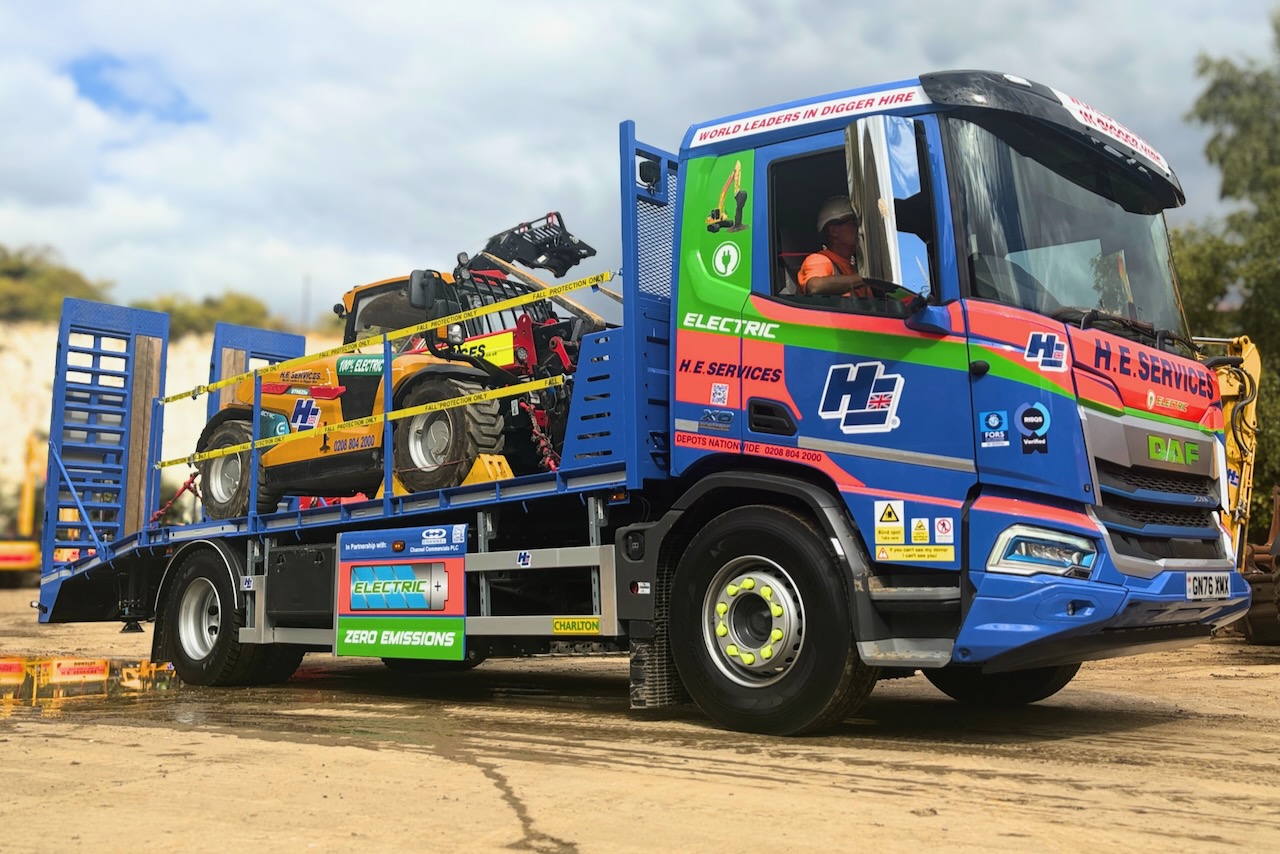
H E Services (Plant Hire) has introduced its first fully electric delivery lorry, an 18‑tonne DAF FA XD 220 from Channel Commercials, operating from its Strood depot and capable of being plated up to 20 tonnes to offset battery mass. The 9m vehicle, with a 6.9m Charlton Bodies platform and beavertail, uses three batteries for a quoted 130–180‑mile range per charge, depending on conditions and payload. To support operations, H E Services has installed an ultra‑rapid CCS charger at Strood, with the truck able to DC fast charge at up to 150 kW or 22 kW on AC.
Stepnell has appointed former Lendlease executive Simon Gorski as managing director of its construction business, drawing on his 30+ years’ experience in defence, justice, healthcare and central government frameworks, including 20 years with Bovis/Lendlease Europe. Based at the Rugby head office, Gorski is tasked with scaling Stepnell’s post-demerger “controlled growth” model, targeting a wider public sector and regional client base. The contractor, which opened its seventh office in Exeter in May 2026, reported £150m turnover with a forecast 20% uplift this year, signalling increased bidding capacity for complex projects.
Truck makers Volvo, Daimler and Toyota used the IAA Transportation show to commit to accelerating a hydrogen ecosystem for heavy goods vehicles, targeting commercial hydrogen truck operations in Germany by 2030. The plan centres on fuel-cell trucks for long-haul corridors, backed by dedicated high-capacity refuelling stations and green hydrogen supply rather than catenary or battery-only solutions. For civil and infrastructure planners, this signals future demand for hydrogen production hubs, roadside storage, and pressure-rated pipeline or tube-trailer logistics across key EU freight routes.
UK Research & Innovation (UKRI) has launched preliminary market engagement for a £6M framework covering civil engineering, groundworks and associated services across its research estate. The proposed procurement is expected to bundle site preparation, foundations, drainage, utilities diversions and minor structures to support new and upgraded laboratory and test facilities. Contractors are being asked to provide input on lot structure, regional coverage and delivery models before UKRI finalises tender documents and technical requirements.
Renegotiation of the two remaining HS2 civils contracts is expected to take a further two to three months, HS2 Ltd chief executive Mark Wild has confirmed, extending commercial uncertainty on key earthworks, structures and tunnelling packages. The delay affects final scope, risk allocation and pricing for major design-and-build lots that underpin formation works, viaduct foundations and interface management with existing rail and utilities. Contractors and designers will need to plan for prolonged bid teams, locked-in supply chain rates and potential reprogramming of geotechnical investigations and early works.
Plans for 1.5M new homes and multiple new towns in England risk locking in car dependency unless rail, bus rapid transit and active travel corridors are embedded in masterplans from day one, a University of Hertfordshire report warns. The study calls for safeguarded alignments for future rail stations, segregated cycleways and high-frequency bus routes to be fixed alongside land-use zoning, not retrofitted after plot-by-plot build-out. For civil and transport engineers, this signals earlier demand modelling, junction capacity design and multimodal access strategies at outline planning stage.
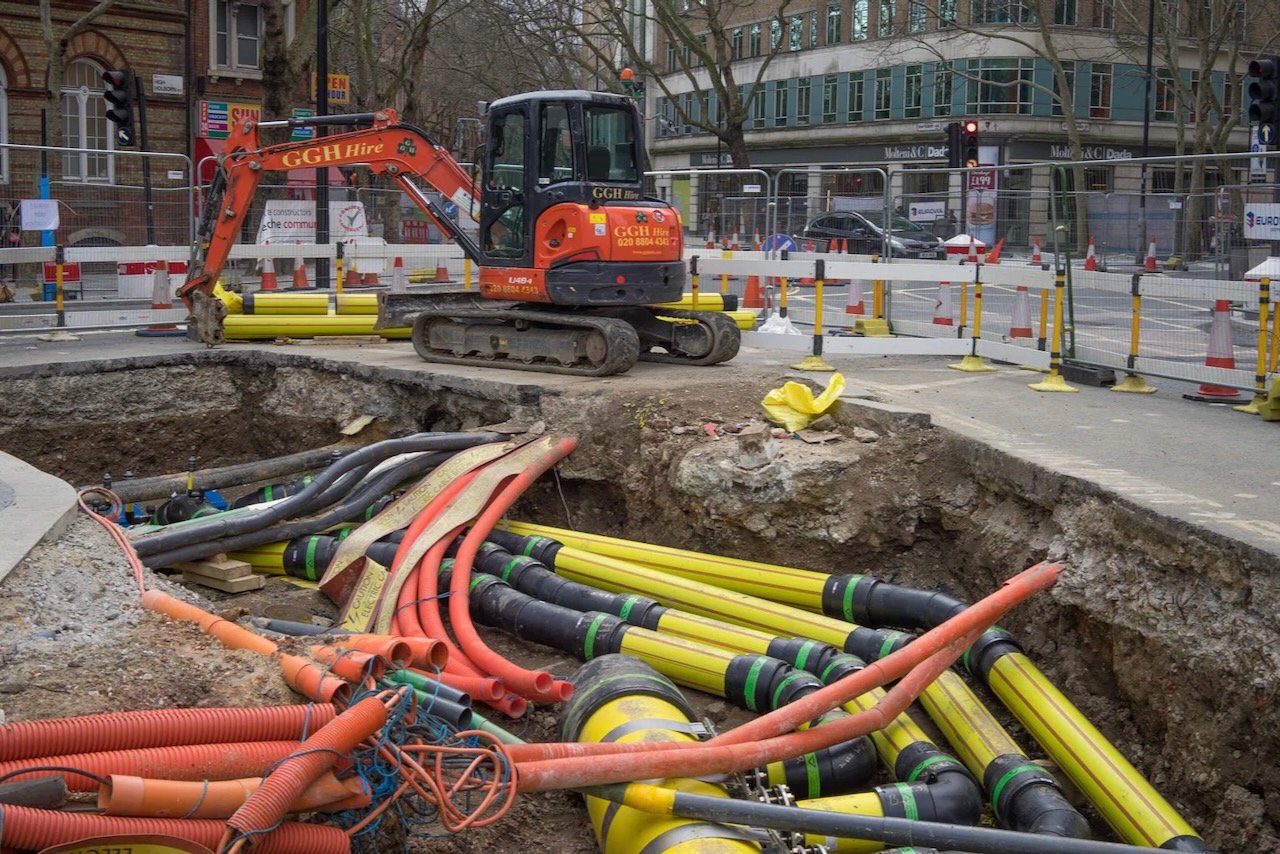
Hundreds of asset owners have uploaded records for underground pipes, cables and ducts to Ordnance Survey’s National Underground Asset Register (NUAR), with 400 public and private organisations contributing data in its first year. The platform is intended to give utilities, local authorities and contractors a single digital view of buried infrastructure, replacing fragmented paper and GIS records during streetworks planning and excavation. Wider coverage should reduce strike risk, support safer trial-hole targeting and improve coordination of trenching for water, gas, power and telecoms upgrades.
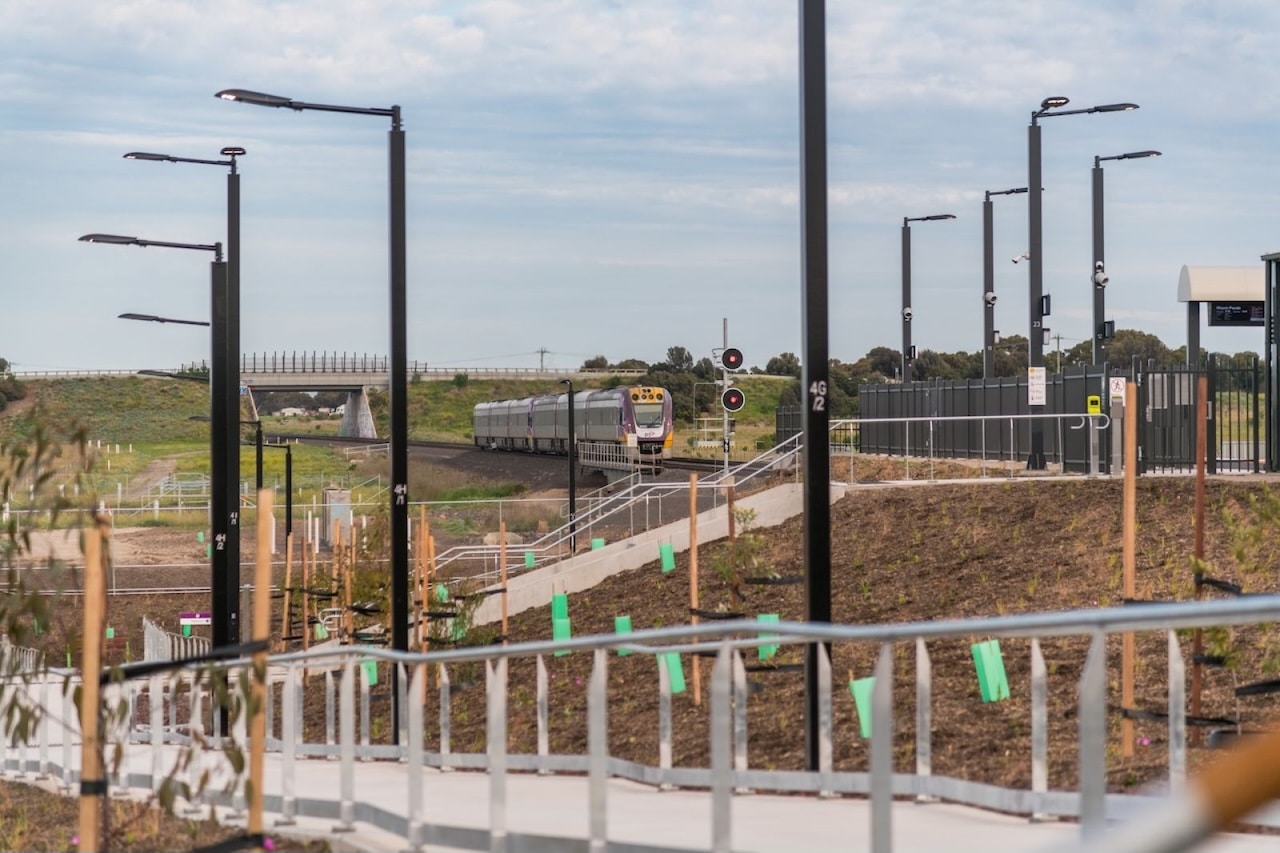
West Tarneit Station, the first brand-new station on Victoria’s rail network in several years, has opened to passengers in Melbourne’s western suburbs to relieve crowding at the existing Tarneit Station. The new stop adds capacity on the Geelong–Melbourne corridor and shortens access distances to rail for rapidly growing greenfield housing areas west of Tarneit. For civil and rail engineers, the project signals ongoing demand for corridor upgrades, additional platforms and turnback options to manage peak loads on this high-growth outer-suburban line.
Barhale has secured the main works contract for Severn Trent Water’s Ravenstone wastewater treatment works upgrade after identifying a 40% cost reduction worth about £2m during early contractor involvement. The saving was achieved by reworking the original design and construction methodology at the feasibility stage, cutting programme and temporary works requirements. The appointment signals continued client preference for contractors who can drive value through early optioneering on process plant layouts, civils scope and MEICA integration.
Graham has secured the Environment Agency contract to build the 5 km Oxford Flood Alleviation Scheme, projected to avoid £1.8bn in flood damage by diverting flows via a new stream and wetland corridor west of the city, from north of Botley Road to Kennington. Works include lowering sections of floodplain, constructing new flood walls and embankments, culverts, bridges and flood gates, and creating over 20 ha of wetland plus 16 ha of floodplain meadow. The new channel will take excess flow from the Seacourt, Bulstake and Hinksey Streams, with Towles Mill weir removal restoring fish passage, and construction scheduled from 2027 over up to five years.