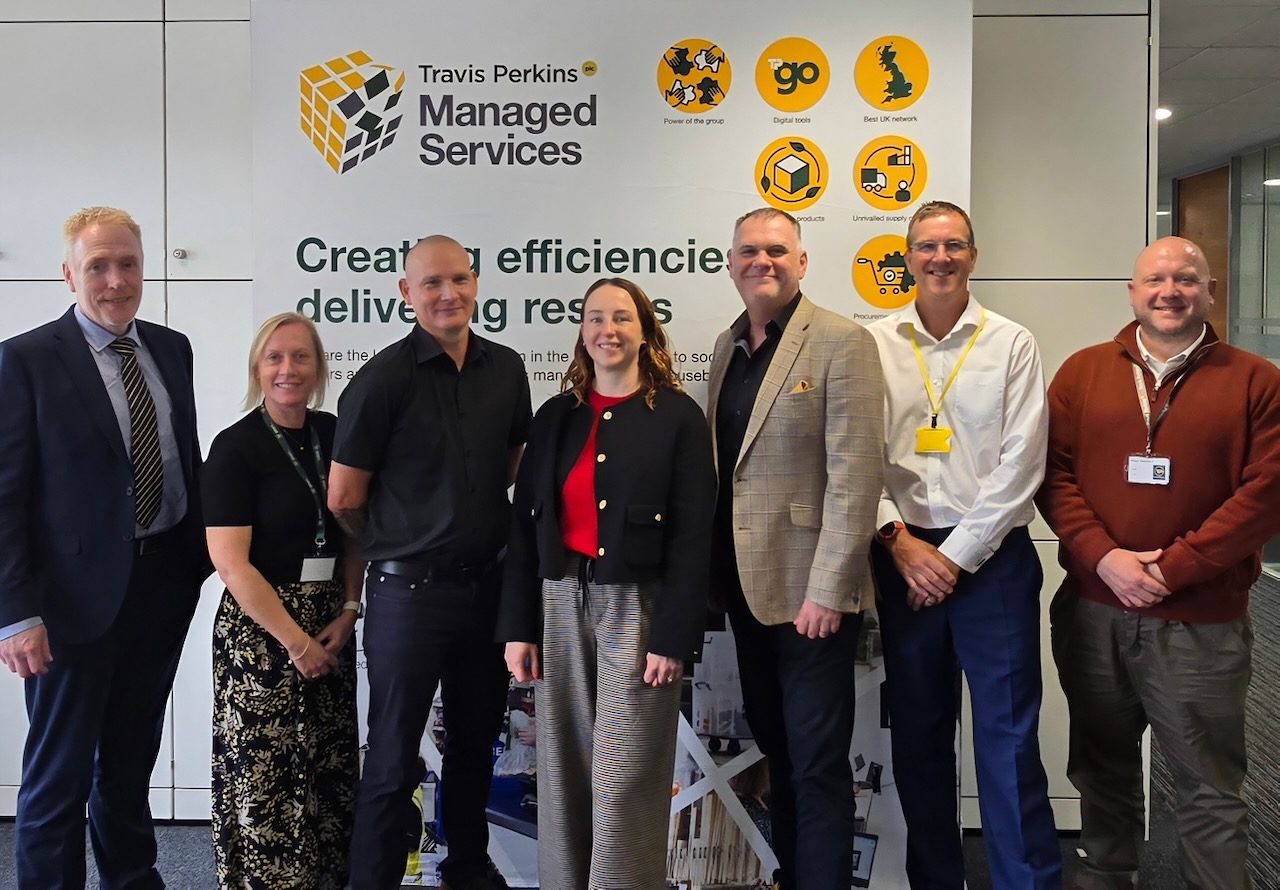
Travis Perkins Managed Services has secured a place on the Communities and Housing Investment Consortium’s Merchants and Materials framework until 2036, covering general construction, plumbing, hire and managed stores for social housing repair and maintenance. TPMS, which already serves over 180 housing associations and local authorities via Travis Perkins’ national branch network, will deploy dedicated branches, autonomous TPgo SelfServe units and its TPgo digital suite to support compliant, just‑in‑time materials supply. CHIC’s framework, restricted to its 350+ members and 1,500 supply chain partners, underpins asset management for 4.3 million UK homes.
Blue Sky Building has been appointed construction manager for the Barbican Renewal Programme, a major upgrade of the Grade II-listed arts complex and residential estate in the City of London. The works will focus on restoring the original architectural vision while supporting the City’s environmental targets, all delivered in a fully operational setting with residents, performance venues and public circulation remaining in use. Blue Sky’s selection leans on its track record managing complex refurbishments in live environments at the National Gallery, British Museum, Selfridges and United Kingdom House.
Severfield has created a new chief commercial officer role and appointed Terry Fitzmaurice to lead the structural steel group’s commercial, procurement and estimating functions across its UK and international projects. Fitzmaurice joins from Manchester Airports Group, where he was group procurement and contracts director, and previously held senior commercial roles at Mitie. Reporting directly to CEO Paul McNerney and working closely with CFO Andrew Page on strategy deployment, he is expected to tighten cost, contract and supply-chain control on complex steelwork packages.
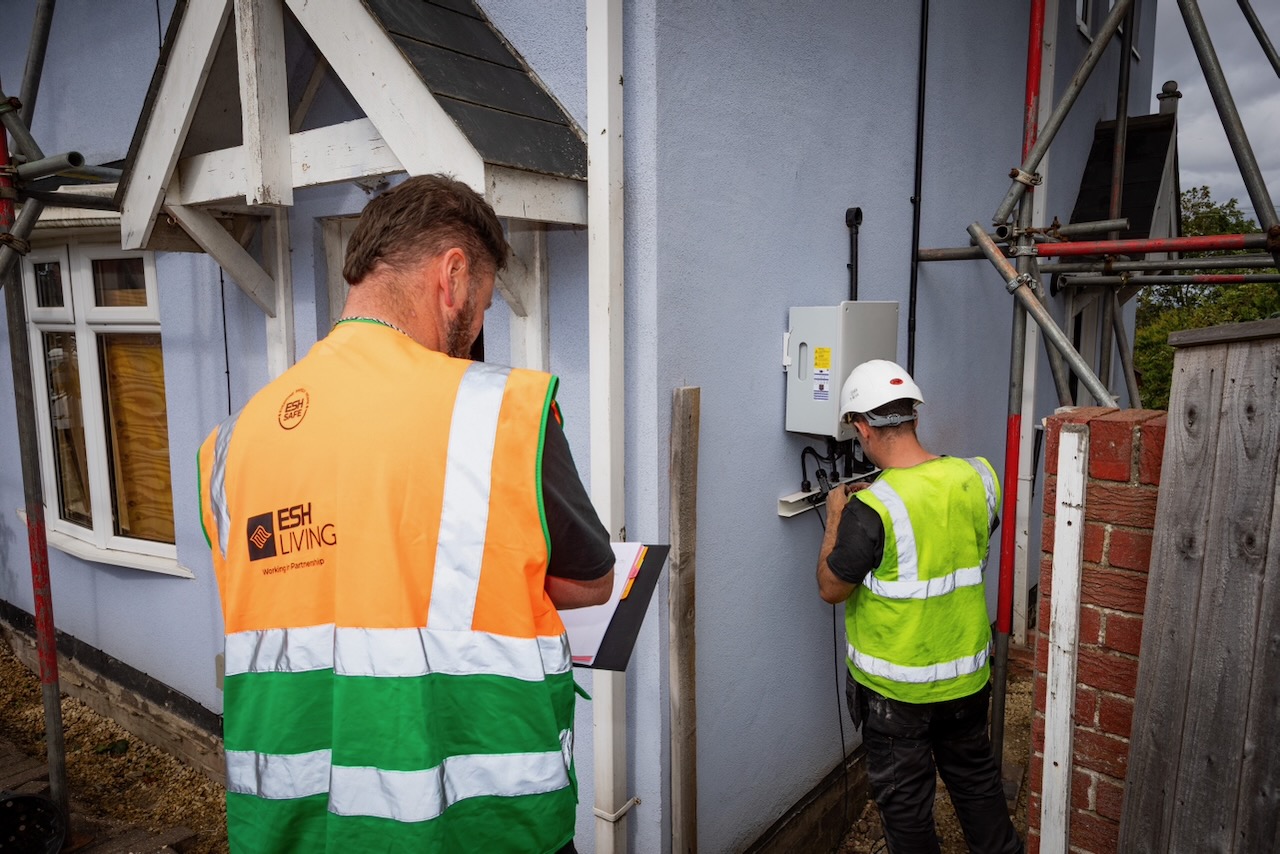
Esh Construction has secured a £2.5m Gateshead Council contract under the Warm Homes: Social Housing Fund Wave 3 to upgrade the energy performance of 82 homes over six months. Works include installing photovoltaic panels and ventilation measures to 70 bungalows and insulated flat roof upgrades to 12 flats, with retrofit designs informed by pre-construction technical surveys and updated EPC ratings. Storm Tempest has been appointed to deliver retrofit assessment, design and coordination in line with PAS retrofit standards, signalling structured, standards-led delivery for future social housing schemes.
Transport for London has appointed Costain under its Infrastructure Improvement Framework to deliver a design-and-build upgrade of South Kensington station, including step-free access and bringing a new dedicated eastbound Circle and District line platform into use by 2031. Works will integrate with a Native Land/Places for London joint venture, which has consent for a RSHP-designed around-station scheme adding 50 homes, refurbished retail and a four-storey “Bullnose” building fronting the station. Funding comes from TfL’s Business Plan, a £12m contribution from the Royal Borough of Kensington and Chelsea, and a separate 1851 Commission contribution.
Construction has started on 41 new council homes in Shirecliffe, delivered by Sheffield Housing Company – a joint venture between Sheffield City Council, Keepmoat and Great Places Housing Group – with all units to be purchased by the council for mainly affordable rent plus some shared ownership. The scheme, part funded by the South Yorkshire Mayoral Combined Authority, provides a mix of one- to four-bedroom properties targeted at local demand. It forms part of SHC’s wider programme for 2,300 multi-tenure homes across 23 sites, over 70% for open-market sale.
Manitou has entered a cross-distribution partnership with HD Construction Equipment, manufacturer of Hyundai and Develon machines, to add compact excavators, loaders and related equipment to its portfolio. The compact models will be sold globally through Manitou’s existing dealer network under both the Manitou and GEHL brands, targeting rental fleets and small to mid-size contractors. For contractors and plant hirers, the move consolidates access to Korean-built compact kit alongside Manitou’s telehandlers and access platforms through a single supply and service channel.
Completion of the £24m Eastern Transfer Station in Ware delivers a 1.4-hectare waste facility for Hertfordshire County Council, built by Balfour Beatty with Pick Everard as project manager, quantity surveyor, NEC supervisor and CDM principal designer under the SCAPE BECS framework. The site includes a main transfer building, a secondary building, new office space, a weighbridge and gatehouse, plus odour and dust suppression, fire water retention tanks and a dedicated pumping station feeding sprinklers and water cannons. The layout is designed to cut waste haul distances across the county and associated carbon emissions.
Approval has been granted for McLaren Living’s Fish Island co-living scheme in Hackney Wick, completing the Neptune Wharf masterplan with 280 co-living studios and 44 affordable homes in two HTA Design blocks of ten and seven storeys. The fully car-free, cycle-first scheme incorporates rain gardens, bioswales and permeable paving for sustainable drainage, plus a central landscaped courtyard linking into the surrounding public realm and retaining mature boundary trees. Roof-mounted PV panels and an energy strategy targeting BREEAM Excellent signal a strong operational performance focus for dense urban residential design.
McLaren Construction has appointed Martin Ewing as divisional director for construction management and specialist projects, tasking him with overseeing a growing portfolio of complex building and infrastructure schemes and reporting to managing director Vince Lydon. Ewing brings more than 40 years’ experience delivering major London projects, including the refurbishment and upgrade of the Ritz Hotel, The Peninsula Hotel (billed as the city’s first 6‑star hotel), the historic Selfridges upgrade and Colchester Garrison. The move signals McLaren’s push to expand construction management services for technically challenging, high-spec refurbishments and new builds.
A new Skills Centre has opened on The Hill Group’s City Centre South regeneration site in Coventry, providing on-site training, apprenticeships and upskilling directly linked to live construction works. The facility is geared to trade and site-management roles needed for large mixed-use urban schemes, giving learners exposure to real programme, logistics and temporary works constraints. For contractors and consultants in the region, it signals a growing local pipeline of site-ready labour familiar with inner-city regeneration conditions and modern construction methods.
New modular single living accommodation at Trenchard Lines, Upavon has completed its first phase, with Reds10 and Arcadis handing over two SLA blocks providing 82 en-suite bedspaces for junior ranks as part of a 200-person scheme. A further 21 officer bedspaces will come from refurbishment of Lord House, a heritage building beside the Officers’ Mess, integrating modern services into an existing structure. The SLA blocks include drying rooms, shared kitchens and furnished communal areas, plus rooftop solar panels and energy management systems to cut operational energy demand and bolster resilience.
M Group has recycled more than 200,000 mixed-material water meters for Yorkshire Water and Netmore, tackling encapsulated lithium batteries and complex assemblies as part of an AMP8 programme that could replace over four million meters in five years. After a year-long review of more than 40 organisations, Yorkshire-based Areera was selected to recover plastics, ferrous and non-ferrous metals, and small quantities of precious materials from printed circuit boards. The process is now being scaled, with automation, robotics and AI under evaluation to increase throughput and improve data capture from returned assets.
The Construction Plant-hire Association has appointed Mel Edwards as training and skills support manager in a new member-facing role focused on plant operator training, skills development, recruitment and funding access. Edwards will work directly with CPA’s 1,900+ member companies, many running large earthmoving, lifting and piling fleets, to navigate CITB grants, apprenticeship schemes and competency card requirements. The move signals more structured support for filling operator and maintenance technician shortages on major UK infrastructure and ground engineering projects.
Government has been accused of having no contingency plan for large-scale data centres if an AI investment bubble bursts and facilities become stranded assets, a gap campaigners call “alarming”. With new hyperscale campuses typically demanding tens of megawatts of grid capacity, deep foundations, extensive cooling infrastructure and multi-decade planning consents, critics warn that unplanned obsolescence could leave local authorities managing redundant, highly serviced shells. Engineers are urged to consider future-proofing, adaptive reuse of high-spec M&E systems, and decommissioning strategies at the planning and design stage.
Deployment of on-board overhead line (OHL) and track defect monitoring systems across GBR Anglia routes is being used to capture live condition data directly from in-service trains, rather than relying solely on periodic inspection trains. Instrumented rolling stock is recording contact wire geometry, stagger and uplift, as well as railhead condition and track geometry, allowing faults to be geo‑referenced to specific masts, spans and sleepers. The joined‑up approach is intended to tighten maintenance intervals, prioritise high‑risk locations and reduce disruptive manual access to the four‑foot and cess.
Balfor Beatty Vinci has installed the final one of six major spans for HS2’s Water Orton viaduct over the M42 in the West Midlands, completing the primary superstructure over the live motorway. The operation required heavy-lift cranes working within tight possession windows above multiple carriageways, with spans preassembled off-line to minimise disruption to M42 traffic. For designers and contractors, the milestone confirms that the staged erection methodology and temporary works strategy for HS2’s major overbridges are performing to programme under complex traffic and logistics constraints.
This summer’s extreme weather is presented as a clear warning that UK infrastructure is still being designed and operated for historic, not future, climate loads. The piece calls for engineers to treat climate resilience as a primary design parameter, integrating updated rainfall intensity–duration–frequency curves, higher peak river flows and compound flooding into asset standards, not just emergency plans. For geotechnical and civil practitioners, that means revisiting drainage capacities, freeboard allowances, slope stability factors and redundancy in power, transport and water networks before the next shock.
The Greater Connect Alliance has secured the contract to deliver the Lloyd Street Extension Project in Western Australia, the first stage of a broader upgrade to the Great Eastern Highway and the road network around Perth Airport. Works will create a new north–south link tying Lloyd Street into the Great Eastern Highway freight corridor, intended to relieve congestion on existing local roads carrying airport and industrial traffic. For designers and contractors, the staged approach signals upcoming packages involving complex interface management with live airport access routes and existing highway structures.
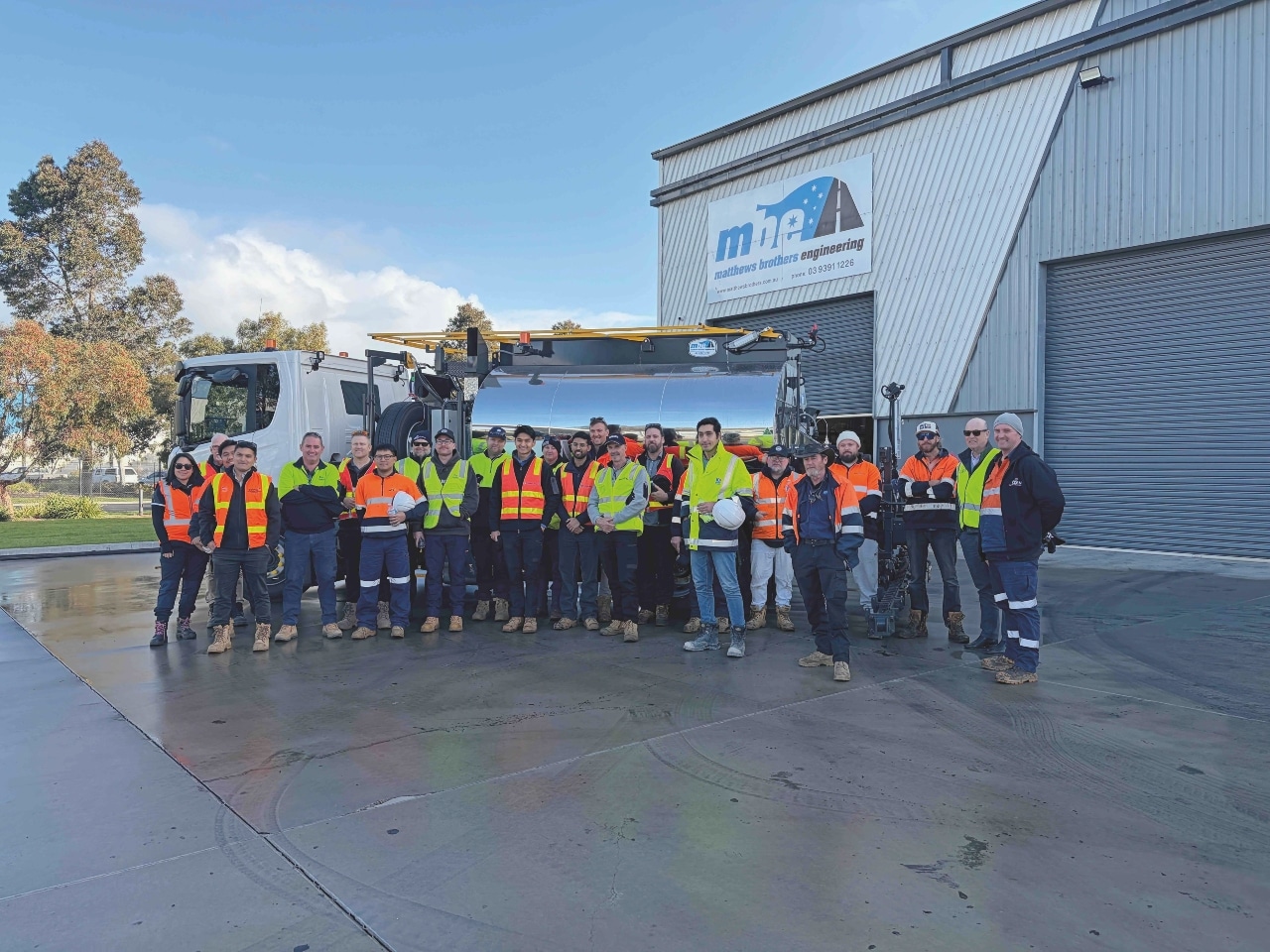
A ‘spray seal essentials’ workshop has positioned Matthews Brothers Engineering (MBE) as a technical partner in upskilling road maintenance crews on binder selection, aggregate grading and application rates for chip seals. MBE used its own spray sealing equipment and calibration procedures to demonstrate correct nozzle configuration, bar height and transverse distribution checks, directly linking plant settings to Austroads-compliant surface texture and waterproofing performance. The initiative signals growing reliance on OEMs to transfer practical know‑how on seal design, construction tolerances and troubleshooting bleeding, stripping and early-life failures.
Three regional contracts have been let for spring road maintenance, resurfacing and repair across Tasmania, covering 84 sites on the state network. Victorian surfacing specialist Roadways will deliver asphalt and spray seal works in the north-west and southern regions, while Hazell Bros will manage civil and pavement works in the north. The programme signals a concentrated seasonal push on surface condition, drainage and structural repairs, with implications for traffic management planning and quarry/asphalt plant scheduling across multiple districts.
Yorkshire Water’s £7.9M storm overflow improvement scheme in Pudsey, West Yorkshire will be delivered by Kier Infrastructure with design by Sweco, targeting reduced spill frequency and improved network resilience during intense rainfall. The project will focus on upgrading existing combined sewer and overflow assets rather than full replacement, aiming to increase storage and conveyance capacity within the constrained urban catchment. For civil and geotechnical teams, key issues will include working around live sewers, limited access in built-up areas, and strict environmental compliance on discharge quality.
Railway renewals between Cardiff and Bridgend via Pontyclun will be delivered by Network Rail over three weekend possessions in September and October, closing sections of the South Wales Main Line to passenger services. Works are expected to focus on track renewals and associated ballast and drainage improvements on this intensively used four-track corridor, which carries both Great Western Main Line intercity traffic and heavy freight. Contractors will need tightly sequenced access, high-output plant and robust temporary works to manage interfaces with existing signalling, overhead line equipment and adjacent live lines.
Gallows Corner flyover and roundabout in east London have fully reopened after a £67.4M programme of strengthening and refurbishment works to the elevated structure. The scheme focused on extending the life of the flyover through concrete repair, steelwork strengthening and replacement of key deck components, along with new waterproofing and surfacing. For designers and asset managers, the project signals continued investment in life-extension of 1970s-era elevated junctions rather than full replacement, with implications for inspection regimes and phased strengthening strategies on similar structures.
Geomechanics, Streamlined.
© 2026 Geomechanics.io. All rights reserved.