Victoria’s new G Class trams in the west: design and loading notes for engineers
Reviewed by Joe Ashwell
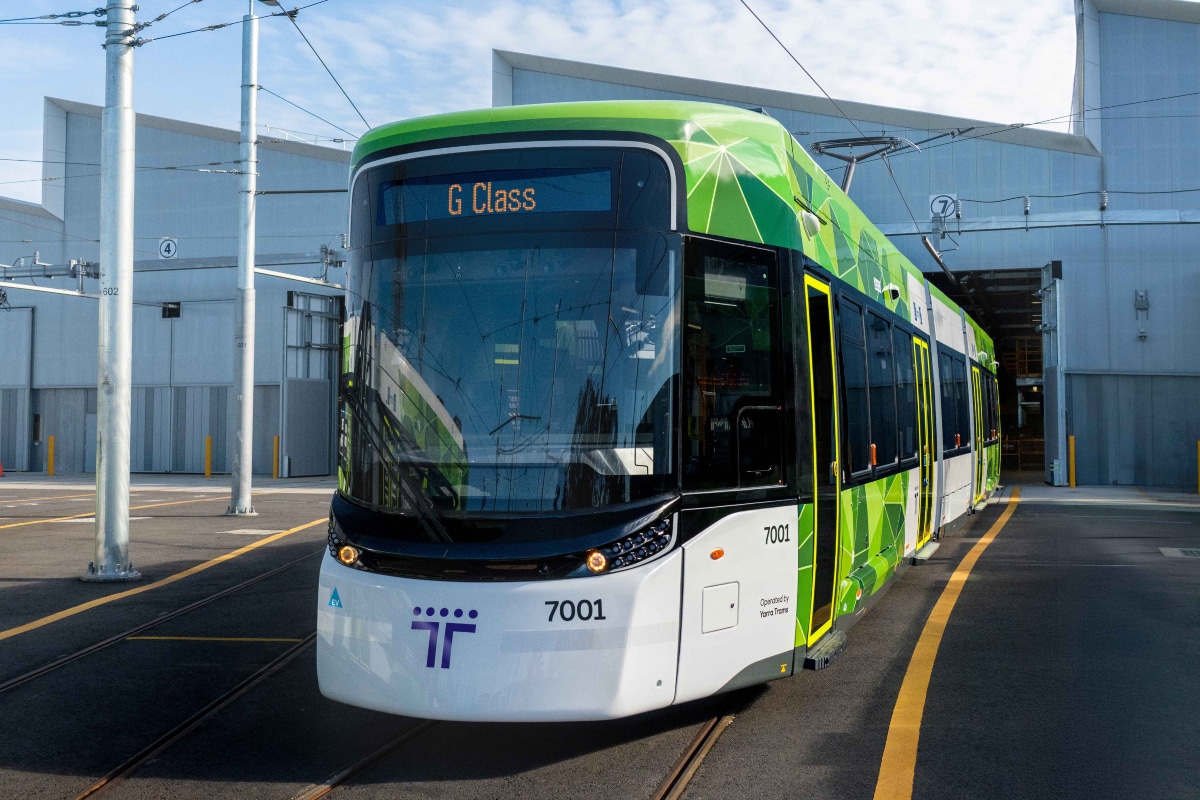
First reported on Roads & Infrastructure (AU)
30 Second Briefing
Victoria’s new G Class trams have entered service in Melbourne’s west, each carrying up to 150 passengers—about double the capacity of the Z and A class vehicles they will replace. The low-floor design includes dedicated spaces for wheelchairs and mobility aids, delivering step-free boarding at platform stops and reducing dwell times. For transport and civil engineers, the higher axle loads and longer vehicles will influence track wear, stop geometry and pavement design around tram corridors.
Technical Brief
- Depot and stop interfaces must accommodate the longer carbody envelope and swept path of G Class vehicles.
- Higher static and dynamic loads will require updated track condition monitoring and more frequent rail grinding regimes.
- Pavement and utility covers within shared tram–traffic corridors need verification for increased wheel loads and braking forces.
- Platform stop kerb edges and tactile surfaces must be rechecked for clearance envelopes and trip‑hazard control.
- Emergency egress procedures at stops and along alignments need revision for higher onboard passenger densities.
- Driver training and signalling sighting distances may need adjustment to reflect altered acceleration, braking and visibility characteristics.
- Similar fleet upgrades elsewhere will likely trigger corridor-wide safety audits rather than vehicle-only compliance checks.
Our Take
For Melbourne and wider Victoria, moving to 150‑passenger G Class trams roughly doubles vehicle capacity, which typically allows operators to cut peak headways or remove some services while still growing throughput, with knock‑on effects for depot scheduling and driver rostering.
In our infrastructure database, Victorian public transport upgrades are increasingly framed under ‘Safety’ tags, so higher‑capacity trams are likely being paired with platform, signalling and accessibility changes rather than treated as a simple rolling‑stock swap.
Roads & Infrastructure Magazine’s broader 2026 coverage has highlighted a cultural focus on people and safety rather than mega‑projects, suggesting the Department of Transport and Planning – Victoria will be judged as much on passenger experience and incident reduction as on raw capacity gains from the new fleet.
Prepared by collating external sources, AI-assisted tools, and Geomechanics.io’s proprietary mining database, then reviewed for technical accuracy & edited by our geotechnical team.
Related Articles


Related Industries & Products
Construction
Quality control software for construction companies with material testing, batch tracking, and compliance management.
Mining
Geotechnical software solutions for mining operations including CMRR analysis, hydrogeological testing, and data management.
CMRR-io
Streamline coal mine roof stability assessments with our cloud-based CMRR software featuring automated calculations, multi-scenario analysis, and collaborative workflows.
HYDROGEO-io
Comprehensive hydrogeological testing platform for managing, analysing, and reporting on packer tests, lugeon values, and hydraulic conductivity assessments.
GEODB-io
Centralised geotechnical data management solution for storing, accessing, and analysing all your site investigation and material testing data.