Geomechanics, Streamlined.
© 2026 Geomechanics.io. All rights reserved.
Taylor Wimpey reported a 19.4% drop in adjusted operating profit in the first half of the year, as margins contracted by 2 percentage points despite revenue edging up 1.7% to £1.683bn. The UK housebuilder said it is prioritising tighter cost control across its build programmes and supply chain to protect returns in a flat volume and price environment. Contractors and materials suppliers to Taylor Wimpey can expect continued pressure on unit costs, programme efficiencies and value engineering on new housing and infrastructure-related packages.
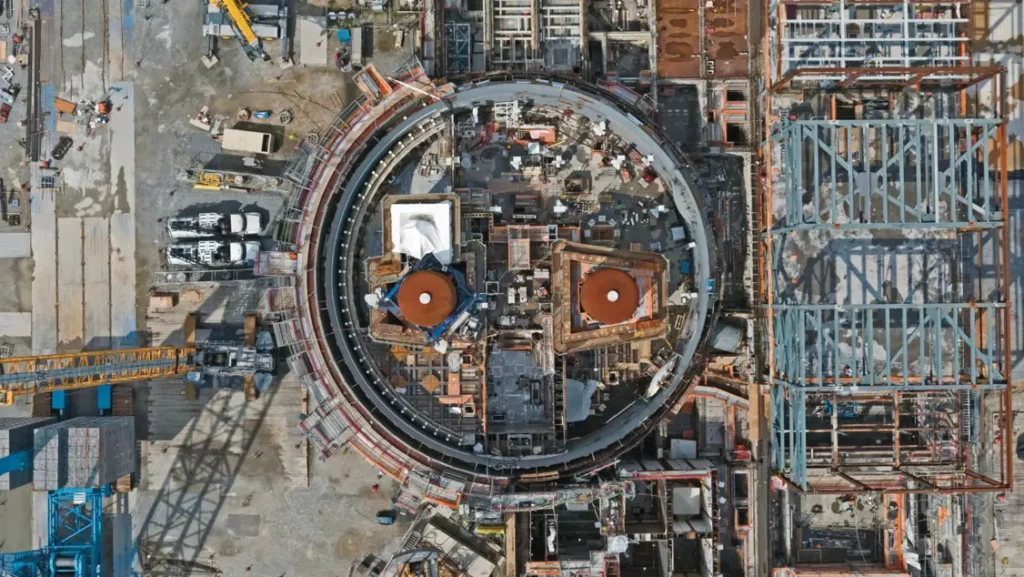
Cameco’s 49%-owned Westinghouse Electric has confidentially filed a Form S-1 for a US IPO, three years after Cameco and Brookfield Renewable paid about C$11 billion for the AP1000 reactor maker, which now contributes roughly 25% of Cameco’s EBITDA. Analysts at Desjardins value Cameco’s Westinghouse stake at about C$15.1 billion, while Scotia notes the IPO timing is several years earlier than expected and the window could extend to 2029. The move comes as Westinghouse lines up with a US government partnership targeting at least US$80 billion of new AP1000 builds and US$17.5 billion in DOE reactor loans.
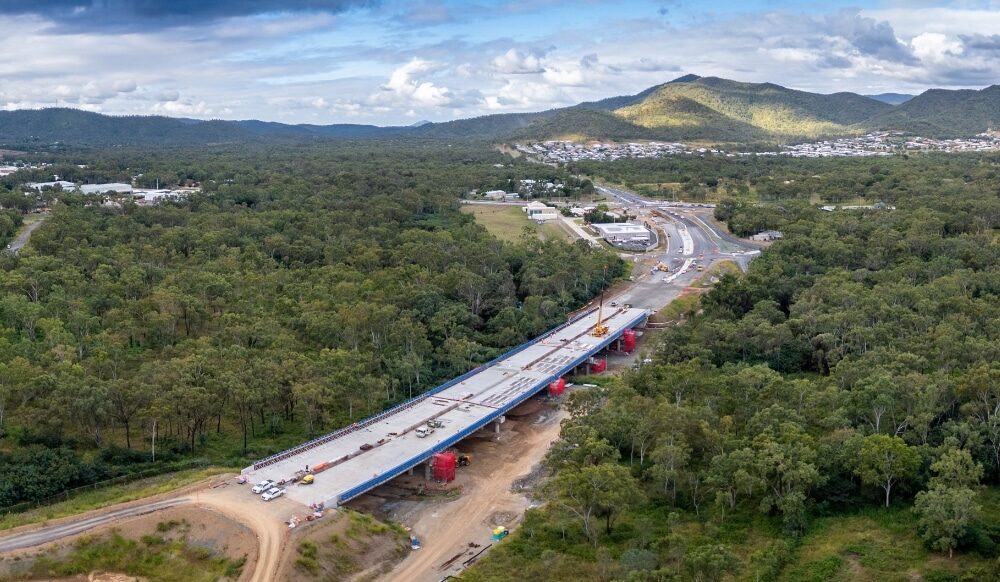
A major construction milestone has been reached on the $1.98 billion Rockhampton Ring Road, a key section of the Bruce Highway upgrade in Central Queensland designed to divert through‑traffic around Rockhampton. The project will provide a new high‑standard highway link engineered for improved flood resilience on the Fitzroy River floodplain and safer, more efficient heavy‑vehicle freight movements. For geotechnical and civil teams, the scale and floodplain setting point to extensive ground improvement, elevated embankments and hydraulic capacity upgrades on approach structures.
The Western Australian Government has appointed Henrietta Farrell as Chief Executive Officer of the Construction Training Fund (CTF), effective 12 August, replacing outgoing CEO Tiffany Allen. The CTF administers industry training levies on building and construction projects across Western Australia to subsidise apprenticeships, traineeships and upskilling programmes for trades such as civil construction, concreting and plant operations. Leadership continuity at CTF is critical as major road, rail and resources projects in the state continue to strain availability of qualified site supervisors, plant operators and specialist trades.
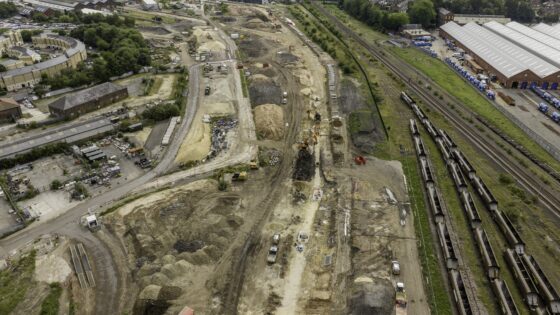
Complex ground conditions around a new railway overbridge in York required 5,669 piles, but value engineering cut a significantly larger initial pile count by rationalising layouts and load paths. Engineers re-optimised pile diameters, lengths and spacing to suit variable strata and rail possession constraints, reducing redundant piles while maintaining settlement and vibration limits for the live railway. The approach shows how early geotechnical–structural integration can materially shrink piling scope, programme risk and embodied carbon on constrained rail infrastructure works.
A projected 2% fall in UK engineering graduates could strip £6.5bn from future economic output in engineering‑intensive sectors such as construction, transport and energy. The shortfall would hit delivery capacity for major programmes including HS2, nuclear new build and large‑scale grid reinforcement, where chartered engineers and specialist technicians are already in constrained supply. Firms may need to expand apprenticeships, overseas recruitment and mid‑career reskilling to maintain design, site supervision and asset management capability.
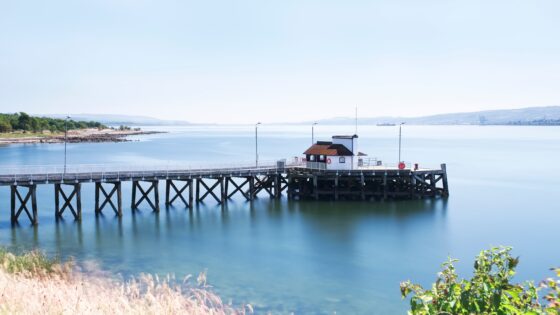
Engineers are planning repairs to the 129-year-old Kilcreggan Pier at Helensburgh so that works are sequenced around tidal windows and the Kilcreggan–Gourock passenger ferry timetable, avoiding service disruption. The programme will rely on short possession periods between sailings and careful marine access planning, rather than full closure of the pier. For contractors and designers, the scheme illustrates the need to integrate structural refurbishment methods with live-berth constraints and limited working time in a tidal estuary environment.
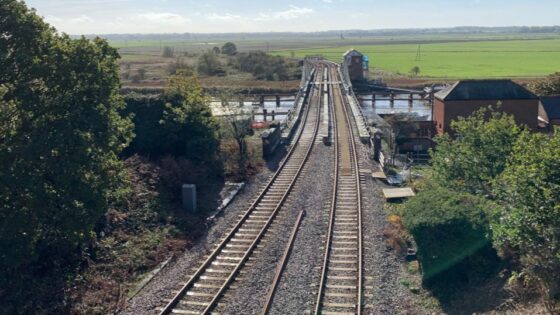
Urgent repairs are under way on the 123-year-old Reedham swing bridge, which carries the single-track Wherry Line over the River Yare between Norwich and Lowestoft and must still open for river traffic. Network Rail engineers are addressing mechanical and structural reliability issues on the ageing steel swing span to keep both rail operations and navigation functioning. The works will interest bridge and permanent-way engineers managing similar early-20th-century movable structures with fatigue, corrosion and alignment constraints under modern traffic loads.
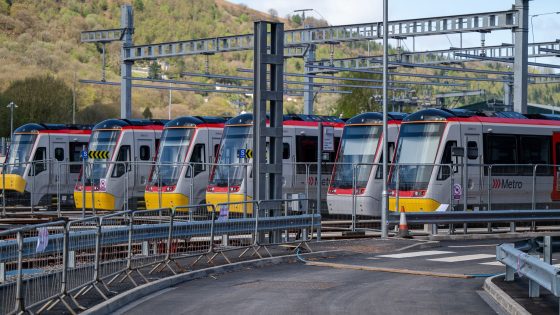
Electrification of Transport for Wales’ Core Valley Lines, a key phase of the South Wales Metro upgrade, has reached a major milestone as overhead line equipment and power systems progress towards full operation. TfW’s latest annual report also records continued growth in rail and bus passenger numbers across the network, signalling stronger utilisation of recently delivered infrastructure such as new signalling, track renewals and station upgrades. For civil and rail engineers, the programme’s pace confirms sustained demand for electrified, higher-capacity suburban corridors in constrained urban valleys.
Aecom has been appointed by ANA Aeroportos de Portugal, part of the Vinci Airports group, to deliver the preliminary design for New Lisbon Airport, to be named Luís de Camões Airport. The commission covers early-stage masterplanning and airside/landside layout definition, setting key parameters for runway orientation, terminal footprint and ground access integration with Lisbon’s existing road and rail networks. Early geotechnical, drainage and pavement design decisions at this stage will strongly influence earthworks volumes, foundation solutions and long-term airfield pavement performance.
Decarbonisation momentum in UK infrastructure is shifting from pledges to delivery, with major clients now embedding whole-life carbon targets into NEC contracts and design briefs. Large programmes such as National Highways’ net zero plan and Network Rail’s traction decarbonisation strategy are driving low‑carbon concrete specifications, electrified plant trials and mandatory PAS 2080 carbon management on projects above defined value thresholds. For engineers, this is tightening requirements for early-stage optioneering, quantified carbon baselines and digital tools that track embodied and operational emissions alongside cost.
ICE Trustee for regions reports that local member groups across the UK are directly shaping infrastructure decisions by engaging with combined authorities, sub‑national transport bodies and local resilience forums. Regional panels are feeding technical evidence on issues such as flood risk management, ageing water and wastewater assets, and decarbonisation of transport corridors into strategic plans and funding bids. For practitioners, this means more opportunities to influence option selection, appraisal assumptions and whole‑life performance criteria at an earlier stage in project pipelines.
Exceptional engineers and major UK infrastructure schemes have been recognised at the 2026 ICE Awards, which spotlighted complex geotechnical works, carbon‑reduced materials and digitally enabled delivery. Winning projects typically combined advanced ground investigation with 3D BIM coordination and offsite precast elements to cut programme risk on constrained urban sites and rail interfaces. For practitioners, the awards signal growing client acceptance of low‑carbon concrete mixes, whole‑life asset modelling and construction methods that minimise temporary works and possession windows.
Place-based infrastructure is being promoted as a way to design transport, flood defence and public realm schemes that respond to specific local social, economic and environmental conditions rather than standardised templates. Advocates argue that early engagement with communities, integration of green–blue infrastructure, and re-use of existing assets can reduce whole-life carbon and cost while improving resilience to climate-related stresses. For engineers, this approach shifts emphasis towards multidisciplinary planning, data-led understanding of local behaviours, and performance metrics that capture social value alongside traditional capacity and safety criteria.
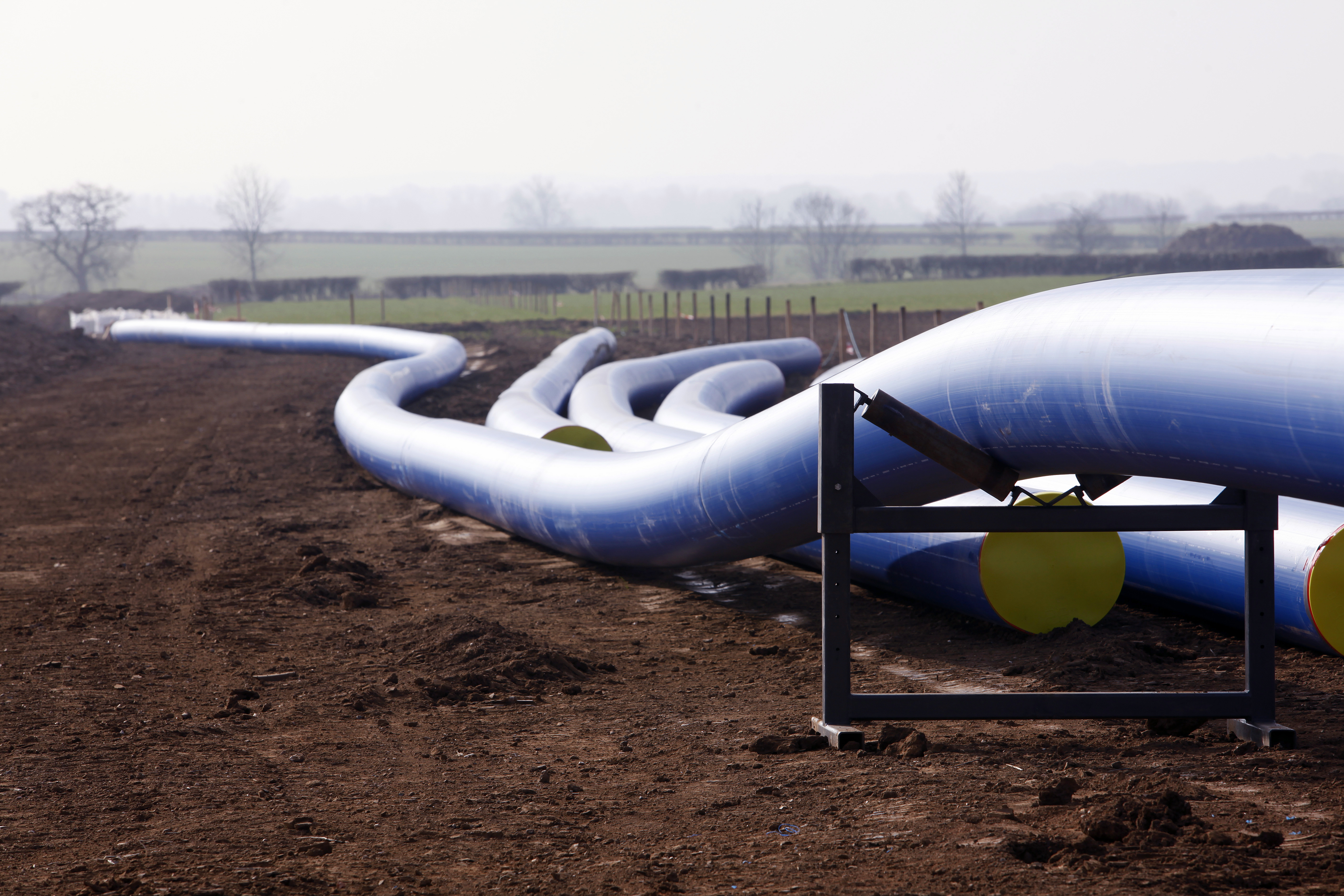
Sir John Armitt is urging cross-party backing for long-term investment in England’s water infrastructure, warning that current reservoir and strategic storage capacity is inadequate for intensifying drought and extreme rainfall. He points to the need for new large-scale storage schemes, upgraded transfer networks between water resource zones, and resilience upgrades to treatment works to cope with more volatile inflows. For civil and geotechnical engineers, this signals sustained demand for major dam, embankment, pipeline and interconnector projects, plus associated environmental and planning work.
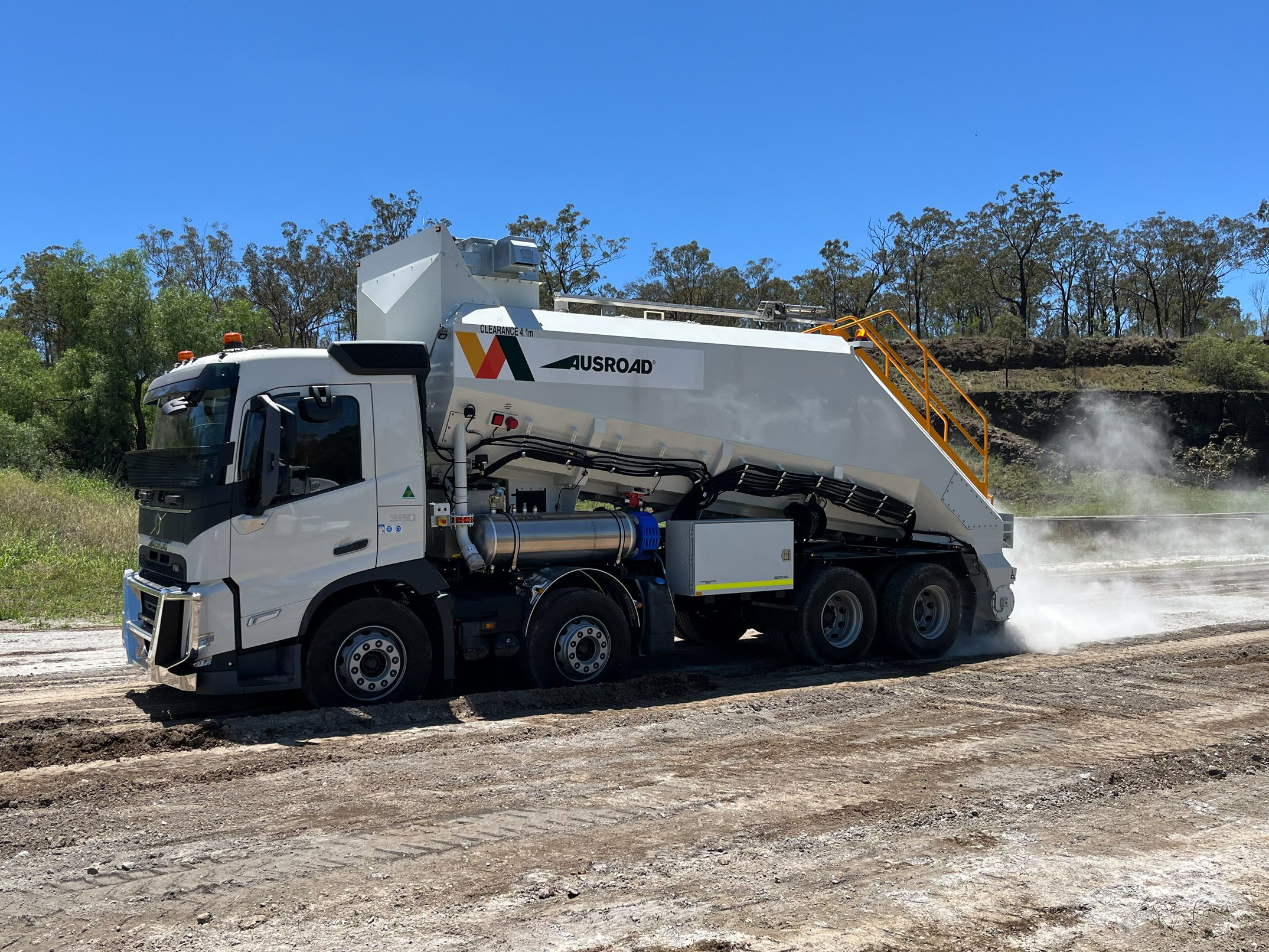
AUSROAD has launched a new purpose-built Powder Spreader for road stabilisation and ground improvement projects, designed to apply dry powdered binders such as lime and cement with tighter spread-rate control than conventional bulk tankers. The unit targets more uniform dosage across formation widths, improving consistency of subgrade strength and reducing over- or under-treatment on stabilised pavements. For contractors, the machine is aimed at higher application accuracy, faster cycle times and reduced operator exposure to airborne fine powders on Australian roadworks.
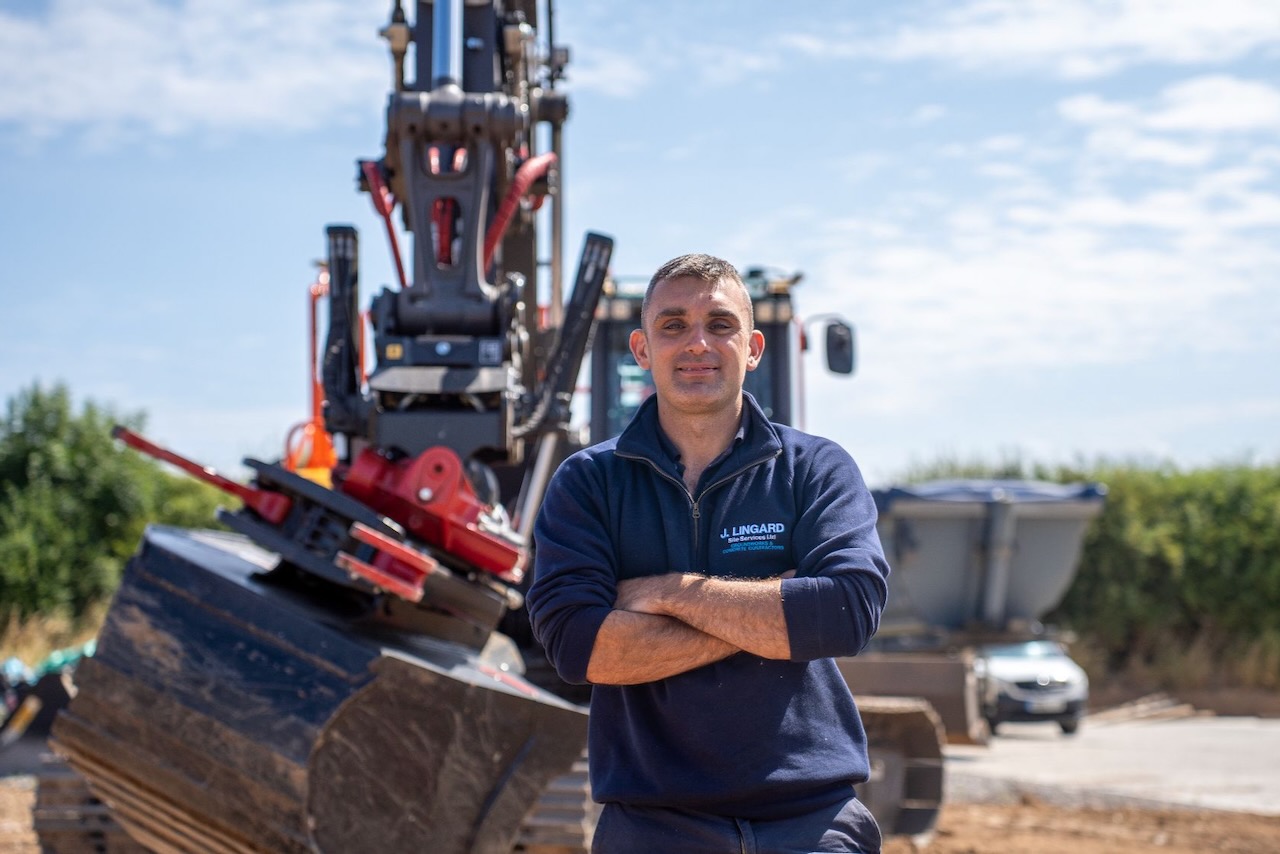
North Yorkshire contractor J Lingard has equipped a new 16‑tonne Volvo EC160E with a Rototilt RC5 tiltrotator and Leica machine-control system, supplied, installed and calibrated by SJ Pigg. The RC5, designed for 14–19 tonne excavators, handles breakout torques up to 200 kNm and offers 25% higher tilting torque than the R5, with pressure‑compensated hydraulics for precise grading, drainage and foundation work. QuickChange, SecureLock active safety, an RG800 gripper and blade control via RC joysticks cut manual coupling, machine repositioning, track wear and operator fatigue on confined sites.
Watkin Jones has secured six contracts worth about £60m in the quarter to 30 June, including five Refresh schemes covering 1,750 purpose-built student accommodation beds across four UK cities and a delivery partnership for Staycity Wilde Oxford. The Oxford aparthotel will provide 145 units, signalling continued demand for high-density, serviced accommodation in constrained urban centres. For contractors and consultants, the pipeline points to ongoing refurbishment and lifecycle upgrade work in PBSA assets alongside new-build hospitality schemes.
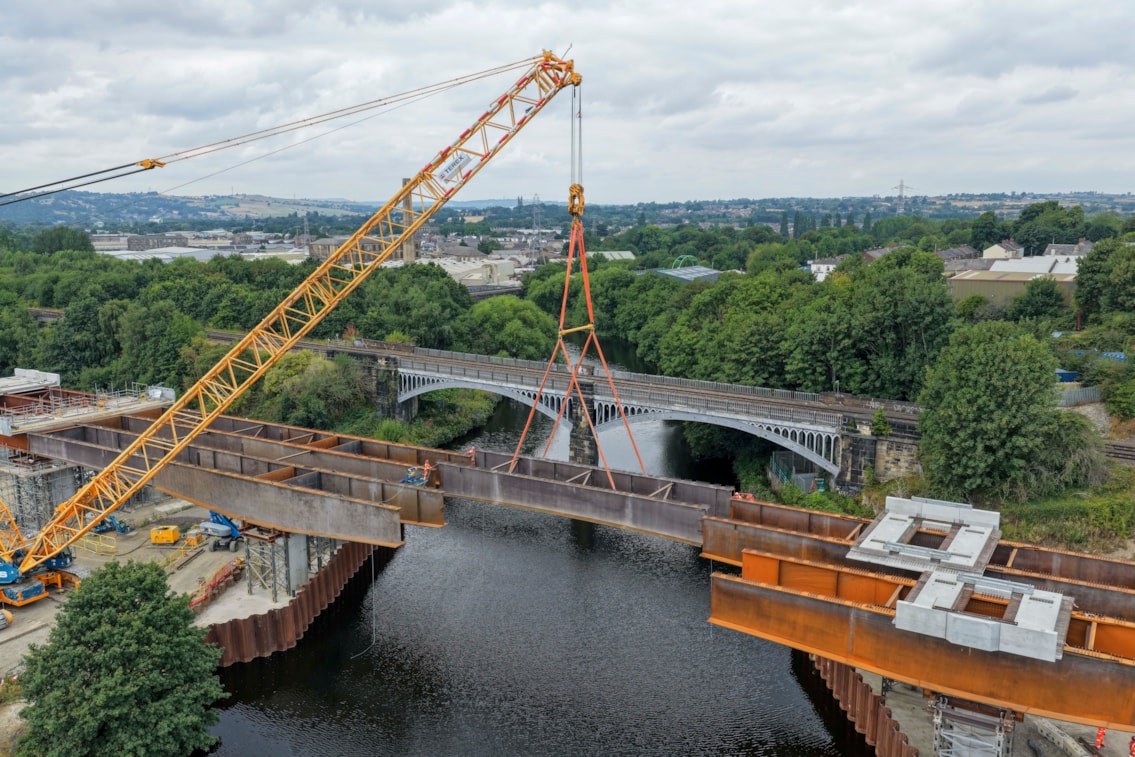
Installation of the penultimate beams on the Baker Viaduct over the River Calder has created the first physical rail connection for the Transpennine Route Upgrade across the river. The structure, delivered by BAM Nuttall and steel specialist Severfield, forms a key multi-span viaduct carrying new electrified railway over the Calder floodplain. For designers and contractors, the milestone confirms that main superstructure works are sufficiently advanced to lock in track alignment, overhead line equipment interfaces and future access for inspection and maintenance.
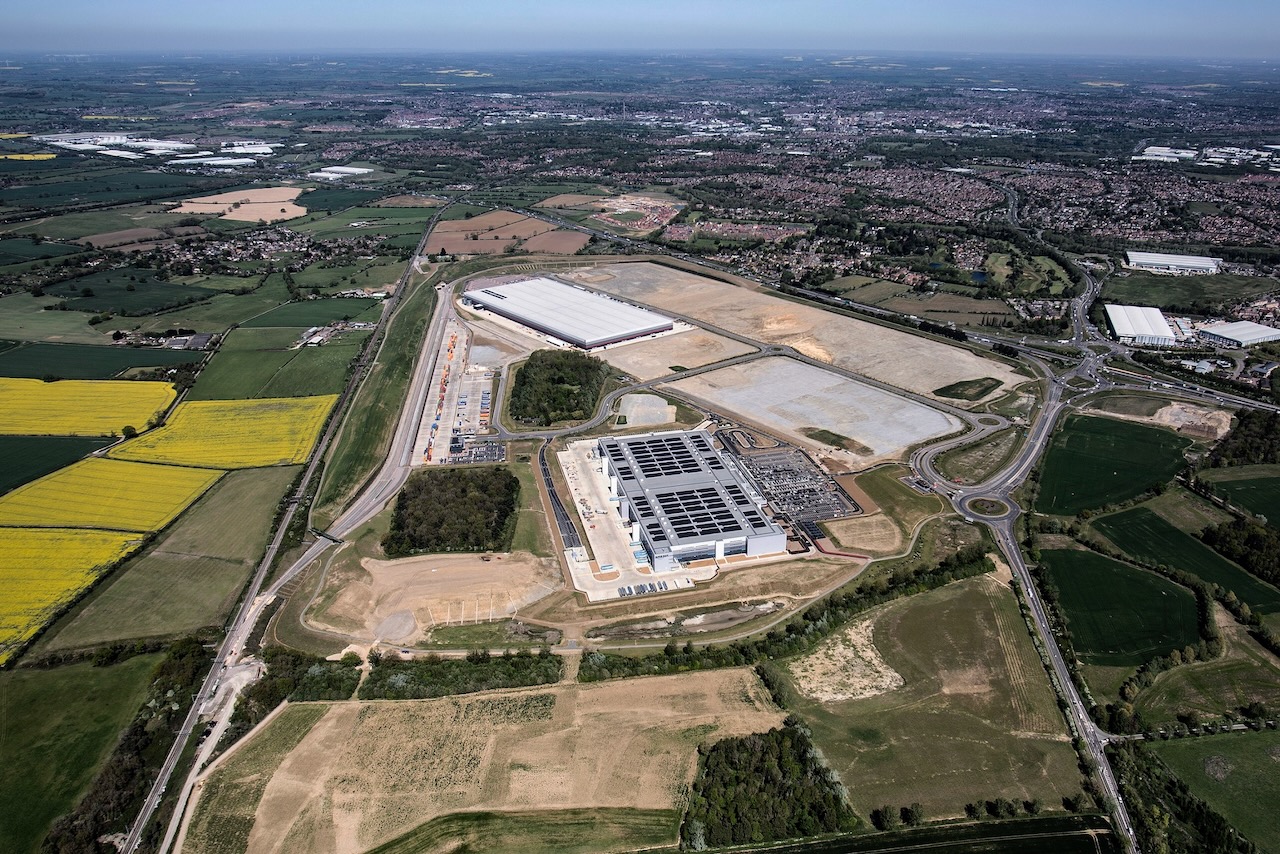
Winvic has completed five years of civils and infrastructure works at SEGRO Logistics Park Northampton, delivering a 2.6km Roade village bypass with bridge and roundabouts, major upgrades to M1 Junction 15 under complex traffic management, and extensive earthworks for the strategic rail freight interchange. The SRFI includes a 35-acre rail terminal, a 55,000m² intermodal and HGV slab, and a 170m tunnel shielding trains entering and leaving the terminal. Winvic also built a 2.3 million sq ft distribution centre and a 1.2 million sq ft BREEAM Excellent, EPC A, net-zero-in-construction facility, within a park masterplanned for up to 5 million sq ft and around 7,450 jobs.
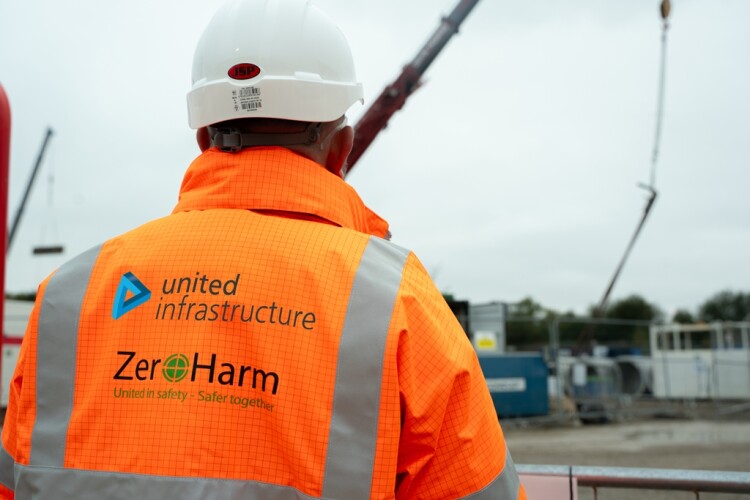
Revenues at United Infrastructure for the year to 31 March rose 17.8% to £845.8m, with EBITDA on continuing operations up 49% to £102.2m and cash profits before tax increasing to £49.6m. The contractor reported a £24bn gross pipeline across 754 opportunities, a £4.6bn order book and £1.7bn of new contract wins in the year. CEO Neil Armstrong linked growth to demand for decarbonisation, resilience, digital connectivity and power, water and data centre infrastructure tied to the UK’s energy transition.
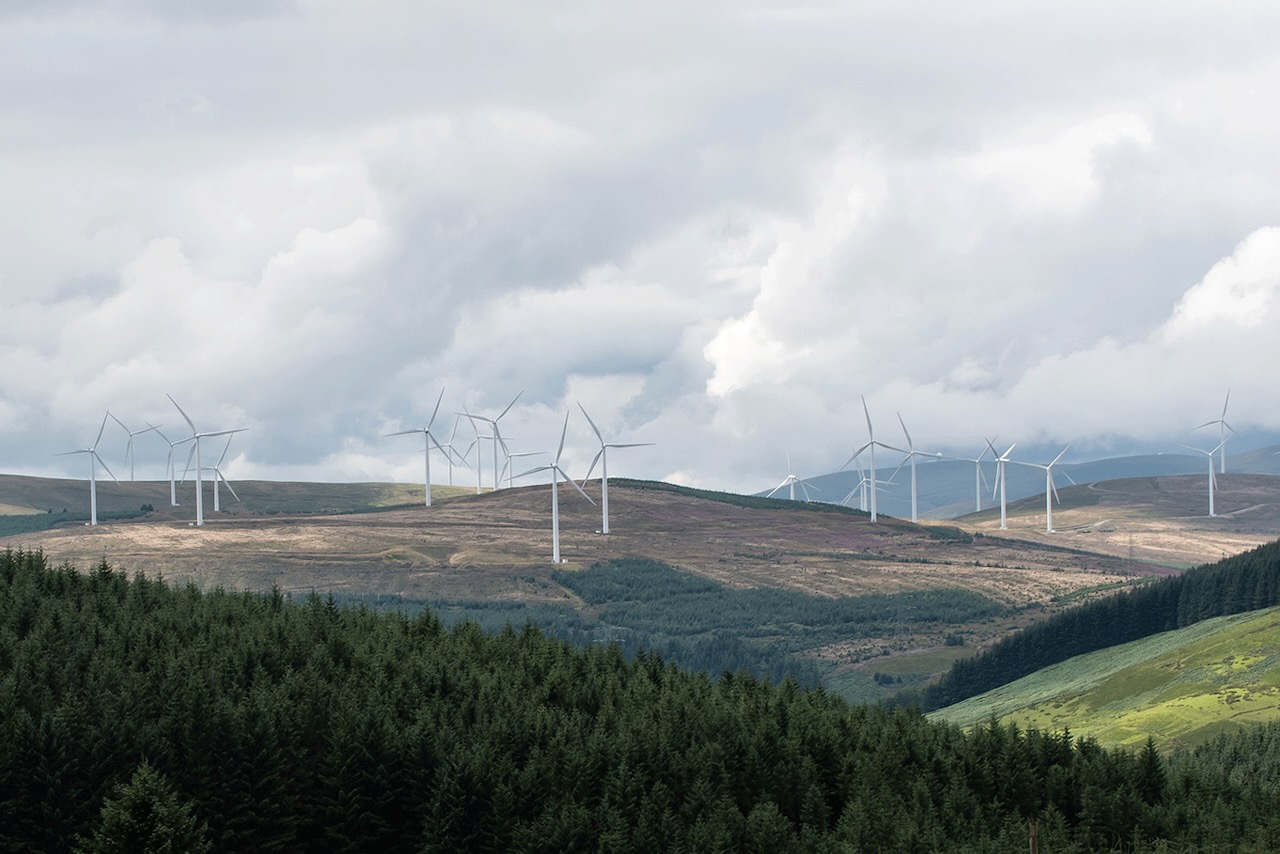
Natural Power has secured a new five-year operations and maintenance contract with ScottishPower Renewables covering four onshore windfarms in southern Scotland – Ewe Hill 1, Ewe Hill 2, Hagshaw Hill 2 and Wether Hill – alongside an extension at Black Law Windfarm. The work sits within ScottishPower Renewables’ latest O&M framework, a record £102.9m investment in the UK onshore wind supply chain. Natural Power is expanding engineering teams in Dumfries and Lanark, signalling sustained regional demand for turbine maintenance, balance-of-plant inspections and asset management expertise.
BAM reported first-half 2026 EBITDA up 36% to €240m, giving a 6.9% margin on a €12.6bn order book and guiding to full-year margins above 6.5% on stronger profitability across energy transition, Dutch residential and defence work. UK operations delivered revenue of €1,733m and EBITDA of €98m, up from €1,673m and €66m, supported by wins such as Wales High School, Royal School Wolverhampton, Huddersfield’s Our Cultural Heart Phase 2 and the Upper Thurne Pumping Stations project. A new plug-and-play compact substation, pending final certification, is expected to cut installation time by 75% and halve specialist labour needs, directly affecting grid-connection programmes.
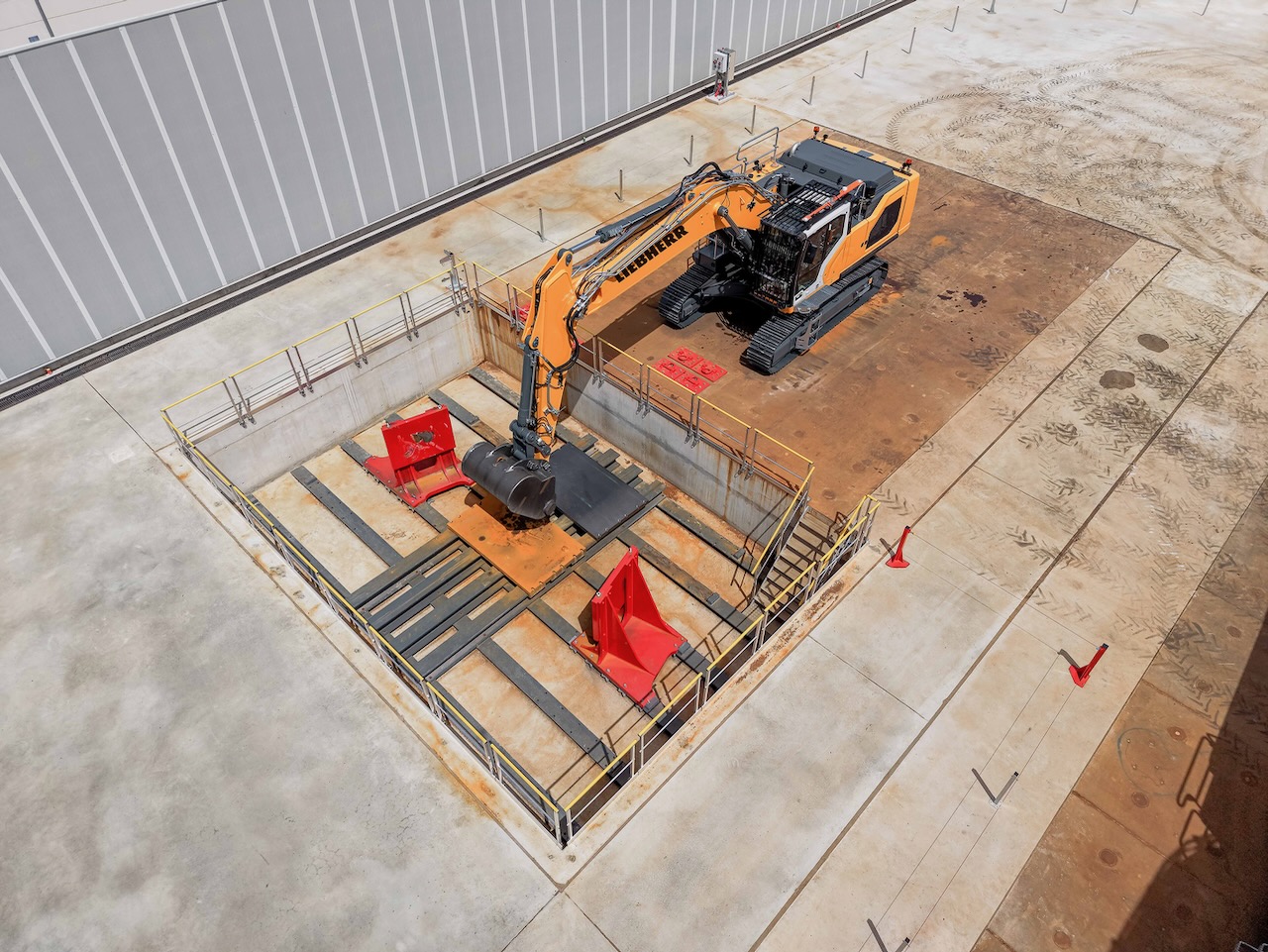
Liebherr France has invested €2.5m in a new accelerated test rig at its Colmar plant that can simulate crawler excavator working stresses at 17 times normal operating speed. The system subjects complete uppercarriage and undercarriage assemblies to cyclic loading to compress multi‑year fatigue, wear and structural integrity assessments into weeks rather than months. Data from the rig are also being used to develop and validate autonomous operation tools, including control algorithms and sensor packages, under repeatable high‑load duty cycles.