National Gas Project Union: design-phase risks and lessons for pipeline engineers
Reviewed by Tom Sullivan
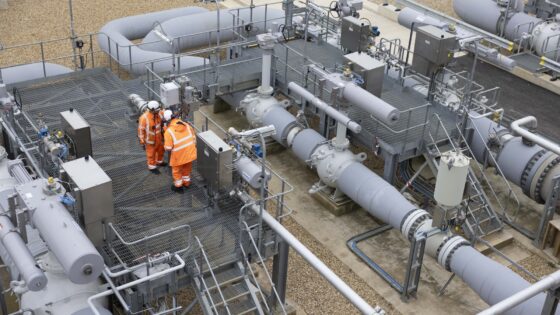
First reported on New Civil Engineer
30 Second Briefing
National Gas has advanced the proposed St Fergus–Teesside hydrogen pipeline, part of its 2,414km Project Union network, into the engineering design phase, moving beyond initial feasibility. The section will repurpose existing high-pressure natural gas transmission corridors where possible, with new buried steel pipe only where capacity or routing gaps exist. Designers must address hydrogen embrittlement, fracture control and compressor station modifications, signalling upcoming demand for materials testing, integrity assessment and geotechnical route optimisation along legacy pipeline alignments.
Technical Brief
- Alignment selection must interface with legacy gas assets, onshore terminals and multiple coastal landfall constraints.
- Design phase triggers detailed wayleave, easement and crossing negotiations with landowners and infrastructure operators.
- Buried pipeline works will require coordinated ground investigation across multiple local authority and utility jurisdictions.
- Integration with future UK hydrogen hubs means tie-in points and valve compounds need long-term capacity allowances.
- Lessons on repurposing gas corridors here are likely to inform subsequent Project Union phases nationwide.
Our Take
National Gas also appears in our coverage for an £11m cathodic protection upgrade at the Bacton Gas Terminal, signalling that integrity management of legacy steel assets is being tackled in parallel with new hydrogen infrastructure like Project Union.
Prepared by collating external sources, AI-assisted tools, and Geomechanics.io’s proprietary mining database, then reviewed for technical accuracy & edited by our geotechnical team.
Related Articles


Related Industries & Products
Mining
Geotechnical software solutions for mining operations including CMRR analysis, hydrogeological testing, and data management.
Construction
Quality control software for construction companies with material testing, batch tracking, and compliance management.
CMRR-io
Streamline coal mine roof stability assessments with our cloud-based CMRR software featuring automated calculations, multi-scenario analysis, and collaborative workflows.
HYDROGEO-io
Comprehensive hydrogeological testing platform for managing, analysing, and reporting on packer tests, lugeon values, and hydraulic conductivity assessments.
GEODB-io
Centralised geotechnical data management solution for storing, accessing, and analysing all your site investigation and material testing data.