Geomechanics, Streamlined.
© 2026 Geomechanics.io. All rights reserved.
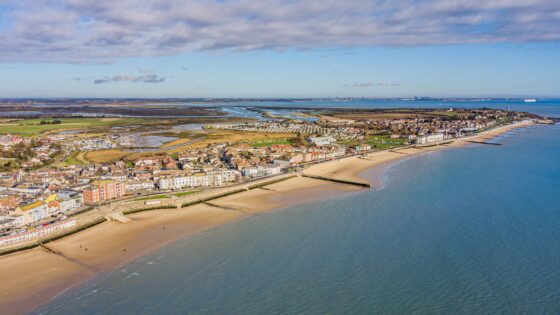
Barhale has secured an £18M contract to deliver a stormwater management scheme at Walton-on-the-Naze, Essex, aimed at bolstering coastal protection during severe weather events. The works will focus on upgrading local drainage and storage infrastructure to manage extreme rainfall and tidal conditions that threaten the low-lying Essex shoreline. For civil and geotechnical teams, the project signals further demand for robust coastal flood defences and high-capacity urban drainage in exposed estuarine environments.
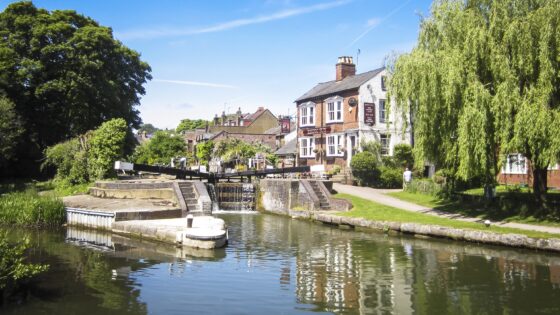
Members of Buckingham Canal Society are urging government agencies and Anglian Water to embed canal restoration into the Water Resources Management Plan 2029 (WRMP29), alongside large new reservoirs, transfer mains and treatment upgrades. They argue that historic waterways such as the Buckingham Canal can act as strategic water transfer corridors, seasonal storage and flood attenuation assets, supporting drought resilience and peak-flow management. For civil and water engineers, this would mean assessing canal embankments, lock structures and bed linings for modern hydraulic loads, leakage performance and integration with existing abstraction and discharge regimes.
Met Office and Department for Transport guidance sets out how UK transport operators should prepare for severe space weather disrupting GNSS navigation, HF/VHF communications and power-dependent signalling systems. The document targets aviation, rail, road and maritime networks, detailing operational responses to solar flares and geomagnetic storms, including use of backup timing sources, alternative navigation procedures and manual fallbacks for control centres. For civil and systems engineers, it signals a need to stress-test critical infrastructure and control systems against prolonged loss or degradation of satellite-based services.
UK energy transition projects face a growing risk from skills loss as experienced engineers in oil, gas and conventional power retire or exit faster than they are replaced. Design, construction and maintenance of offshore wind foundations, grid-scale battery systems and hydrogen-ready gas infrastructure depend heavily on legacy competencies in high-pressure pipelines, rotating machinery and grid stability analysis that are not being systematically transferred. For civil and geotechnical teams, this raises immediate resourcing and risk-management issues on complex assets such as subsea cables, converter stations and repurposed thermal power sites.
Major UK contractors and consultants have reshuffled senior leadership in July 2026, with several firms appointing new managing directors, technical directors and regional leads across transport, water and major projects. Moves include leadership changes on complex programmes such as multi‑billion‑pound rail upgrades, strategic highway corridors and large wastewater treatment expansions, where delivery hinges on geotechnical risk management and programme controls. For engineers, the appointments signal where key decision‑making power on procurement, digital design standards and ground engineering methodologies will sit over the next few framework cycles.
Edinburgh’s North Bridge has fully reopened to pedestrians and traffic after an eight‑year phased restoration that began in 2018, returning a key link between the Old and New Towns to full use. The Grade A‑listed, three‑span masonry and steel structure, originally completed in the 1890s, has undergone extensive deck, steelwork and waterproofing repairs along with stonework conservation and parapet upgrades. For civil and structural engineers, the project illustrates the complexity of maintaining traffic over a constrained urban site while refurbishing a heavily loaded historic bridge.
Greater Anglia faces accusations of ableism after a disabled passenger reported having to drag themselves up and down stairs at Stowmarket station because new lifts remain uncommissioned. The lifts, installed as part of an accessibility upgrade to the Network Rail-owned station, are physically in place but not yet operational pending final testing and approvals. The incident exposes a critical gap between completion of structural lift works and actual step-free access, with temporary arrangements evidently inadequate for mobility-impaired users.
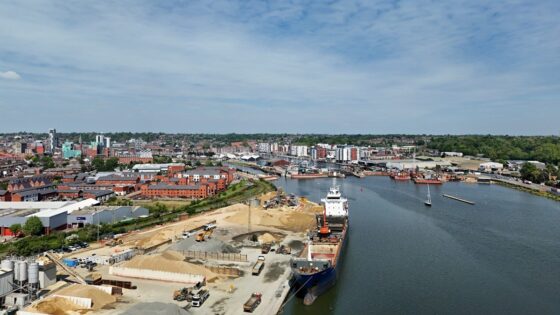
ABP, Brett and Tarmac are developing a tri-modal (road, rail and marine) logistics hub at the Port of Ipswich to feed construction materials to EDF’s Sizewell C nuclear project on the Suffolk coast. The hub will consolidate aggregates and cementitious materials for bulk shipment, reducing HGV movements on local roads by shifting high-volume loads to rail wagons and coastal vessels. For civil and materials teams on Sizewell C, this signals a tightly controlled supply chain with centralised quality control and stock management for concrete and backfill materials.
National Grid will invest £5M over five years to fund training and employment support for 5,000 young people, becoming one of the first major employers to back Prime Minister Andy Burnham’s overhaul of technical education. The programme is expected to target skills for power transmission, substation construction and grid connection projects, directly feeding labour into major UK infrastructure upgrades. For contractors and consultants, this signals a medium‑term pipeline of technician‑level talent aligned with emerging grid modernisation and decarbonisation workloads.
Russian state-supported cyber attackers have been targeting Western government and commercial organisations, including operators in the electricity, oil and gas sectors, according to UK and allied intelligence agencies. The activity, attributed to groups linked to the Russian state, focuses on compromising operational and corporate IT networks that interface with SCADA and other industrial control systems. For infrastructure owners, this raises immediate questions over network segregation, patching of legacy control hardware and resilience of critical assets such as substations, compressor stations and pipeline control centres.
Oxfordshire County Council has awarded Graham the final major contract in a multimillion-pound package to construct the Didcot–Culham road river crossing, intended to relieve congestion and unlock new housing growth around Didcot. The scheme forms part of a wider strategic transport corridor linking Didcot, Culham Science Centre and the A415, designed to improve journey times between the A34 and key employment sites. For civil and geotechnical teams, the project will involve river crossing foundations, floodplain works and integration with existing local road geometry and drainage.
Victoria-based contractor PAD Civil is deploying Komatsu earthmoving fleets integrated with Komatsu’s Smart Construction digital platform to deliver road, drainage and subdivision works across metropolitan and regional sites in Victoria. Machine control, in-cab 3D guidance and cloud-based progress tracking are being used to cut rework on bulk earthworks and trenching, tighten level tolerances on pavements and drainage grades, and reduce survey set-out time. For civil engineers and clients, the approach signals faster program delivery, better as-built data and more predictable costs on brownfield and greenfield infrastructure projects.
Victoria’s new G Class trams have entered service in Melbourne’s west, each carrying up to 150 passengers—about double the capacity of the Z and A class vehicles they will replace. The low-floor design includes dedicated spaces for wheelchairs and mobility aids, delivering step-free boarding at platform stops and reducing dwell times. For transport and civil engineers, the higher axle loads and longer vehicles will influence track wear, stop geometry and pavement design around tram corridors.
The New South Wales Government has allocated $230 million for 83 road safety upgrades within a $2.8 billion State Budget programme targeting high‑risk sections of the network. Works will include new safety barriers, rumble strips and shoulder widening, aimed at reducing run‑off‑road and head‑on crashes on rural and regional roads. Geometric improvements and containment systems will be critical design tasks for civil and geotechnical teams, particularly where shoulder widening interfaces with existing pavement structures and embankment stability.
Toll charges on several of Sydney’s major privately operated motorways will be cut following completion of pricing negotiations between the New South Wales Government and concession holders. The agreement covers key corridors such as WestConnex and other e‑toll network links, with changes aimed at simplifying the current multi‑operator tolling structure and making trip costs more predictable for regular commuters and freight. For road planners and traffic modellers, lower tolls and clearer pricing are likely to shift demand from parallel arterials, affecting congestion forecasts and maintenance planning.
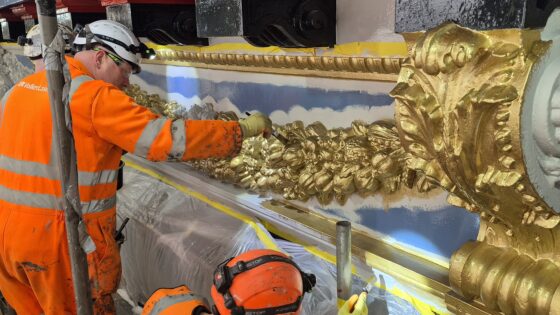
Major refurbishment of Edinburgh’s Grade A-listed, 120-year-old Kings Theatre by Robertson Construction Central East has upgraded the 1,125-seat, 9,184m² venue with a fly tower extended by 4.5 metres, a new level stage replacing the former rake, and hospitality capacity increased from 200 to 405. Accessibility works include lifts to every public floor, step-free “street to seat” and stage access, new wheelchair positions including in the Dress Circle, and accessible toilets plus a Changing Places facility on all levels. Back-of-house systems, stage technology and services have been completely renewed, while Edwardian plasterwork, stained glass, carved stone and John Byrne’s dome mural were carefully stabilised and restored 100 feet above the auditorium.
Graham has been appointed to deliver a £530m Passivhaus student accommodation scheme on the University of Manchester’s Fallowfield campus, providing 3,300 new rooms in what is billed as the world’s largest single-phase Passivhaus PBSA and the UK’s largest pre-cast MMC project. The 50-year partnership model with Equitix and pensions insurer Rothesay covers investment, development, construction and long-term operations, with Rothesay supplying the majority of funding. Phased delivery will see the first 1,000 rooms open in 2028, with full completion targeted for 2030 and an estimated social return approaching £250m.
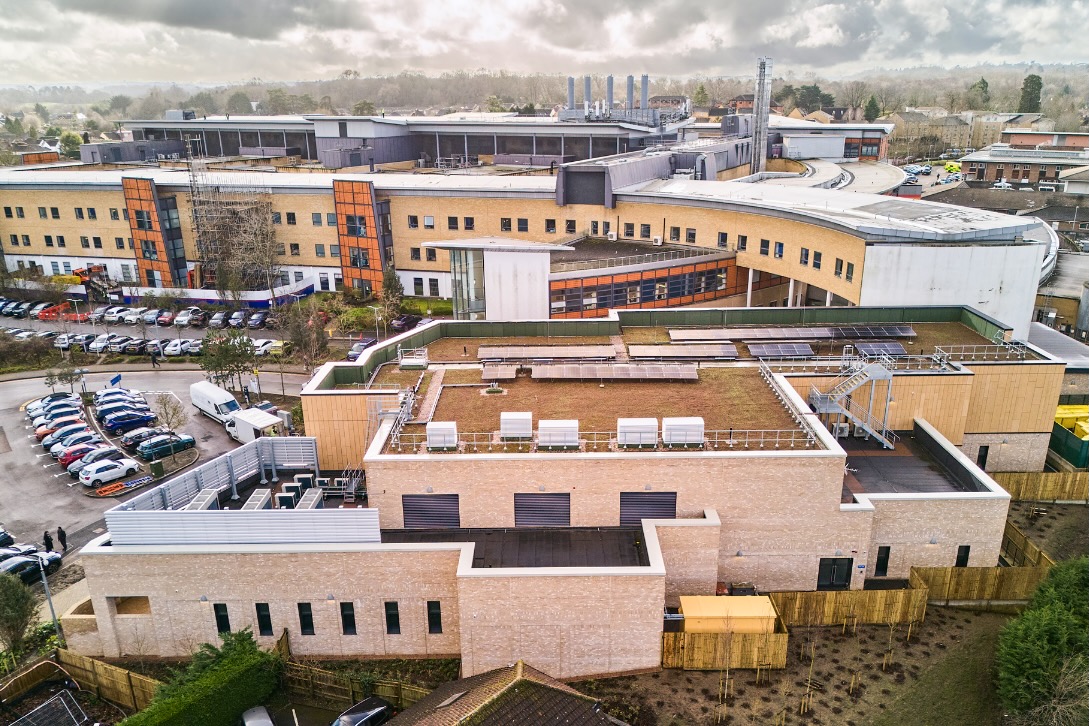
Perega has completed structural design for a new endoscopy centre at Princess Royal University Hospital, delivering first-floor slabs capable of supporting heavy clinical plant, including a large water tank, and integrating surgical pendant arms hung from the first-floor soffit. Floor plates were engineered for tight vibration sensitivity limits to maintain stability during delicate procedures. A 13 m suspended transfer structure using 1.4 m-deep, 2 m-wide concrete beams was installed at ground-floor level to bridge a limited-capacity underground tank, with retaining walls and pile layouts coordinated around multiple buried services.
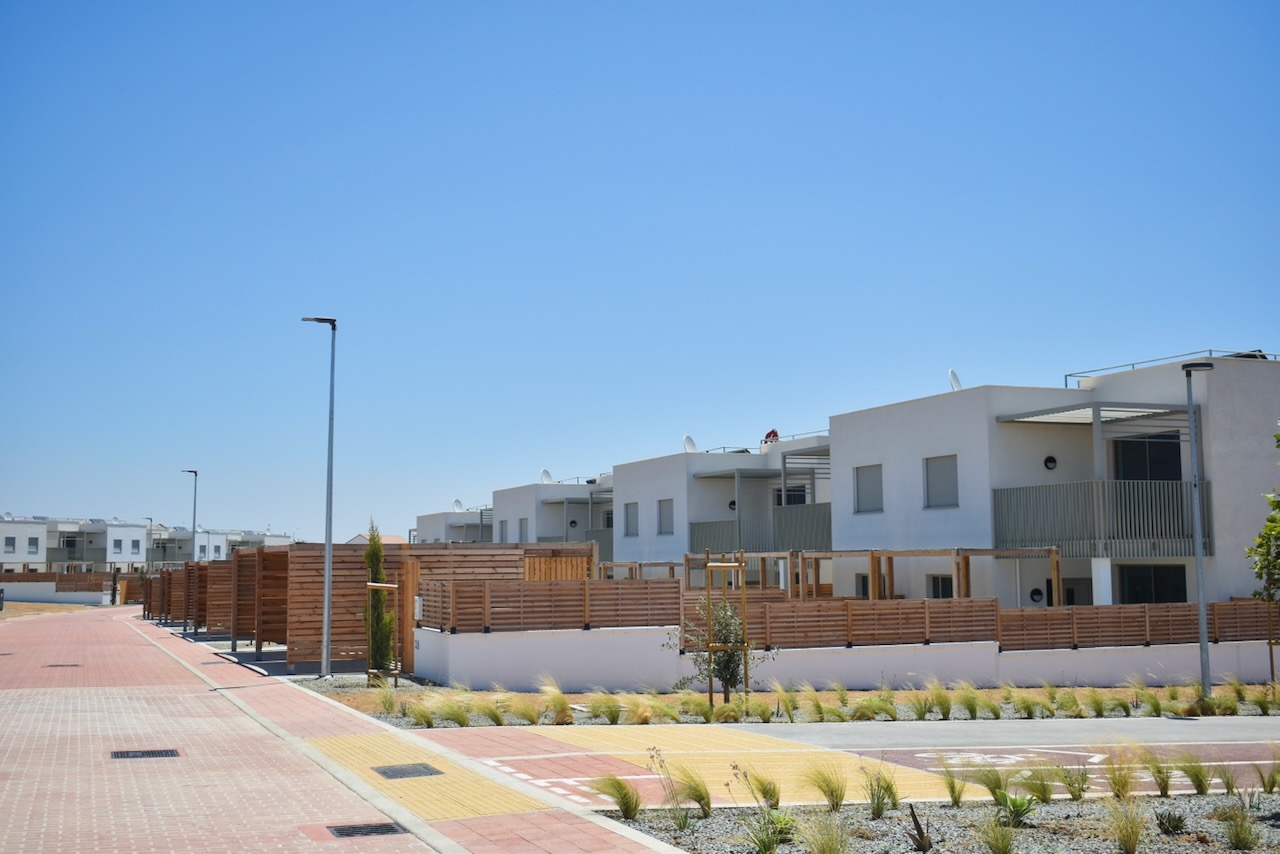
Completion of the first of 138 new service homes at Dhekelia Station in Cyprus by the Lagan Iacovou Joint Venture marks a key delivery milestone for the UK Defence Infrastructure Organisation and Cyber and Specialist Operations Command. The housing programme will replace ageing stock across the garrison with modern, energy‑efficient accommodation designed to UK defence estate standards for year‑round Mediterranean conditions. For civil and building engineers, the scheme signals sustained demand for robust, thermally efficient envelope design, resilient utilities, and low‑maintenance materials in overseas defence infrastructure.
Hillwood Investment Properties has secured a £76.4m development finance facility from Affinius Capital to deliver two speculative logistics schemes in Luton and east London. The Luton project comprises a Grade A, c.286,000 sq ft scheme of eight units in five buildings along the M1 corridor, aimed at institutional specification occupiers with direct access to Central London and the Midlands. In Canning Town (E16), the funding backs a c.43,659 sq ft freehold last‑mile warehouse, with both sites targeting BREEAM Excellent, signalling strong demand for high‑spec urban logistics space.
Southern Cranes & Access has added a 300-tonne Liebherr LTM 1300-6.4 with an eight-section 90-metre boom, 120-metre maximum hook height and 94-metre radius, roadable at a 12-tonne axle load, plus LICCON3 controls, VarioBase Plus and VarioBallast for tighter urban sites. A 150-tonne LTM 1150-5.3 brings a 66-metre boom, up to 92-metre hook height using a seven-metre extension, and carries 29 of its 45 tonnes of counterweight under UK STGO rules, cutting support transport. The 150-tonner is already working in London, including a “pin drop” lift at the Southbank Centre’s 75th anniversary.
Innovation agency Connected Places Catapult is inviting UK-registered SMEs with deployment-ready diesel-free construction plant or site power solutions to trial them on live Strategic Pipeline Alliance sites with Costain and Anglian Water. Up to four firms will receive up to £60,000 each for four-month demonstrations, plus access to site data, industry experts and tailored commercial support to build quantified evidence of on-site performance. The initiative targets proven alternatives to conventional diesel excavators, generators and ancillary equipment, aiming to de-risk client procurement and accelerate wider fleet transition.
Currie & Brown has appointed Mike Bull as head of infrastructure for England and Wales, with a remit to grow project and programme management work in regions outside London and the South East. Bull brings 23 years’ experience from roles including strategy and programme director at Midlands Connect and leadership positions on the Midlands Rail Hub, HS2 Phase 2b between Manchester and Birmingham, and motorway investment programmes. Currie & Brown signals a push to support clients on investment decisions, risk management and business case development across major transport and network schemes.
The Department of Health and Social Care has named construction partners for 11 new NHS hospitals under the standardised Hospital 2.0 programme, including Graham for Airedale, Willmott Dixon for Royal Cornwall, Laing O’Rourke for Hillingdon, Skanska for James Paget and Queen Elizabeth King’s Lynn, and a Vinci–Sir Robert McAlpine JV for Leighton. Further awards go to Kier for Hinchingbrooke, Sacyr UK for Frimley, Morgan Sindall for Milton Keynes, Bovis for Manchester, and Dragados for West Suffolk. Standardised design and repeatable components are intended to shorten procurement and delivery cycles and give contractors clearer forward workload visibility.