SANY telehandlers distributed by CEA across Australia now integrate a 360-degree Pedestrian Recognition System that uses cameras and AI to detect people in blind spots created by the boom and attachment. The system provides real-time visual and audible alerts around the full machine envelope, targeting typical collision risks in tight construction, infrastructure and materials-handling sites. For fleet owners and contractors, the technology supports proactive exclusion-zone management and incident reporting, particularly on mixed-traffic sites where telehandlers work alongside ground crews and delivery vehicles.
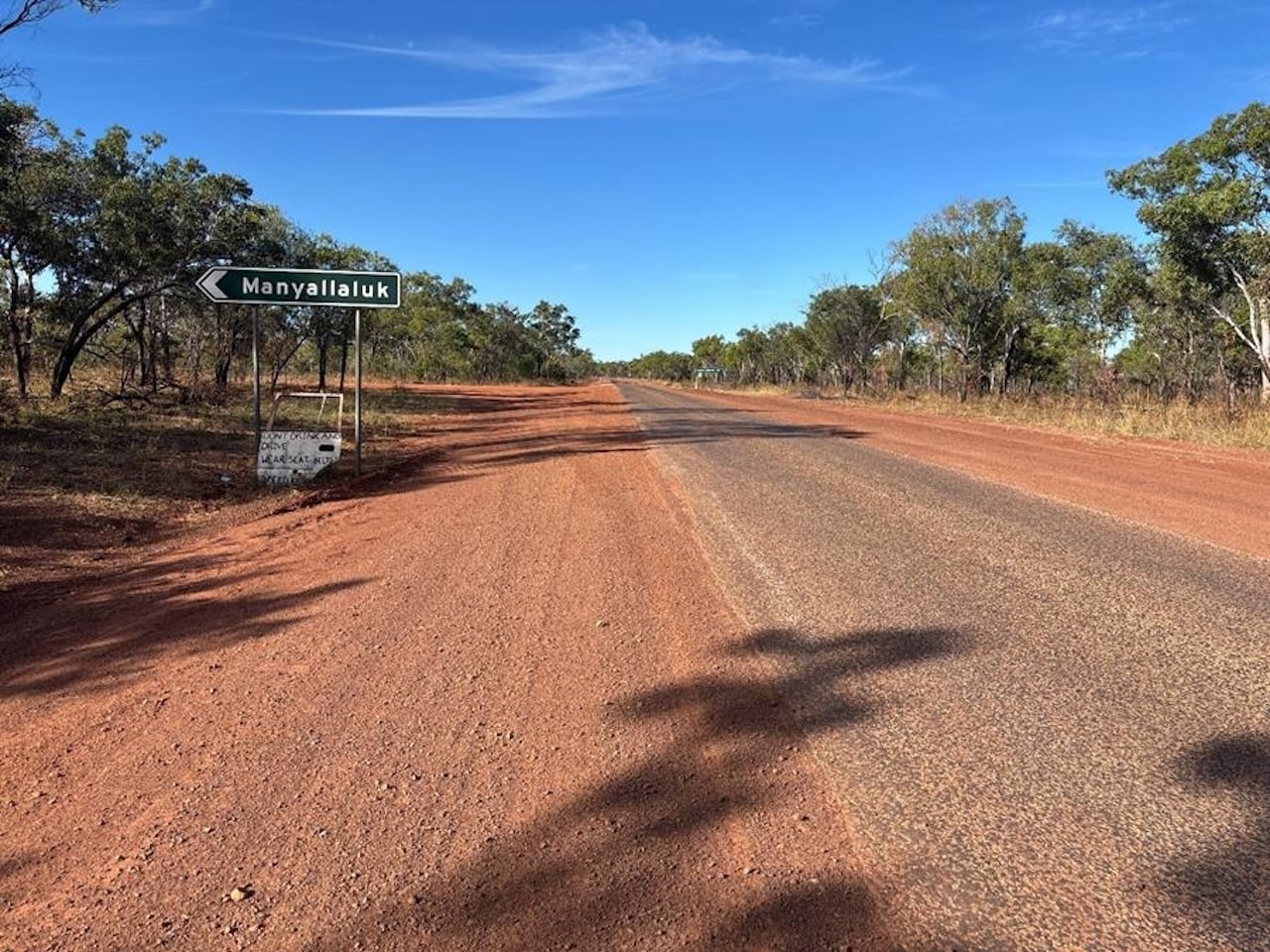
A $21 million contract has been awarded to upgrade sections of the 645‑kilometre Central Arnhem Road, which links Nhulunbuy to the Stuart Highway and services multiple Aboriginal communities. Works will focus on strengthening and sealing priority unsealed segments that currently constrain heavy freight for mining and pastoral operations and limit all‑weather access. For geotechnical and pavement engineers, the project signals further demand for robust designs on expansive clays and flood‑prone formations typical of remote Northern Territory corridors.
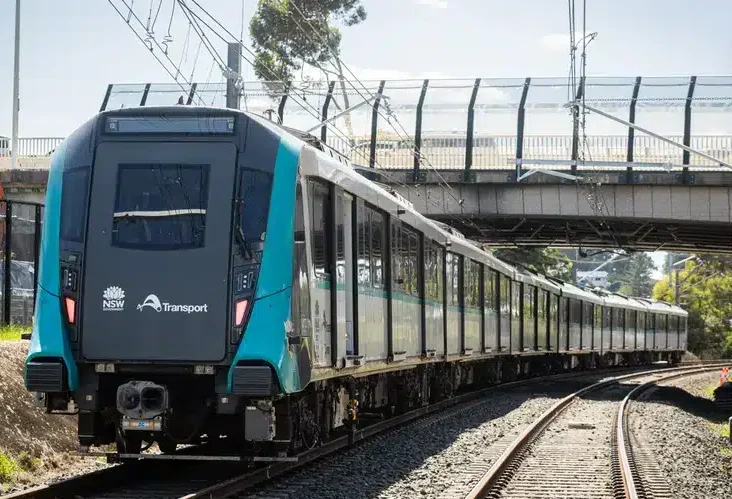
Final testing of driverless trains is underway on Sydney’s Southwest Metro, converting the 125-year-old T3 Bankstown heavy rail line into a fully automated rapid transit corridor between Sydenham and Bankstown. The trial period is stress‑testing the integrated signalling, platform screen doors and new power systems across the full length of the connected line before handover to Metro Trains Sydney. For civil and rail engineers, the project is a major brownfield conversion case study in upgrading legacy track, stations and structures to metro‑grade headways and safety systems.
Applications have opened for $50 million in Federal funding for new or upgraded cycling and walking paths, drawn from Australia’s $500 million Active Transport Fund. The program will support design and construction of separated bike lanes, shared-use paths and pedestrian links over a 10‑year period, as outlined in the 2026–27 Budget. Councils and state road agencies can now bid for projects that close missing links, retrofit corridors alongside arterial roads and improve grade-separated crossings, with co‑funding and deliverability likely to be key assessment criteria.
Yorkshire Water has appointed Egis to Lot 1 of its £80m AMP8 technical services and assurance framework, a multi-year contract starting 1 July and running to 2030 with options to extend to 2032. Lot 1, worth a combined £12.7m, will see Egis deliver project-level engineering and design services across civil, mechanical and electrical disciplines, including feasibility testing, optioneering and construction support for critical infrastructure upgrades. The work targets long-term asset health and environmental performance across Yorkshire’s water and wastewater networks.
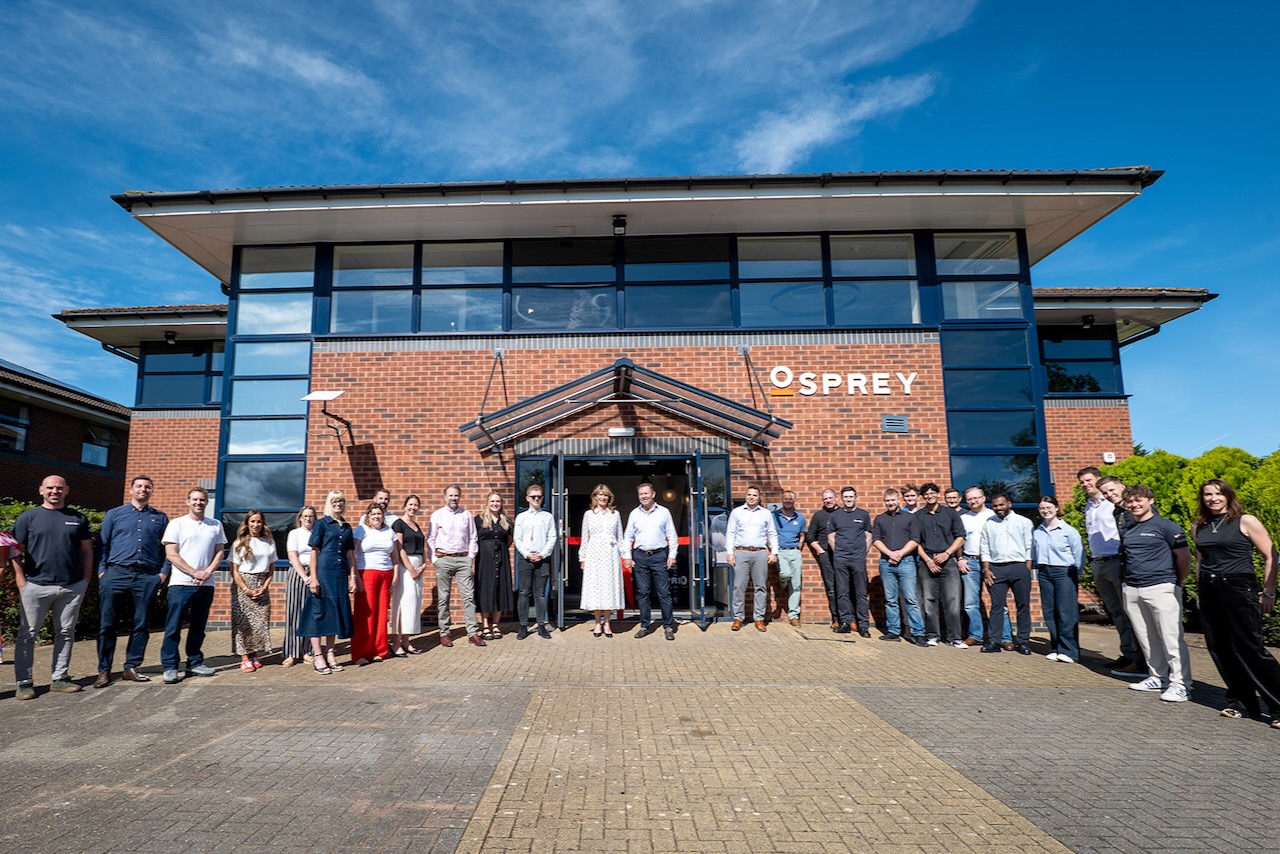
Osprey has opened a new headquarters in Portishead, consolidating its engineering, heavy transport, marine operations and project delivery teams to support integrated, engineering-led transport and installation planning for complex infrastructure, energy and defence projects. The expanded facility is positioned to handle continued growth in abnormal load movements, marine logistics and multi-modal heavy lift operations from a single hub. Proximity to universities and colleges in Bristol and North Somerset underpins the Osprey Skills Academy, targeting students, graduates and early‑career professionals for specialist project cargo and heavy engineering roles.
Muir Group reported a 30% rise in turnover to £113.9m for the year to January 2026, with profit before tax exceeding £3m. Muir Construction was the main driver, delivering £85.7m of segment turnover and more than doubling profit before tax from £2.2m to £4.8m. The figures signal strong demand in its construction pipeline, giving the contractor greater headroom for bidding, risk management and investment in project delivery capacity.
The Association for Environment Conscious Building has appointed architect and decarbonisation specialist Ste Garlick as CEO and business leader Chris Iredale as COO under a dual fractional leadership model, allowing both to retain external roles. Garlick, strategic and advisory lead for decarbonisation and retrofit at BDP, will focus on evidence-based building performance, retrofit and collaboration across the AECB’s growing membership. Iredale, who previously scaled a manufacturing business to over £9m turnover and delivered 38% direct sales growth for a construction group, will drive operational development, governance and organisational growth.
Pinnacle Group has appointed Zen Housing to manage 60 intermediate rent apartments at Market House within the Camden Goods Yard redevelopment near Chalk Farm and Primrose Hill, drawing over 600 priority applications for the units. The agreement takes Pinnacle’s management portfolio on behalf of Zen to 400 homes, consolidating a pipeline that now includes 85 recently handed-over units in New Malden and a further 60 due shortly. For housing and regeneration teams, the scheme signals sustained demand for mid-market rental in high-value London locations and growing roles for for‑profit registered providers.
Caddick Construction has been appointed principal contractor to design and build a four-storey Big Yellow Self Storage facility on Scotswood Road, Newcastle, providing 60,000 net sq ft of internal storage plus customer loading bays, staff welfare, office and reception areas. The scheme includes roof-mounted solar PV, on-site battery storage, car parking, landscaping and external works, and is targeting BREEAM ‘Very Good’ on completion in summer 2027. The contract forms part of Caddick’s £127m regional workload since opening its Durham office in 2025, alongside projects such as the DPD parcel hub at Newton Aycliffe.
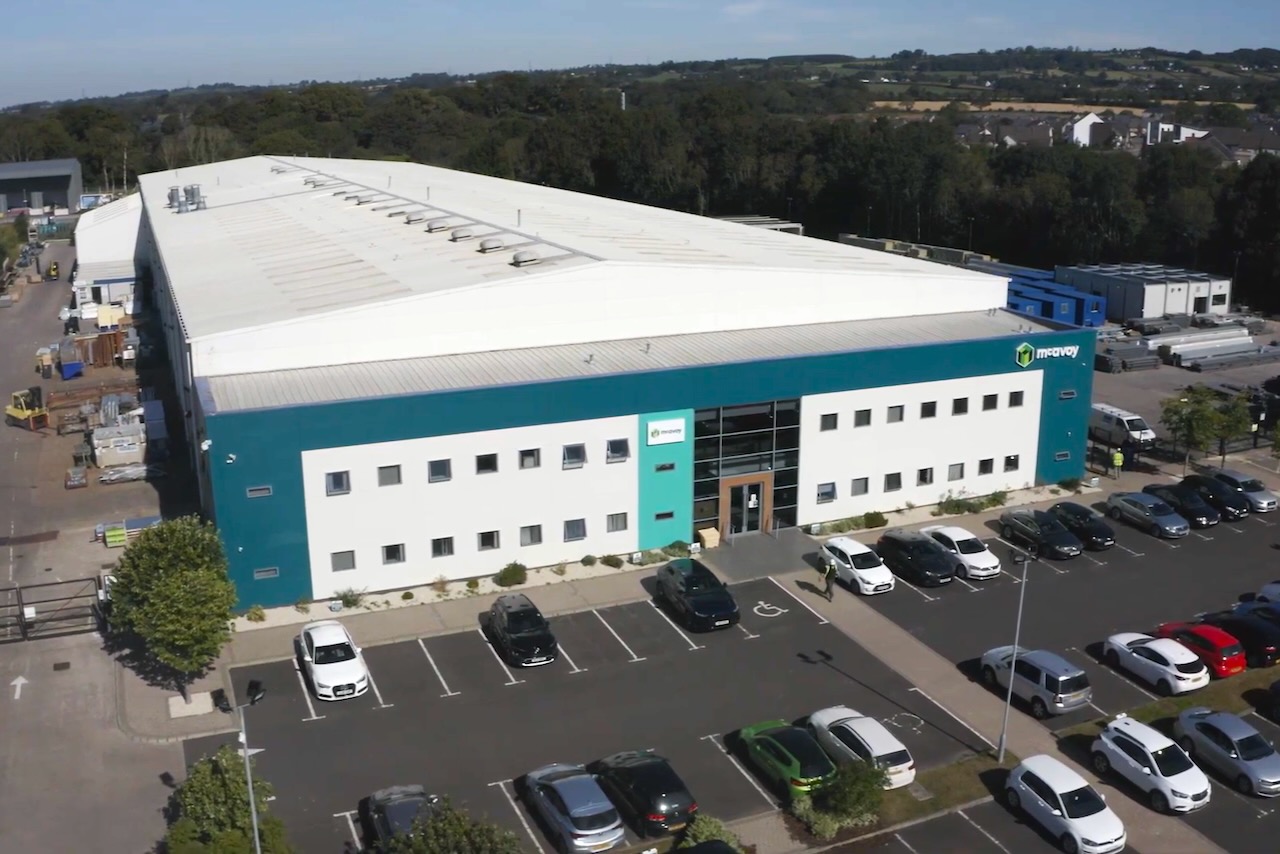
Modular building specialist McAvoy has been appointed to the Everything Estates framework, giving UK public sector, devolved administrations and third-sector clients direct-award access to its offsite manufactured building solutions. The framework enables estates teams to procure factory-built interim or permanent accommodation that is delivered to site for rapid installation, helping address capacity pressures and replacement of ageing facilities on constrained, operational campuses. McAvoy says the controlled factory environment improves programme certainty and quality, which will appeal to clients managing tight timelines and live-site disruption risks.
The University of Hertfordshire has appointed CBRE to deliver integrated facilities management across its 1.8m sq ft campus, covering technical maintenance, cleaning, horticulture, waste and pest control. Services will run on an integrated, data-led computer-aided facilities management and helpdesk platform, with BMS-driven energy strategies to optimise building performance and campus operations. CBRE will also create an on-site campus ambassador role and provide 320 hours of student work experience annually, feeding into its Next Generation talent scheme.
Sphere has completed and handed over One Eastside, a 51-storey build-to-rent tower and Birmingham’s tallest skyscraper, to Pension Insurance Corporation, delivering 667 rental apartments plus co-working and amenity space on a remediated brownfield site. Construction used £15.7m of locally sourced materials, created 87 local jobs and 11 apprenticeships, with 61% of labour drawn from the surrounding area. The scheme incorporates new green space, on-site renewable energy infrastructure and the planting of 620 trees under the One Eastside Forest initiative to offset resident move-in emissions.
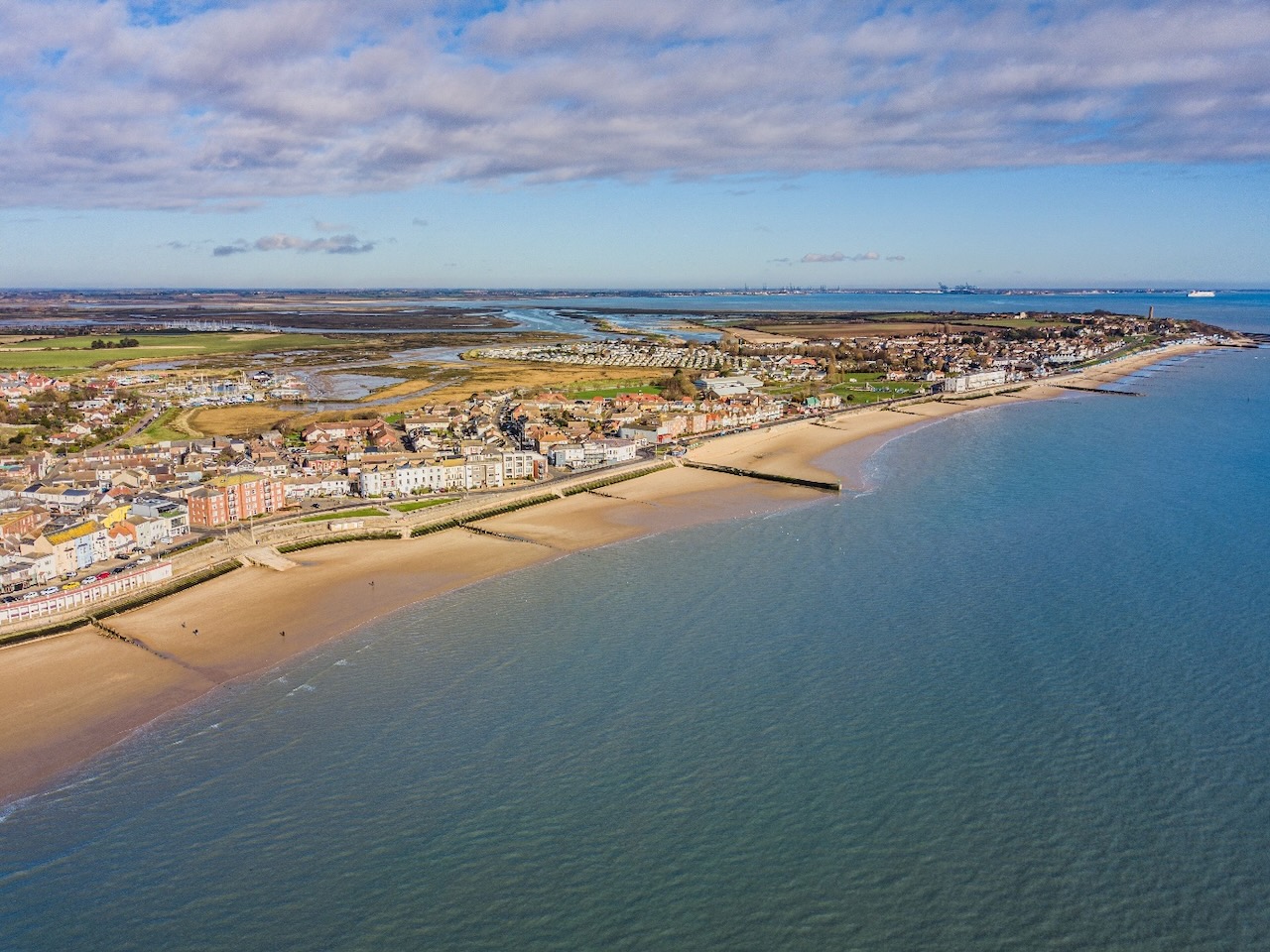
Anglian Water has appointed Barhale as principal contractor for an £18m stormwater scheme at Walton-on-the-Naze, centred on a new 5,000m³ “pill shaped” storm tank built in diaphragm wall construction adjacent to the existing terminal pumping station. The tank geometry is designed to avoid an existing aquifer and sewer, with excavation from within the wall to minimise the footprint on a constrained coastal site. Additional storage will be linked to the current tank via an 84m, 1,200mm concrete jacked pipeline installed by microtunnelling to manage extreme rainfall events and protect bathing water quality.
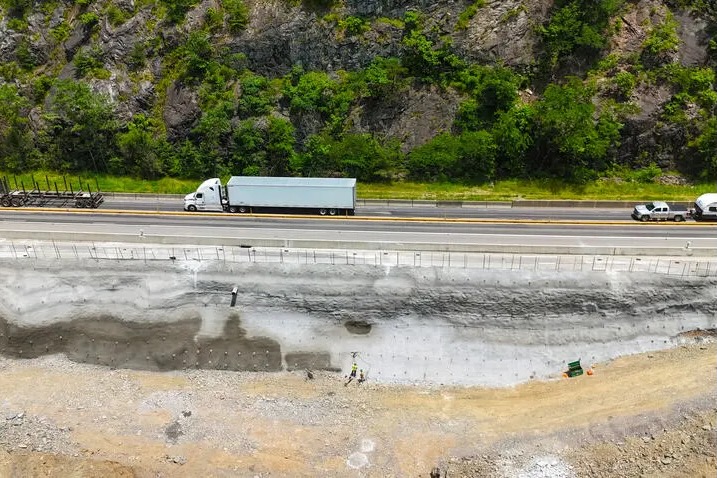
Geotechnical contractor Keller reported first-half 2026 revenue up 11% to £1,608m and underlying operating profit up 17.1% to £117.9m, driven by record North American volumes. Strong demand from interstate infrastructure and hyperscale data centre foundations, including an expanded ground engineering contract on the I-40 corridor, pushed the order book to a record £1.9bn, up from £1.6bn year-on-year. Margin and profit growth were strongest in the Middle East, and management signalled confidence in meeting recently upgraded full-year expectations.
Network Rail has begun a £3.6M restoration of the historic Avon Viaduct near Linlithgow, a key masonry rail structure on the Edinburgh–Glasgow main line. Works are expected to focus on repairing weathered stonework, repointing mortar joints and upgrading drainage to manage water ingress through the multi-span arches. For geotechnical and structural teams, access planning, scaffold foundations in the river corridor and careful load management under live rail traffic will be central to construction methodology.
HS2 Ltd has confirmed it has “successfully” renegotiated two main works civil engineering contracts as part of its programme-wide reset of Phase One delivery. The revised deals affect major earthworks, viaducts and tunnelling packages on the central section, where contractors have been grappling with inflation, changing scope and complex ground conditions. Engineers should expect rebaselined construction schedules, tighter cost controls and potential redesign or resequencing of key assets such as cuttings, embankments and bored tunnels.
Judges have refused campaigners permission to appeal the High Court decision backing Gatwick Airport’s plans to convert its existing northern runway into a routine second runway. The ruling leaves in place development consent for reconfiguring the 2,565m standby strip to allow dual-runway operations alongside the 3,316m main runway, increasing declared capacity without building a new strip. For civil and geotechnical teams, the decision clears a major legal hurdle for associated taxiway works, pavement strengthening, and airfield infrastructure upgrades.
Western Australia has allocated $10 million to complete detailed planning and approvals for the new METRONET Karnup Station on the Mandurah Line, with construction targeted to start in 2028. The project, previously deferred in favour of the now-operational Lakelands Station, will add an infill station between Warnbro and Mandurah to serve the rapidly growing southern coastal suburbs. Early work will focus on rail alignment interfaces, station access and parking layouts, and integration with surrounding road upgrades and bus interchanges.
JLG Industries has launched a new range of hybrid lighting towers for Australian construction and road projects, powered by LiFePO4 lithium batteries paired with a Kubota Z482 diesel engine. The units are designed to illuminate shaded structures during the day and extend safe working hours at night, targeting sites where 24/7 operations, traffic staging or night paving are required. For contractors, the hybrid setup promises lower fuel burn, reduced noise and emissions, and more flexible deployment on constrained or urban work zones.
Barhale has secured an £18M contract to deliver a stormwater management scheme at Walton-on-the-Naze, Essex, aimed at bolstering coastal protection during severe weather events. The works will focus on upgrading local drainage and storage infrastructure to manage extreme rainfall and tidal conditions that threaten the low-lying Essex shoreline. For civil and geotechnical teams, the project signals further demand for robust coastal flood defences and high-capacity urban drainage in exposed estuarine environments.
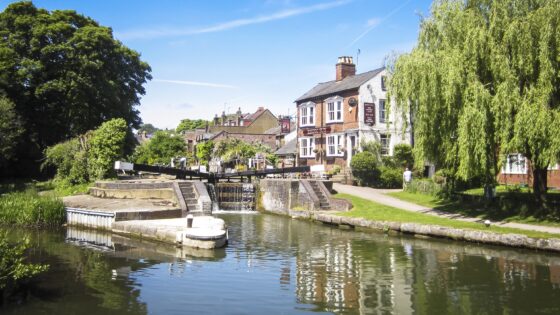
Members of Buckingham Canal Society are urging government agencies and Anglian Water to embed canal restoration into the Water Resources Management Plan 2029 (WRMP29), alongside large new reservoirs, transfer mains and treatment upgrades. They argue that historic waterways such as the Buckingham Canal can act as strategic water transfer corridors, seasonal storage and flood attenuation assets, supporting drought resilience and peak-flow management. For civil and water engineers, this would mean assessing canal embankments, lock structures and bed linings for modern hydraulic loads, leakage performance and integration with existing abstraction and discharge regimes.
Met Office and Department for Transport guidance sets out how UK transport operators should prepare for severe space weather disrupting GNSS navigation, HF/VHF communications and power-dependent signalling systems. The document targets aviation, rail, road and maritime networks, detailing operational responses to solar flares and geomagnetic storms, including use of backup timing sources, alternative navigation procedures and manual fallbacks for control centres. For civil and systems engineers, it signals a need to stress-test critical infrastructure and control systems against prolonged loss or degradation of satellite-based services.
UK energy transition projects face a growing risk from skills loss as experienced engineers in oil, gas and conventional power retire or exit faster than they are replaced. Design, construction and maintenance of offshore wind foundations, grid-scale battery systems and hydrogen-ready gas infrastructure depend heavily on legacy competencies in high-pressure pipelines, rotating machinery and grid stability analysis that are not being systematically transferred. For civil and geotechnical teams, this raises immediate resourcing and risk-management issues on complex assets such as subsea cables, converter stations and repurposed thermal power sites.
Geomechanics, Streamlined.
© 2026 Geomechanics.io. All rights reserved.