Southwest Metro trial in NSW: brownfield conversion lessons for rail engineers
Reviewed by Tom Sullivan
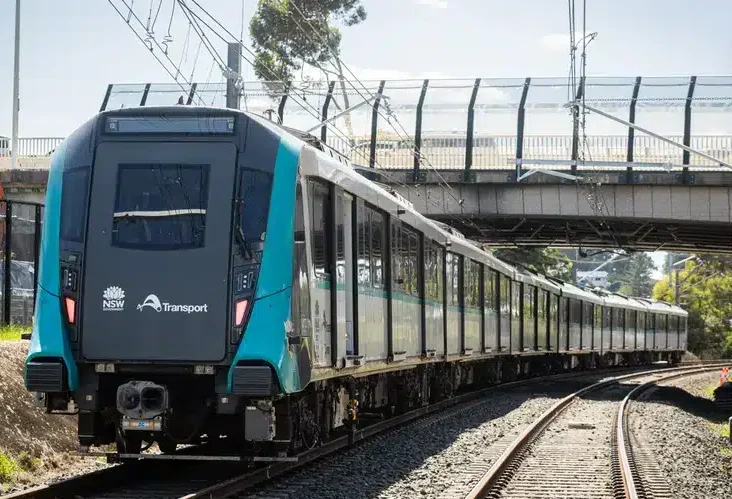
First reported on Roads & Infrastructure (AU)
30 Second Briefing
Final testing of driverless trains is underway on Sydney’s Southwest Metro, converting the 125-year-old T3 Bankstown heavy rail line into a fully automated rapid transit corridor between Sydenham and Bankstown. The trial period is stress‑testing the integrated signalling, platform screen doors and new power systems across the full length of the connected line before handover to Metro Trains Sydney. For civil and rail engineers, the project is a major brownfield conversion case study in upgrading legacy track, stations and structures to metro‑grade headways and safety systems.
Technical Brief
- Trial operations are being used as a live systems integration test for the converted Southwest Metro corridor.
- Trial runs are exercising timetable, signalling, rolling stock and station systems concurrently under near-service conditions.
- Safety validation focuses on how the entire connected network behaves as a single operational system.
- Testing is occurring on an in-service legacy corridor, adding brownfield interface and staging risks to manage.
- Results from the trial will inform final safety cases and regulatory approvals before passenger operations.
- Lessons from this brownfield conversion are directly applicable to other Australian heavy-rail-to-metro upgrades.
Our Take
In our database, Sydney Metro features across multiple 2026 items, indicating that the Southwest Metro project on the T3 Bankstown line is progressing in parallel with major works on the Sydney Metro West corridor rather than as a standalone upgrade.
The related July 2026 testing coverage for Southwest Metro suggests Metro Trains Sydney is moving through a compressed sequence of trial, full-line testing and handover, which typically tightens the window for resolving safety and reliability defects before passenger operations.
With Sydney Metro West packages concurrently awarded to Gamuda Engineering and design JVs like Jacobs–GHD–WSP, the New South Wales programme is locking in a long-term ecosystem of contractors and operators that will likely standardise systems and safety practices across multiple automated lines.
Prepared by collating external sources, AI-assisted tools, and Geomechanics.io’s proprietary mining database, then reviewed for technical accuracy & edited by our geotechnical team.
Related Articles


Related Industries & Products
Construction
Quality control software for construction companies with material testing, batch tracking, and compliance management.
Mining
Geotechnical software solutions for mining operations including CMRR analysis, hydrogeological testing, and data management.
CMRR-io
Streamline coal mine roof stability assessments with our cloud-based CMRR software featuring automated calculations, multi-scenario analysis, and collaborative workflows.
HYDROGEO-io
Comprehensive hydrogeological testing platform for managing, analysing, and reporting on packer tests, lugeon values, and hydraulic conductivity assessments.
GEODB-io
Centralised geotechnical data management solution for storing, accessing, and analysing all your site investigation and material testing data.