Geomechanics, Streamlined.
© 2026 Geomechanics.io. All rights reserved.
Plans for a £1bn fleet of British-built battery-electric trains for the Transpennine Route Upgrade signal a shift towards discontinuous electrification with on-board energy storage bridging unelectrified gaps. The proposal would allow zero-emission running through sensitive sections such as long tunnels and constrained urban corridors where full overhead line equipment is difficult or costly to install. For civil and rail engineers, this supports leaner electrification designs, reduced substation and feeder requirements, and potentially lower clearance interventions on legacy structures.
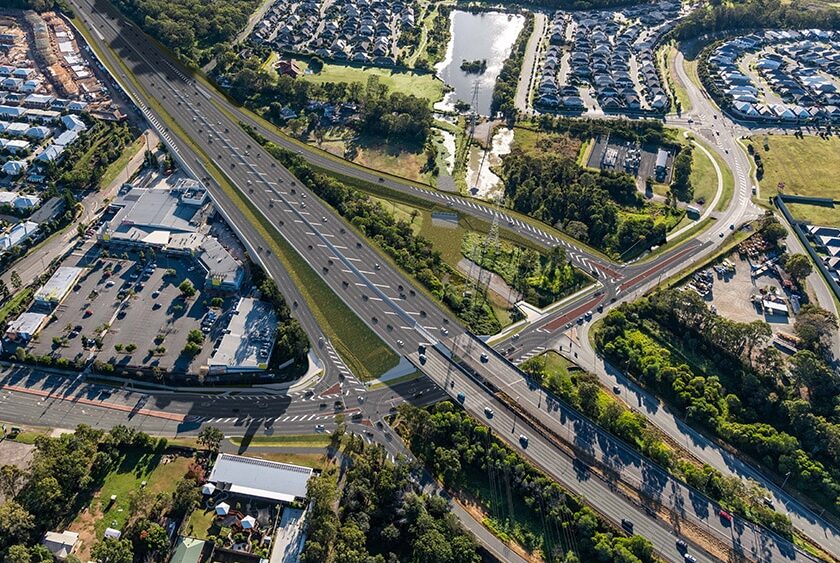
Safety upgrades on Queensland’s Bruce Highway have been completed at the Barton Road intersection at Kolonga, north of Gin Gin, with new turning facilities and reconfigured approaches to reduce conflict points. Works focus on safer right- and left-turn movements on and off the highway and improved sight distances for through traffic, addressing a known rural intersection risk profile. For designers and contractors, the project signals continued priority on low-cost, high-impact treatments on high-speed two-lane highways rather than major realignments.
The Federal Government has appointed Professor Eva Hanly and Christopher Rayner to the High Speed Rail Authority Board, strengthening governance for the planned Sydney–Newcastle high-speed corridor. Hanly brings nearly 30 years’ experience in procuring, delivering and operating complex transport, mining and energy infrastructure, including major PPP-style projects and multi-billion-dollar linear assets. Their appointments signal upcoming decisions on corridor protection, staging and procurement strategy that will shape geotechnical investigation programmes, interface with existing rail, and long-lead materials and construction planning.
Vinci Energies has acquired CDD Automation Solutions from the Bühler Group, adding a 32-strong systems integration team specialising in bespoke control systems for Rockwell Automation, Siemens and AVEVA industrial platforms in food and feed plants. The deal brings CDD, founded in 1981 and part of Bühler since 1991, into Vinci Energies’ UK and Ireland ecosystem of more than 230 control systems specialists. Vinci Energies plans to use the acquisition to expand advanced process optimisation, energy efficiency and manufacturing resilience services, while Bühler refocuses on its core plant and equipment offering.
Groundworks and civils contractor M&J Evans Construction reported 2025 turnover up 15% to £374.3m, with operating profit rising 70.2% to £8.7m and profit before tax more than doubling to £8m. The figures follow a period of rapid expansion in residential and infrastructure groundworks, where the company delivers bulk earthworks, foundations and drainage packages for major housebuilders and developers. Stronger margins at this scale signal continued demand for large-volume enabling works and may support more aggressive bidding on complex, multi-phase sites.
BAM UK & Ireland has completed the £23m Eastern Entrance at Bristol Temple Meads, extending the existing passenger subway beneath platforms 13 and 15 to connect directly into the new Temple Quarter development. The works, carried out through existing structures within the Grade I-listed station and alongside an operational railway and the adjacent Sloane Robinson Building, are designed to handle around 2.5m passengers a year by 2030. The entrance forms part of wider Temple Quarter plans for 10,000 new homes and 22,000 jobs, reshaping access and pedestrian flows on the eastern side of the station.
AECOM and Jacobs have been appointed by Transport Infrastructure Ireland, with support from Ramboll and Nicholas O’Dwyer, to deliver MetroLink, Dublin’s first fully segregated metro railway. The predominantly underground, high-capacity, high-frequency line will run from Swords to Dublin Airport and the city centre with 16 new stations, interfacing with Irish Rail, DART, Luas and BusConnects to form a multi‑modal network across the Greater Dublin Area. The JV will provide integrated programme management, governance, interface control and risk management across multiple contracts on one of Ireland’s largest infrastructure investments.
Wates Construction has appointed Sasha Simmonds as head of social value and Josh Steiner as head of sustainability, as the group reports £464m of social value generated in 2025. Simmonds, formerly head of social value at O’Neill & Brennan, previously supported more than 300 people in prison into employment via release on temporary licence schemes and will now lead Wates’ next phase of social value strategy and partnerships. Steiner, who has spent nearly a decade shaping Wates’ sustainability approach, will deliver a five-year roadmap focused on carbon reduction and resource efficiency towards net zero.
York Central, a £2bn mixed-use scheme by McLaren Regeneration and Arlington Real Estate, has secured planning approval from City of York Council for more than 1,000 homes plus a hotel, innovation hub, and retail and leisure space. Backed publicly by the Housing Secretary, the project will redevelop a major brownfield site adjacent to York railway station, tying into existing heavy rail and local road networks. Civil and geotechnical teams can expect complex ground remediation and phased infrastructure delivery to support high-density residential and commercial loads.
A National Audit Office review warns that the UK’s £70bn programme of electricity transmission upgrades, costed by Ofgem, will be “very challenging” to deliver to current timescales. The plan involves major reinforcement of the high‑voltage network to connect large volumes of offshore wind and other low‑carbon generation, requiring extensive new overhead lines, substations and cable routes. NAO flags risks around planning consents, supply‑chain capacity and delivery sequencing, signalling likely pressure on design teams, geotechnical investigations and construction logistics.
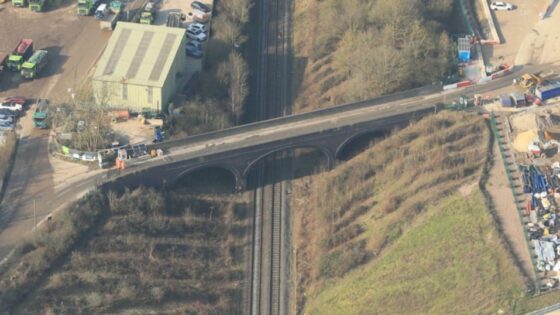
Stockton-on-Tees Borough Council plans to demolish two disused railway bridges on the former Stockton & Darlington Railway alignment, prompting the Historical Railways Estate (HRE) Group to accuse it of “incompetence or scaremongering” over structural risk claims. Campaigners argue the masonry arches could be retained or infilled for active travel use, citing similar Network Rail and National Highways Historical Railways Estate schemes where parapets were upgraded and decks waterproofed instead of removed. The dispute raises design questions on life-extension versus demolition for ageing brick and stone overbridges in low-traffic corridors.
Vinci Energies in the UK and Republic of Ireland has acquired Bühler Group’s CDD Automation Solutions, a UK-based systems integrator specialising in process automation for the food and feed industry. The deal expands Vinci Energies’ capabilities in PLC/SCADA-based control systems and plant-wide automation upgrades for bulk handling, milling and mixing lines. For civil and industrial project teams, this strengthens in-house delivery options for highly automated process plants, particularly where brownfield refurbishments must integrate new digital controls with existing mechanical and structural assets.
Edinburgh’s tram expansion has advanced with the southern section between the city centre and the Edinburgh BioQuarter prioritised over the full Granton–BioQuarter corridor. The decision concentrates early design, utilities coordination and ground investigation on the BioQuarter link, where hospital and research campus demand is highest and interfaces with existing heavy traffic corridors are most complex. For contractors and consultants, this signals near-term opportunities in track slab design, junction remodelling and integration with current tram power and signalling systems on constrained urban streets.
Spencer Group’s building and civil engineering arm has secured National Grid contracts for groundworks and enabling works at two substations in West Yorkshire and Merseyside that are being upgraded to interface with large-scale battery storage. The packages will focus on substation platform formation, below-ground services and foundations to accommodate new battery systems and associated switchgear. For contractors and designers, the works signal continuing demand for civils capability around grid-scale storage integration, including high-capacity cable routes, heavy equipment bases and stringent electrical safety clearances.
Network Rail and contractors will this weekend upgrade the Chiltern Main Line between Northolt Park and Haddenham & Thame Parkway, combining track and signalling reliability works with demolition of an HS2 bridge. Possession of this intensively used commuter and inter-urban corridor will allow renewal of life-expired components and removal of a redundant structure in a single blockade, reducing future access needs. Geotechnical and structural teams will need to manage demolition-induced vibration, track support conditions and interface with adjacent HS2 earthworks.
RSK Group has acquired Mason Street Furniture (MSF), a specialist highways electrical and technology contractor focused on roadside lighting, signalling and ITS installations, to deepen its capability on road and wider transport schemes. The deal expands RSK’s in-house capacity for motorway and trunk road electrical works, including gantry-mounted equipment, traffic monitoring systems and associated ducting and cabling. For designers and contractors, the move signals more integrated delivery of M&E, controls and civils packages on complex highways projects under single project governance.
Transport Infrastructure Ireland has appointed an Aecom–Jacobs joint venture as programme delivery partner for the £8.4bn (€9.5bn) MetroLink, the long-planned rail line linking Swords, Dublin Airport and Dublin city centre. The JV will oversee integrated design, procurement and construction management for the mostly segregated, high-capacity metro system, which is expected to form the backbone of Dublin’s future mass transit network. Geotechnical, tunnelling and station box design will be critical, with interfaces around the airport and dense city-centre utilities likely to drive construction methodology and risk management.
Stage One of New South Wales’ $130 million Avoca Drive Upgrade is starting 18 months early on the Central Coast, where the two-lane east–west arterial currently carries about 26,000 vehicles per day and is a known congestion pinch point. Funded by $100 million from the Federal Government and $30 million from NSW, the works will focus on upgrading Avoca Drive’s capacity and geometry. Civil contractors can expect complex traffic staging and pavement reconstruction on a constrained corridor that must remain operational throughout construction.
Kier has been appointed by Hertfordshire County Council to build a 3,263 m² single-storey satellite extension to Amwell View School in Stanstead Abbotts, providing 100 specialist places for pupils aged 11–19 with severe learning difficulties on a 1.34 ha greenfield site. The layout uses a single-storey teaching block to minimise level changes and circulation complexity, with specialist internal spaces and outdoor learning areas designed around accessibility, wellbeing and independence. The scheme, procured via Pagabo’s major works framework, includes a new car park with 63 bays and 15 EV charging points and will support around 65 full-time staff.
Champion Hire has taken delivery of its 100th Kubota U27-4 mini excavator via BTE Plant Sales, marking a long-running fleet standardisation that began with Kubota K008 units in 2001 and KX36 and KX61-3 models in the early 2000s. The 2.6‑tonne U27-4 is a zero tailswing machine with a 15.6kW (21.6hp) diesel engine, 4.74m reach and 2.82m maximum dig depth, designed to be towed behind a light commercial vehicle. For contractors, this keeps typical 1.5–3t hire needs within a compact, transportable platform with a relatively large cab for the 2.5t class.
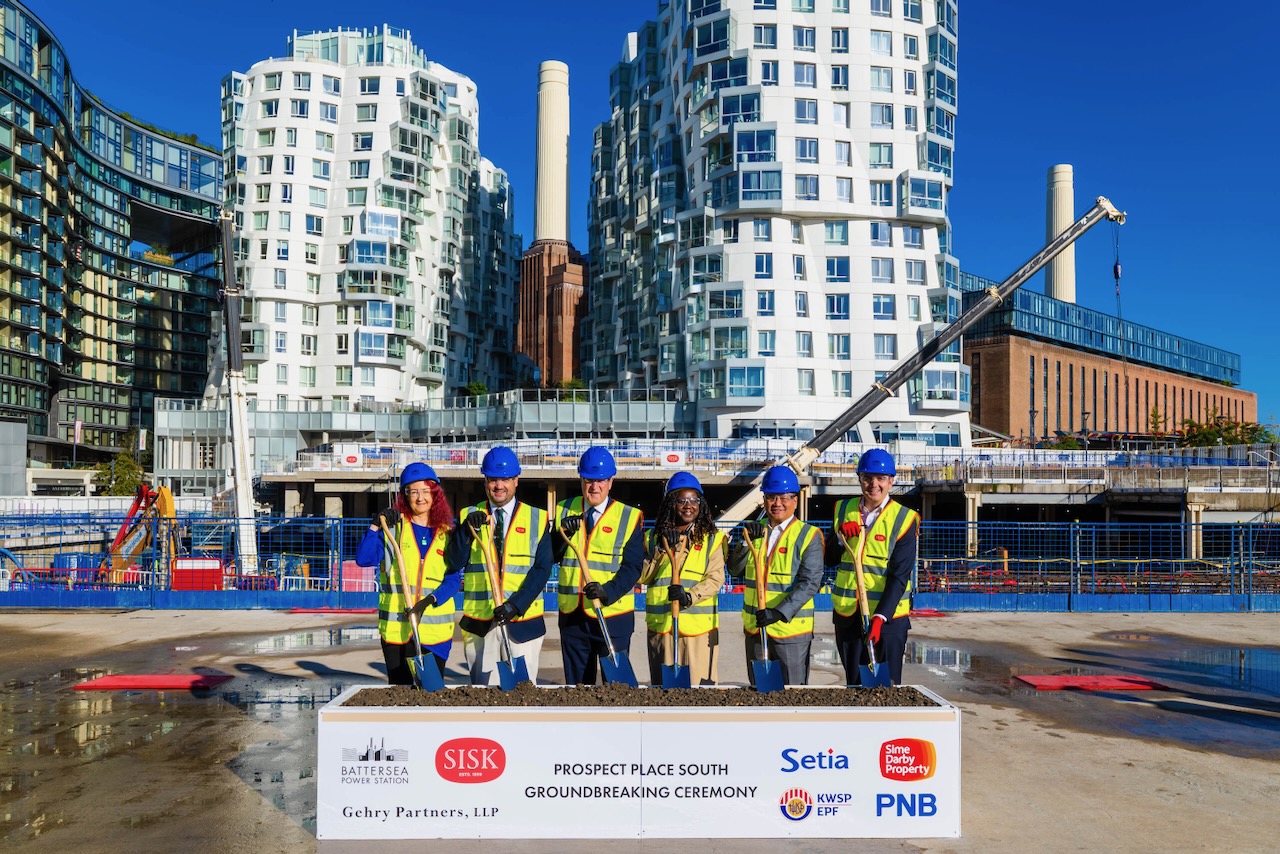
Sisk has broken ground on Prospect Place South at Battersea Power Station, a brownfield riverside scheme delivering around 300 homes, 65,000 sq ft of commercial space, a 15,000 sq ft community hub and a 600-space cycle hub across two Gehry Partners-designed blocks, Rosewood House and Hayworth House. Gehry’s design targets a reduced carbon footprint with green roofs specified to secure at least a 10% biodiversity net gain, while construction is expected to create 400 jobs, 20% locally sourced, ahead of completion in 2030. Masterplanner Studio Egret West will submit a revised plan this month for the remaining 16 acres, enabling up to 3.2 million sq ft of additional residential, commercial, cultural and leisure floorspace.
Doncaster Council has approved Vistry’s Kings Brook scheme in Conisbrough, a 226-home mixed-tenure development on former agricultural land, comprising 109 affordable units with Sage Homes and 117 private homes, using a mix of traditional masonry and timber frame construction across 16 house types. All units will include roof-mounted solar PV and EV charging points as standard, with extensive public open space and landscaping integrated through the layout. Construction, which started in spring 2026, is scheduled to complete in 2028, with the site benefiting from direct access to the A1(M) and M18 corridors.
Excavator hirer H E Services has trialled two- and four-seater EVision electric golf carts at its Strood depot to move staff around busy construction areas more quickly on private land. The carts use integrated roof-mounted solar panels to trickle-charge batteries during daylight, cutting reliance on mains charging and keeping vehicles available for short shuttle movements around large sites. H E Services reports lower walking times, reduced on-site emissions and quieter operation, while EVision is pushing nationwide delivery with hire terms from single-day to long-term agreements.
Bovis Construction (Europe) Limited has opened a new office at Northspring | Peter Street in Manchester city centre, reinforcing an 88‑year presence that began with projects such as Manchester Dental Hospital. The office sits close to Manchester Town Hall, where Bovis is currently delivering major restoration works, and supports ongoing schemes including North Manchester General Hospital under the Hospital 2.0 Alliance. Positioned alongside its London and Birmingham bases, the site is intended as a national hub for public sector framework delivery and client engagement.