Wheeler River uranium project: ISR approval and schedule insights for mine planners
Reviewed by Tom Sullivan
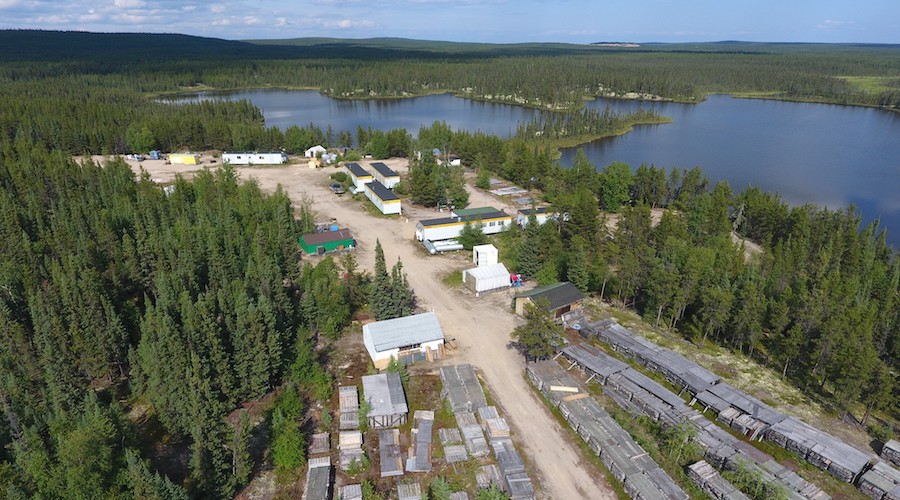
First reported on MINING.com
30 Second Briefing
Canadian Nuclear Safety Commission approval of the environmental assessment and issuance of a Licence to Prepare Site and Construct a Mine and Mill clears the final regulatory hurdle for Denison Mines’ Wheeler River project in the eastern Athabasca Basin, northern Saskatchewan. The decision allows Denison, which holds a 90% operating stake alongside JCU (Canada) Exploration at 10%, to advance the high‑grade Phoenix in‑situ recovery (ISR) uranium mine towards a mid‑2028 production start, pending final investment decision. Phoenix is Canada’s first ISR‑approved uranium mine and the first large‑scale uranium mine cleared for construction in over 20 years.
Technical Brief
- CNSC licence explicitly covers both mine and mill construction, enabling integrated ISR extraction and processing on-site.
- Approval follows a two-part public hearing process held in October and December 2025.
- Denison has already addressed several draft licence conditions, shortening the mobilisation window once FID is taken.
- Regulatory review was conducted under federal environmental assessment requirements, confirming compliance with Canada’s “stringent standards”.
- Wheeler River ownership is structured as 90% Denison (operator) and 10% JCU (Canada) Exploration.
- Previous consolidation steps included Denison’s acquisition of UEX interests to increase its effective stake in Wheeler River.
Our Take
Being the first large-scale Canadian uranium mine approved in more than 20 years positions Wheeler River in northern Saskatchewan as a bellwether for how the Canadian Nuclear Safety Commission will treat future Athabasca Basin ISR-style proposals.
Denison Mines moving from 90% towards potential 100% ownership of Wheeler River consolidates decision-making on mine design and development phasing, which typically shortens timelines but also concentrates financing and execution risk on a single operator.
With only five primary metal production plants remaining in the United States for aluminium, the contrast with new uranium capacity in Canada underscores how North American nuclear-fuel supply security is tightening even as some other strategic metals processing capacity continues to erode regionally.
Prepared by collating external sources, AI-assisted tools, and Geomechanics.io’s proprietary mining database, then reviewed for technical accuracy & edited by our geotechnical team.
Related Articles

Related Industries & Products
Mining
Geotechnical software solutions for mining operations including CMRR analysis, hydrogeological testing, and data management.
Construction
Quality control software for construction companies with material testing, batch tracking, and compliance management.
CMRR-io
Streamline coal mine roof stability assessments with our cloud-based CMRR software featuring automated calculations, multi-scenario analysis, and collaborative workflows.
HYDROGEO-io
Comprehensive hydrogeological testing platform for managing, analysing, and reporting on packer tests, lugeon values, and hydraulic conductivity assessments.
GEODB-io
Centralised geotechnical data management solution for storing, accessing, and analysing all your site investigation and material testing data.