Geomechanics.io

  • Free Tools
Sign UpLog In

Geomechanics.io

Geomechanics, Streamlined.

© 2026 Geomechanics.io. All rights reserved.

Geomechanics.io

CMRR-ioGEODB-ioHYDROGEO-ioQCDB-ioFree Tools & CalculatorsBlogLatest Industry News

Industries

MiningConstructionTunnelling

Company

Terms of UsePrivacy PolicyLinkedIn
    Projects

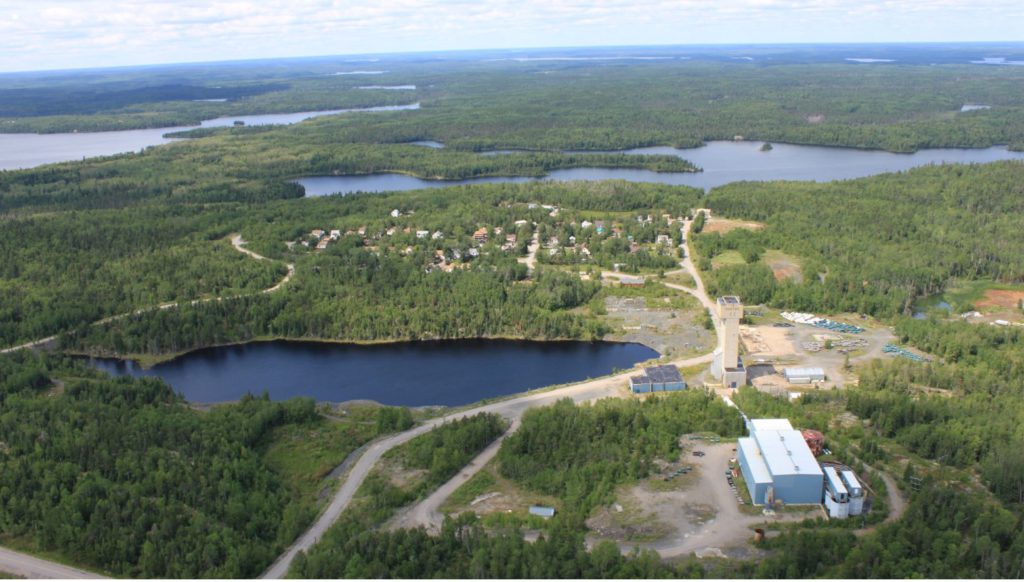
    West Red Lake’s Madsen mine commercial output: ramp-up and design notes for engineers

    January 13, 2026|

    Reviewed by Joe Ashwell

    West Red Lake’s Madsen mine commercial output: ramp-up and design notes for engineers

    First reported on MINING.com

    30 Second Briefing

    West Red Lake Gold Mines’ Madsen mine in Ontario has entered commercial production from 1 January 2026 after the mill ran in December at 86% of its permitted 800 t/d throughput, averaging 94.6% gold recovery and producing 3,215 oz. The operation, which yielded about 20,000 oz. in 2025, is targeting sustained nameplate capacity by mid-2026 while advancing the Fork deposit into the mine plan and bringing the shaft into operation. Drilling is delineating a new high-grade zone in Lower Austin’s 904 Complex, analogous to the 4447 zone in South Austin now in active mining.

    Technical Brief

    • Restart decision in May 2025 targeted an initial 500 t/d, with staged ramp-up through the year.
    • Historic Madsen operation produced ~2.5 Moz Au between 1938 and 1999, informing current resource and infrastructure reuse.
    • Pure Gold’s 2021 restart failed after ~1 year due to cost overruns, framing current cost-control focus.
    • West Red Lake acquired the project in June 2023 and completed test mining plus major infrastructure upgrades before restart.
    • 2025 output totalled ~20,000 oz Au, with 7,000 oz produced in Q4 alone during ramp-up.
    • Shaft is nearing operational status, with engineering indicating potential to materially increase hoisted tonnage in the medium term.
    • New high-grade 904 Complex in Lower Austin is being delineated, benchmarked against the already-mined 4447 zone in South Austin.
    • 4447 zone was taken from definition drilling through design and access development to active mining in only eight months.

    Our Take

    Within our 558 Mining stories, very few Ontario gold items report such a rapid seven‑month ramp from restart decision to commercial production, which suggests West Red Lake has de‑risked key underground and plant bottlenecks unusually quickly for the Red Lake district.

    Running the Madsen mill at 86% of its 800 t/d permit with 94.6% gold recovery implies there is still incremental upside from debottlenecking and process control before any major capex, which can be important for a C$436.4‑million company looking to grow cash flow without balance‑sheet stretch.

    Advancing the 4447 area from definition drilling to mining in eight months signals a short drill‑to‑stope cycle, giving West Red Lake flexibility to sequence additional Red Lake district zones (such as South Austin or the 904 Complex) quickly as grade control and market conditions evolve.

    Geotechnical Software for Modern Teams

    Centralise site data, logs, and lab results with GEODB-io, CMRR-io, and HYDROGEO-io.

    No credit card required.

    • Save and export unlimited calculations
    • Advanced data visualisation
    • Generate professional PDF reports
    • Cloud storage for all your projects

    Prepared by collating external sources, AI-assisted tools, and Geomechanics.io’s proprietary mining database, then reviewed for technical accuracy & edited by our geotechnical team.

    Related Articles

    Scope Systems cyber attack: resilience and risk lessons for mining IT teams
    Mining
    1 day ago

    Scope Systems cyber attack: resilience and risk lessons for mining IT teams

    A ransomware attack on Perth-based Scope Systems’ Pronto Xi ERP cloud stack disrupted dozens of mining customers, including Northern Star Resources and Evolution Mining, in what MM‑ISAC’s Rob Labbe calls the broadest single third‑party cyber event the sector has seen. Scope says client servers were restored from backups and not directly accessed, but admits internal data was exfiltrated and has not disclosed the attack vector, raising questions about visibility at hypervisor, storage and backup layers. The incident spotlights how multi‑tenant vCenter/ESXi environments, VM cloning and snapshot abuse—already used by groups like Akira—could expose integrated exploration, production and maintenance data across more than 400 Pronto Xi‑reliant mining operations.

    Newmont’s Red Chris underground expansion: block cave design and capex notes for engineers
    Mining
    1 day ago

    Newmont’s Red Chris underground expansion: block cave design and capex notes for engineers

    Newmont’s Red Chris mine in British Columbia has secured an amended Environmental Assessment Certificate and Mines Act permit, allowing a shift from open-pit to underground block caving and extending operations into the mid-2040s. The copper-gold porphyry deposit in the Golden Triangle hosts an estimated 20 million oz of gold and 13 billion lb of copper, with the block cave expected to lift Canada’s copper output by about 15%. The project entails several billion dollars in capital, around 1,800 construction jobs and roughly 1,500 operating roles at peak.

    Goldman cuts gold price forecast to US$4,900: planning notes for mine projects
    Mining
    1 day ago

    Goldman cuts gold price forecast to US$4,900: planning notes for mine projects

    Goldman Sachs has cut its end‑2026 gold price forecast by US$500/oz to US$4,900/oz after the US Federal Reserve, under new chair Kevin Warsh, signalled a hawkish shift that has pushed market-implied December rate hike odds to 87%. Spot gold has already fallen to about US$4,100/oz, down 27% from its near‑US$5,600/oz January peak, with three consecutive monthly losses between March and May and a 4% year‑to‑date decline. Goldman warns a 2026 year‑end target as low as US$4,400/oz is possible if rates rise, partly offset by ongoing central‑bank buying of roughly 50 tonnes/month this year and 40 tonnes/month next year.

    Related Industries & Products

    Mining

    Geotechnical software solutions for mining operations including CMRR analysis, hydrogeological testing, and data management.

    Construction

    Quality control software for construction companies with material testing, batch tracking, and compliance management.

    CMRR-io

    Streamline coal mine roof stability assessments with our cloud-based CMRR software featuring automated calculations, multi-scenario analysis, and collaborative workflows.

    HYDROGEO-io

    Comprehensive hydrogeological testing platform for managing, analysing, and reporting on packer tests, lugeon values, and hydraulic conductivity assessments.

    GEODB-io

    Centralised geotechnical data management solution for storing, accessing, and analysing all your site investigation and material testing data.

    AllGeotechnicalMiningInfrastructureMaterialsHazardsEnvironmentalSoftwarePolicy