Walsall waste-to-energy facility: concrete core methods and lessons for engineers
Reviewed by Joe Ashwell
First reported on New Civil Engineer
30 Second Briefing
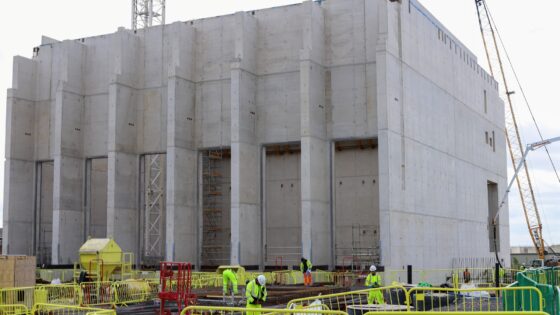
Construction of the Walsall Energy Recovery Facility is progressing as contractors build the 40m-high reinforced concrete core that will form the structural spine of the waste-to-energy plant. The core demands complex temporary works, high-capacity formwork and careful sequencing to manage verticality, crane access and heavy reinforcement congestion. For civil and structural teams, the job centres on controlling thermal cracking in thick pours, maintaining tolerances over the full 40m height and coordinating M&E penetrations within the core walls.
Technical Brief
- Core construction uses climbing formwork systems to minimise work at height and manual handling.
- Pre-assembled reinforcement cages are lifted as large units to reduce time working within congested steel.
- Temporary edge protection and integrated access platforms are fixed to the formwork for each lift.
- Concrete placing is largely pump-delivered from ground level, limiting crane man-baskets and suspended loads.
- Pour sequencing is planned to avoid simultaneous high-risk activities around the core and tower crane.
- Embedded cast-in channels and box-outs are factory-set to reduce on-site drilling and hot works.
- Quality control of concrete temperature and strength gain is linked to formwork strike permissions and access release.
Our Take
Among the 255 Infrastructure stories in our database, relatively few focus on complex vertical concrete cores above 30 m, so the 40 m reinforced core at the Walsall Energy Recovery Facility sits at the more demanding end of temporary works and safety planning.
Waste-to-energy plants like the Walsall facility typically combine tight urban footprints with tall process structures, which tends to drive more intricate formwork sequencing and access solutions than comparable-height commercial buildings.
With this project tagged under Safety in our coverage, practitioners will likely be watching how specialised concrete solutions manage working-at-height risks and interface with heavy M&E installation, as these are recurring pinch points in other high-rise process-plant builds.
Prepared by collating external sources, AI-assisted tools, and Geomechanics.io’s proprietary mining database, then reviewed for technical accuracy & edited by our geotechnical team.
Related Articles


Related Industries & Products
Construction
Quality control software for construction companies with material testing, batch tracking, and compliance management.
Mining
Geotechnical software solutions for mining operations including CMRR analysis, hydrogeological testing, and data management.
QCDB-io
Comprehensive quality control database for manufacturing, tunnelling, and civil construction with UCS testing, PSD analysis, and grout mix design management.