VolkerFitzpatrick Camp Hill stations: design and capacity notes for rail engineers
Reviewed by Joe Ashwell
First reported on New Civil Engineer
30 Second Briefing
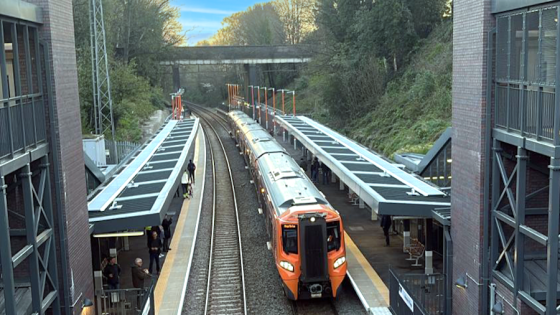
VolkerFitzpatrick has completed three new railway stations on Birmingham’s Camp Hill line, enabling the restoration of passenger services on the corridor for the first time in 80 years. The works form part of a wider upgrade of south Birmingham rail capacity, reconnecting intermediate suburbs to Birmingham New Street and improving resilience on routes currently funnelling through the city centre. For civil and rail engineers, the project signals further demand for station design, access structures and track interface works on previously freight‑only or mothballed urban lines.
Technical Brief
- Brownfield rail alignment required new platforms and access structures to be threaded around existing permanent way.
- Track–platform interface works would have needed gauging checks, tactile surfacing and compliant stepping distances to current standards.
- Station designs likely incorporate lifts, ramps and overbridges to meet modern accessibility and fire-evacuation codes.
- Integration of new signalling, telecoms and power supplies onto legacy infrastructure would drive significant systems testing.
- Drainage, earthworks and platform foundations had to be detailed for long-term settlement and ballast performance.
- Similar reopenings of freight or mothballed lines will increasingly demand complex station retrofits within constrained rail corridors.
Our Take
VolkerFitzpatrick’s role in reopening passenger services in south Birmingham sits alongside its recent £350m HIF1 road scheme work in Oxfordshire, signalling that the contractor is consolidating a niche in complex, multi-modal regional connectivity projects rather than pure rail or highways alone.
Our infrastructure database shows VolkerFitzpatrick also handling operationally constrained upgrades at RAF Coningsby, which suggests its Birmingham work is likely to leverage similar phasing and access strategies to minimise disruption while reactivating an 80‑year dormant corridor.
Prepared by collating external sources, AI-assisted tools, and Geomechanics.io’s proprietary mining database, then reviewed for technical accuracy & edited by our geotechnical team.
Related Articles


Related Industries & Products
Construction
Quality control software for construction companies with material testing, batch tracking, and compliance management.
CMRR-io
Streamline coal mine roof stability assessments with our cloud-based CMRR software featuring automated calculations, multi-scenario analysis, and collaborative workflows.
HYDROGEO-io
Comprehensive hydrogeological testing platform for managing, analysing, and reporting on packer tests, lugeon values, and hydraulic conductivity assessments.
GEODB-io
Centralised geotechnical data management solution for storing, accessing, and analysing all your site investigation and material testing data.