UKAEA timeline for ‘limitless’ fusion: infrastructure design notes for engineers
Reviewed by Joe Ashwell
First reported on New Civil Engineer
30 Second Briefing
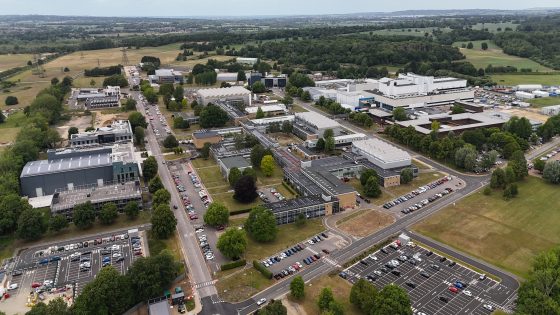
UK Atomic Energy Authority has set out a 2025–2030 strategy to move UK fusion from experimental facilities like JET and the MAST Upgrade tokamak towards commercially viable power, targeting grid-scale demonstration in the 2040s. The plan centres on the Spherical Tokamak for Energy Production (STEP) prototype plant at West Burton, advanced tritium breeding blanket concepts, and high-heat-flux divertor materials. Civil and infrastructure engineers are flagged for early involvement in designing reactor buildings, remote-handling maintenance halls, and high-capacity grid connections for multi-hundred-megawatt fusion units.
Technical Brief
- Civil works must anticipate extreme neutron fluxes driving concrete activation, thermal cracking and long-term durability challenges.
- Remote-handling maintenance concepts imply large clear internal spans, high-bay cranes and vibration-controlled foundations for precision robotics.
- For infrastructure planners, fusion’s high capacity factor could reshape grid reinforcement priorities versus intermittent renewables-led upgrades.
Our Take
UKAEA’s 2030 strategy horizon aligns with the STEP spherical tokamak prototype now in principal design-and-build under the £200m ILIOS JV, signalling that fusion delivery is moving from pure research into a defined infrastructure pipeline in the United Kingdom.
Within our 804-item Infrastructure corpus, UKAEA and fusion appear far less frequently than conventional energy or transport schemes, so this planning window to 2030 is likely to be a key reference point for UK grid and network operators assessing long‑lead connections and balancing services.
The concentration of major contractors and consultants (Kier, Nuvia, Aecom, Turner & Townsend, AL_A Architects) around STEP Fusion in the related piece suggests that, for UKAEA, supply-chain capacity and nuclear-grade delivery experience are already being locked in ahead of any wider roll‑out of fusion assets on the UK grid.
Prepared by collating external sources, AI-assisted tools, and Geomechanics.io’s proprietary mining database, then reviewed for technical accuracy & edited by our geotechnical team.
Related Articles


Related Industries & Products
Construction
Quality control software for construction companies with material testing, batch tracking, and compliance management.
CMRR-io
Streamline coal mine roof stability assessments with our cloud-based CMRR software featuring automated calculations, multi-scenario analysis, and collaborative workflows.
HYDROGEO-io
Comprehensive hydrogeological testing platform for managing, analysing, and reporting on packer tests, lugeon values, and hydraulic conductivity assessments.
GEODB-io
Centralised geotechnical data management solution for storing, accessing, and analysing all your site investigation and material testing data.