Geomechanics.io

  • Free Tools
Sign UpLog In

Geomechanics.io

Geomechanics, Streamlined.

© 2026 Geomechanics.io. All rights reserved.

Geomechanics.io

CMRR-ioGEODB-ioHYDROGEO-ioQCDB-ioFree Tools & CalculatorsBlogLatest Industry News

Industries

MiningConstructionTunnelling

Company

Terms of UsePrivacy PolicyLinkedIn
    Projects

    Suffolk MP’s energy infrastructure coordination levy: implications for NSIP project engineers

    February 26, 2026|

    Reviewed by Tom Sullivan

    Suffolk MP’s energy infrastructure coordination levy: implications for NSIP project engineers

    First reported on New Civil Engineer

    30 Second Briefing

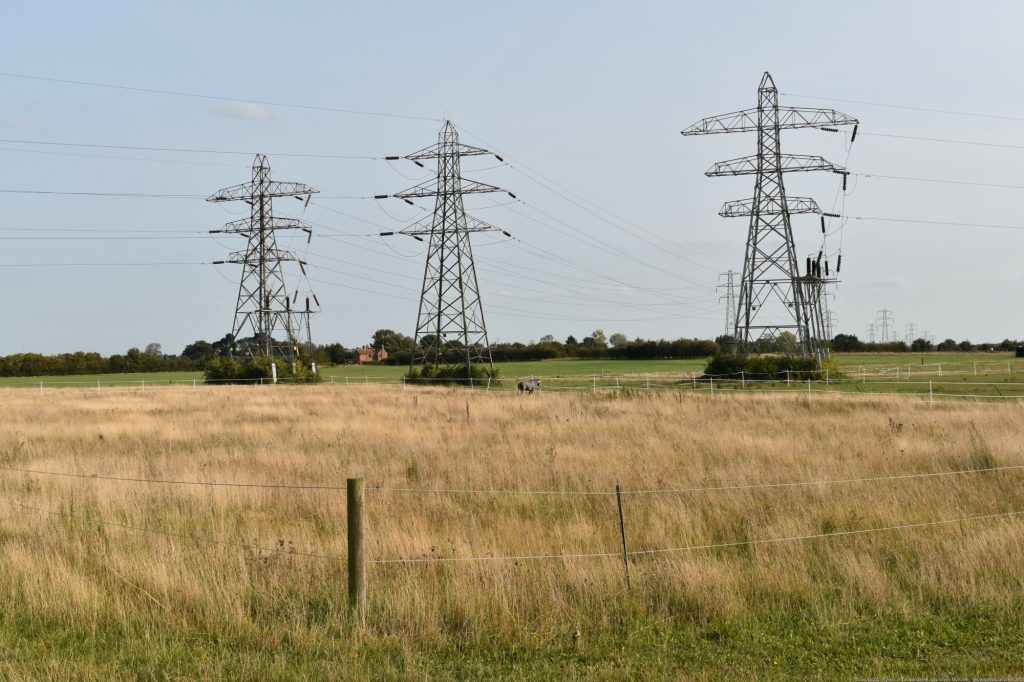
    A new “energy infrastructure coordination levy” has been proposed in the House of Commons by a Suffolk MP to compel developers of Nationally Significant Infrastructure Projects (NSIPs) to plan grid, cable and substation works jointly rather than as isolated schemes. The move responds to Suffolk communities facing overlapping onshore works from multiple offshore wind connections and transmission upgrades, with repeated trenching, haul road construction and temporary land take along similar corridors. For civil and geotechnical teams, the levy could drive shared route corridors, consolidated ground investigations and integrated construction phasing across competing NSIPs.

    Technical Brief

    • Similar levy structures could be adapted for hydrogen pipelines, interconnectors and large-scale battery storage clusters.

    Our Take

    Within the 137 Policy stories in our database, relatively few focus on a single English county like Suffolk, suggesting this proposal could become a reference point for how local MPs seek to shape national energy infrastructure planning rules.

    Most of the 2,039 Projects-tagged pieces deal with project-by-project approvals, so a UK-wide ‘coordination levy’ concept would mark a shift from asset-level consenting towards more programmatic funding of grid and energy corridors.

    If adopted nationally, a levy structured around energy infrastructure in the United Kingdom would likely influence cost allocation on future transmission and generation projects, affecting how developers price risk and negotiate with local authorities in counties such as Suffolk.

    Geotechnical Software for Modern Teams

    Centralise site data, logs, and lab results with GEODB-io, CMRR-io, and HYDROGEO-io.

    No credit card required.

    • Save and export unlimited calculations
    • Advanced data visualisation
    • Generate professional PDF reports
    • Cloud storage for all your projects

    Prepared by collating external sources, AI-assisted tools, and Geomechanics.io’s proprietary mining database, then reviewed for technical accuracy & edited by our geotechnical team.

    Related Articles

    Plumber heads to parliament: what Hannah Spencer’s win means for UK trades
    Policy
    about 8 hours ago

    Plumber heads to parliament: what Hannah Spencer’s win means for UK trades

    A 34-year-old Manchester plumber, Hannah Spencer, has won the Gorton and Denton by-election for the Green Party with 14,980 votes, taking 40.7% of the vote and a 27.5% swing. Reform polled 10,578 votes and Labour, which previously held the seat, dropped to third with 9,364 votes. Spencer, believed to be the first qualified plumber in the House of Commons and newly trained as a plasterer via a St Gobain intensive course, has pledged to champion tradespeople in parliament.

    Reverse charge VAT clampdown: compliance essentials for UK project teams
    Policy
    2 days ago

    Reverse charge VAT clampdown: compliance essentials for UK project teams

    HMRC is intensifying enforcement of the VAT domestic reverse charge (DRC) in construction, moving from “light‑touch” to active enquiries, assessments and penalties where reverse charge accounting, CIS classification or invoicing are wrong. The DRC applies where both parties are UK VAT‑ and CIS‑registered, the work falls within CIS “construction operations”, and the customer has not declared end‑user or intermediary status, with mixed‑supply treatment governed by a 5% threshold. Contractors and subcontractors now need watertight written end‑user declarations, DRC‑capable invoicing systems, and cash‑flow planning that reflects loss of the VAT working‑capital buffer.

    Scotland carbon cuts and CCC warning: infrastructure planning takeaways
    Policy
    2 days ago

    Scotland carbon cuts and CCC warning: infrastructure planning takeaways

    Scotland is on course to meet most emissions cuts required in its first carbon budget for 2026–2030, but the Climate Change Committee warns that weak long‑term policy on building heat decarbonisation and negative emissions technologies threatens later targets. The CCC points to slow progress on large‑scale heat pump deployment, limited clarity on phasing out high‑carbon heating systems, and uncertainty over engineered removals such as bioenergy with carbon capture and storage. For infrastructure planners, this signals potential future policy shifts in heat networks, retrofit standards and CCS‑ready industrial projects.

    Related Industries & Products

    Construction

    Quality control software for construction companies with material testing, batch tracking, and compliance management.

    Mining

    Geotechnical software solutions for mining operations including CMRR analysis, hydrogeological testing, and data management.

    QCDB-io

    Comprehensive quality control database for manufacturing, tunnelling, and civil construction with UCS testing, PSD analysis, and grout mix design management.

    AllGeotechnicalMiningInfrastructureMaterialsHazardsEnvironmentalSoftwarePolicy