Spittal–Peterhead 203km HVDC link: geotechnical design notes for engineers
Reviewed by Tom Sullivan
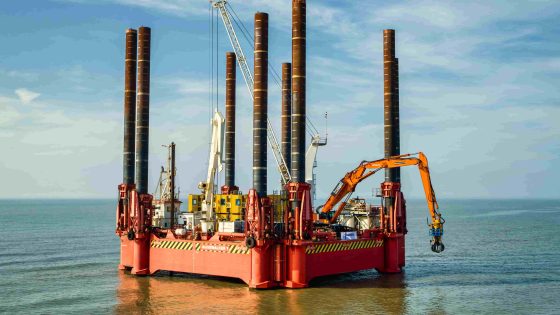
First reported on New Civil Engineer
30 Second Briefing
SSEN Transmission has begun onshore and nearshore construction for its 203km Spittal to Peterhead subsea HVDC link, designed to export renewable power from Caithness to Aberdeenshire. The scheme involves landfall works, transition joint bays and onshore cable sections tying into converter stations at each end, enabling bulk transfer of offshore wind output into the Scottish transmission network. Marine installation of the HVDC cable will demand detailed seabed surveys, burial design and protection measures to manage geotechnical risk along the North Sea route.
Technical Brief
- Onshore and nearshore construction phases are now active, requiring tight marine–terrestrial interface coordination.
- Landfall works must manage tidal windows, surf zone mobility and coastal erosion constraints during trenching.
- Transition joint bays will form critical stress‑relief and inspection points between subsea and onshore cable sections.
- Converter station interfaces at each end will dictate earthing design, harmonic filtering and reactive power management.
- Burial depth and protection strategy will need to accommodate fishing gear interaction and potential anchor drag.
- Similar long‑distance HVDC export schemes around the UK are increasingly standard for integrating remote renewables.
Our Take
Within the 630 Infrastructure stories in our database, there are relatively few long-distance HVDC schemes in Scotland, so the 203km Spittal to Peterhead link stands out as one of the more complex transmission corridor builds in the Caithness–Aberdeenshire belt.
SSEN Transmission’s work on the Spittal to Peterhead subsea electricity link aligns with a cluster of ‘Projects’ and ‘Sustainability’ pieces where grid upgrades are becoming the critical path item for connecting offshore wind and other low‑carbon generation in northern Scotland.
For contractors, a 203km HVDC route between Spittal and Peterhead implies extended exposure to marine and coastal interface risks, which in our coverage have often driven schedule and cost pressure on comparable subsea cable projects even when onshore civils are relatively straightforward.
Prepared by collating external sources, AI-assisted tools, and Geomechanics.io’s proprietary mining database, then reviewed for technical accuracy & edited by our geotechnical team.
Related Articles


Related Industries & Products
Construction
Quality control software for construction companies with material testing, batch tracking, and compliance management.
Mining
Geotechnical software solutions for mining operations including CMRR analysis, hydrogeological testing, and data management.
QCDB-io
Comprehensive quality control database for manufacturing, tunnelling, and civil construction with UCS testing, PSD analysis, and grout mix design management.