Southbay’s Port Stanley causeway contract: design and load notes for engineers
Reviewed by Joe Ashwell
First reported on The Construction Index
30 Second Briefing
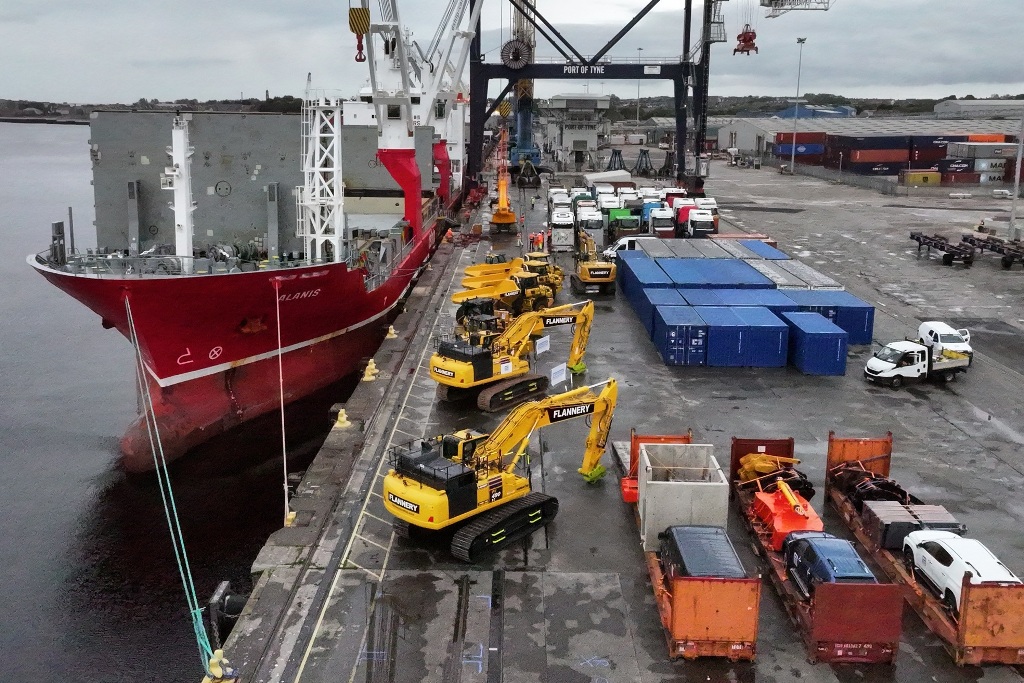
Gateshead-based Southbay Civil Engineering has secured an 18‑month design-and-build contract for a new rock-armour causeway at Port Stanley, replacing the existing 240‑metre structure that serves a large pontoon barge and upgrading capacity for heavier vehicles. The new works comprise an inner rock core with outer rock armour and a heavy steel ramp connection to the floating barge, using local Falklands labour and raw materials. Mobilisation from the Port of Tyne includes a 150‑tonne crawler crane, three 20‑tonne dumpers, excavators up to 60 tonnes and full compaction equipment.
Technical Brief
- Existing Port Stanley causeway currently extends 240 metres into the harbour to a pontoon barge.
- Southbay Falkland Islands Ltd is a wholly owned project vehicle of Southbay Civil Engineering.
- Construction methodology is based on a simplified, low‑risk marine works sequence developed in‑house.
- Loadout from Port of Tyne required coordination of heavy plant, small tools and marine shipment logistics.
- Marine spread includes a 150‑tonne crawler crane for rock placement and ramp installation.
- Earthmoving fleet comprises three 20‑tonne dump trucks and three excavators up to 60 tonnes.
Our Take
Among the 408 Infrastructure stories in our database, very few involve remote UK overseas territories, so Southbay Civil Engineering’s 18‑month Port Stanley assignment positions it as one of the relatively rare contractors with recent heavy civil experience in such logistically constrained environments.
Mobilising 150‑tonne lifting capacity and 60‑tonne excavators to the Falkland Islands signals that Port Stanley is being upgraded to handle larger vessels and heavier cargoes, which could materially improve supply-chain resilience for both civilian and defence users compared with current Port of Tyne–style feeder operations.
The use of multiple 20‑tonne dumper trucks and large excavators on a 240‑metre causeway suggests a focus on bulk earthworks and armour placement, implying that geotechnical design will likely prioritise long-term coastal protection and climate resilience rather than just incremental capacity increases.
Prepared by collating external sources, AI-assisted tools, and Geomechanics.io’s proprietary mining database, then reviewed for technical accuracy & edited by our geotechnical team.
Related Articles


Related Industries & Products
Construction
Quality control software for construction companies with material testing, batch tracking, and compliance management.
Mining
Geotechnical software solutions for mining operations including CMRR analysis, hydrogeological testing, and data management.
QCDB-io
Comprehensive quality control database for manufacturing, tunnelling, and civil construction with UCS testing, PSD analysis, and grout mix design management.