Smarter earthwork monitoring in rail: integration and risk lessons for engineers
Reviewed by Joe Ashwell
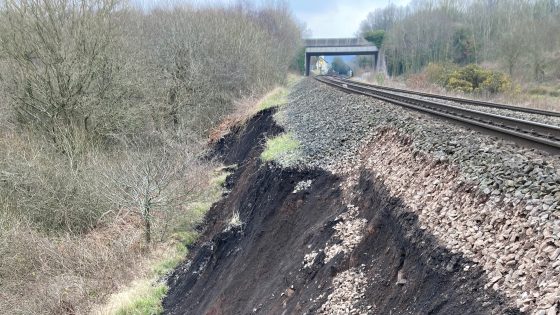
First reported on New Civil Engineer
30 Second Briefing
Managing earthwork risk on railways increasingly depends on smarter monitoring systems that can detect slope movements and drainage issues before they disrupt operations. Network operators are weighing automated inclinometers, fibre optic strain sensing and remote LiDAR or radar surveys against traditional visual inspections, particularly on high-risk cuttings and embankments near ageing formations. The key challenge is integrating continuous data streams into existing asset management and possession regimes so that alarms translate into timely, targeted interventions rather than unmanageable alert volumes.
Technical Brief
- Selection of monitoring systems must align with formal rail earthwork risk management frameworks and tolerable risk criteria.
- Safety cases increasingly require traceable links between sensor outputs, inspection records and intervention decisions.
- Asset managers need clear trigger hierarchies so alerts escalate through defined operational and engineering response levels.
- Integration with existing possession planning is critical to avoid monitoring-driven interventions clashing with access windows.
- Data governance is a safety issue: configuration control, calibration records and audit trails must withstand incident investigation.
- Remote monitoring must be validated against on-site geotechnical assessments to avoid false confidence in “black box” outputs.
- For legacy cuttings and embankments, monitoring strategies must explicitly consider unknown ground conditions and historic drainage alterations.
Our Take
New Civil Engineer appears repeatedly in our infrastructure coverage as a convenor for digital innovation initiatives such as the TechFest Awards 2025, so a focus on ‘smarter’ earthwork monitoring is likely to be framed around deployable, near-term technologies rather than blue-sky R&D.
With 813 Infrastructure stories and 2307 tag-matched pieces on Projects and Safety, earthwork monitoring in the rail sector sits in a mature risk theme where clients increasingly expect quantified safety benefits and demonstrable reduction in unplanned possessions before backing new monitoring systems.
The keyword link to AI/artificial intelligence suggests this piece is part of a cluster of articles exploring data-led condition monitoring, which in our database often highlights integration challenges with legacy rail asset-management systems rather than the sensing hardware itself.
Prepared by collating external sources, AI-assisted tools, and Geomechanics.io’s proprietary mining database, then reviewed for technical accuracy & edited by our geotechnical team.
Related Articles


Related Industries & Products
Construction
Quality control software for construction companies with material testing, batch tracking, and compliance management.
Mining
Geotechnical software solutions for mining operations including CMRR analysis, hydrogeological testing, and data management.
CMRR-io
Streamline coal mine roof stability assessments with our cloud-based CMRR software featuring automated calculations, multi-scenario analysis, and collaborative workflows.
HYDROGEO-io
Comprehensive hydrogeological testing platform for managing, analysing, and reporting on packer tests, lugeon values, and hydraulic conductivity assessments.
GEODB-io
Centralised geotechnical data management solution for storing, accessing, and analysing all your site investigation and material testing data.