Geomechanics.io

  • Free Tools
Sign UpLog In

Geomechanics.io

Geomechanics, Streamlined.

© 2026 Geomechanics.io. All rights reserved.

Geomechanics.io

CMRR-ioGEODB-ioHYDROGEO-ioQCDB-ioFree Tools & CalculatorsBlogLatest Industry News

Industries

MiningConstructionTunnelling

Company

Terms of UsePrivacy PolicyLinkedIn
    Projects

    Skeena’s Eskay Creek EA certificate: design, capex and risk notes for mine planners

    January 28, 2026|

    Reviewed by Joe Ashwell

    Skeena’s Eskay Creek EA certificate: design, capex and risk notes for mine planners

    First reported on MINING.com

    30 Second Briefing

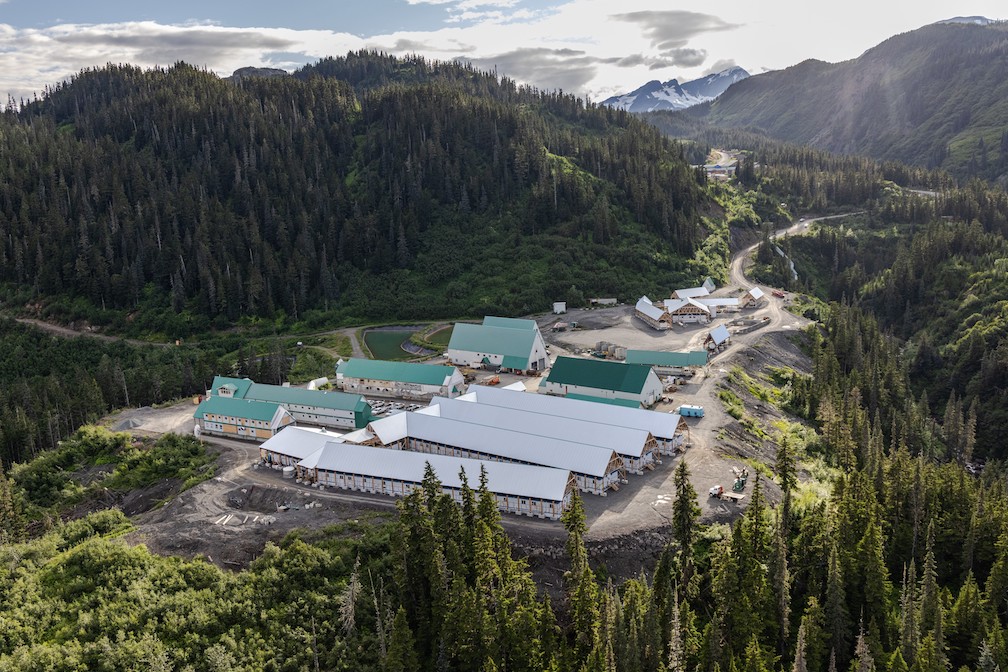
    British Columbia has issued an environmental assessment certificate for Skeena Gold & Silver’s restart of the Eskay Creek gold-silver mine in Tahltan territory, with federal approval under the Impact Assessment Act and a requirement to substantially start by 2036. The 12-year open-pit operation is expected to produce about 320,000 oz gold-equivalent per year (455,000 oz gold in the first five years), with C$713 million in capex, roughly 1,000 peak construction jobs and 770 peak operating jobs. The certificate embeds Tahltan Nation consent via a Section 7 agreement and imposes 38 binding conditions, including co-developed measures on water, fish, air quality, human health and traffic impacts.

    Technical Brief

    • Consent-based assessment was conducted jointly with Tahltan Central Government, guided by a 2022 Section 7 agreement.
    • Over 500 meetings with Tahltan Central Government and more than 60 local engagement sessions informed conditions.
    • Tahltan risk assessment directly shaped co-developed mitigation measures and Tahltan’s ongoing compliance-monitoring role.
    • Certificate imposes 38 legally binding conditions covering water, fish, air quality, human health and traffic impacts.
    • Conditions require monitoring to confirm environmental effects remain within modelled and assessed prediction envelopes.
    • Nisga’a Lisims Government issued formal letters of support; Gitanyow, Tsetsaut Skii km Lax Ha and Alaska Tribes were consulted.

    Our Take

    With a projected C$713 million capex and a 12‑year mine life, Eskay Creek sits in the mid-scale bracket of BC’s gold projects in our database, which typically makes schedule certainty and permitting (now de‑risked via the EAC) more critical than pure size for attracting construction financing.

    The Section 7 agreement between the Government of British Columbia and the Tahltan Central Government, combined with more than 500 documented meetings, signals a higher bar for Indigenous engagement in Tahltan territory than seen at many other BC gold-silver projects in our coverage, and will likely be used as a reference point in future negotiations in the Golden Triangle.

    The EAC requirement that Eskay Creek be ‘substantially started’ by 2036 effectively gives Skeena Resources a long option on development timing, which could allow the company to sequence construction with gold price cycles rather than being forced into a near-term build window.

    Geotechnical Software for Modern Teams

    Centralise site data, logs, and lab results with GEODB-io, CMRR-io, and HYDROGEO-io.

    No credit card required.

    • Save and export unlimited calculations
    • Advanced data visualisation
    • Generate professional PDF reports
    • Cloud storage for all your projects

    Prepared by collating external sources, AI-assisted tools, and Geomechanics.io’s proprietary mining database, then reviewed for technical accuracy & edited by our geotechnical team.

    Related Articles

    Volvo’s right-sized rigid mining trucks: fleet and haul road insights for engineers
    Mining
    about 12 hours ago

    Volvo’s right-sized rigid mining trucks: fleet and haul road insights for engineers

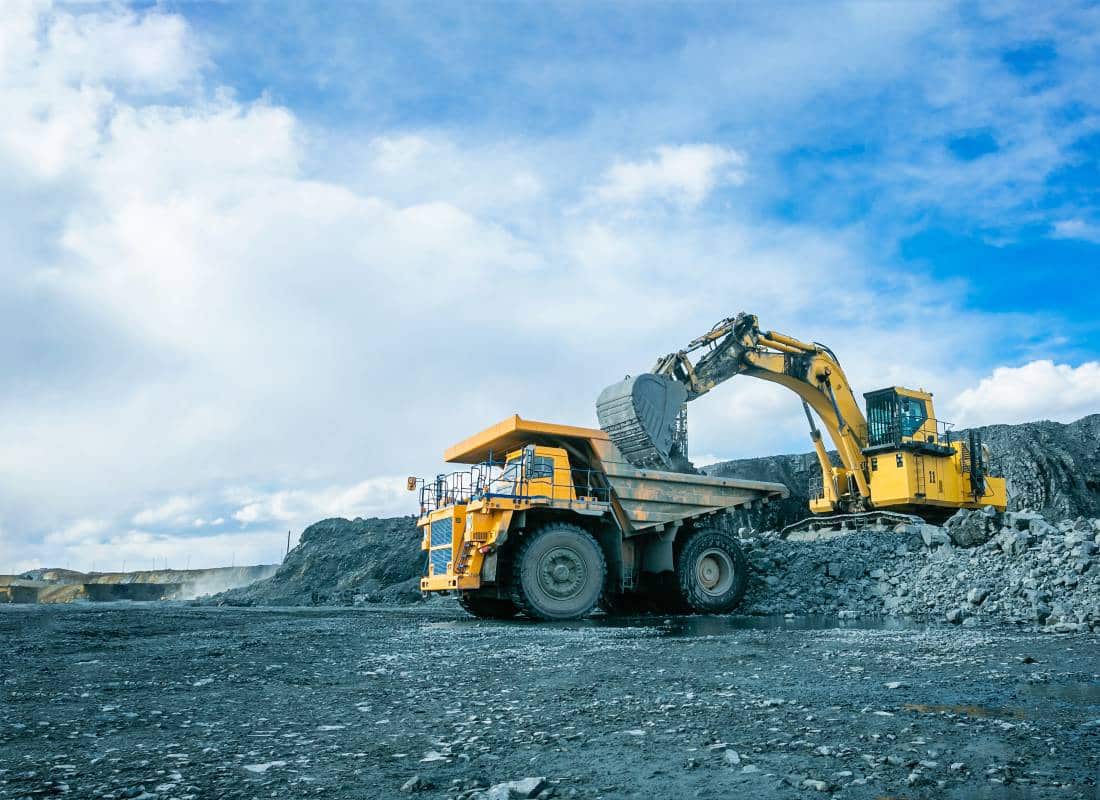
    Volvo Construction Equipment is pushing to expand its share of the smaller rigid mining truck segment, challenging Caterpillar’s 777/775 and Komatsu’s HD785/HD685 with its rigid haulers built in Motherwell, Scotland. The “right-sized” Volvo units target mines where ultraclass trucks are impractical, focusing on optimised payload-to-weight ratios and shorter cycle times on tighter haul roads. For operators, the main implications are alternative fleet configurations in the 60–100 t class and potential lifecycle cost competition in brownfield pits constrained by ramp geometry and crusher layouts.

    Kazatomprom’s value-over-volume uranium strategy: key points for mine planners
    Mining
    about 12 hours ago

    Kazatomprom’s value-over-volume uranium strategy: key points for mine planners

    Kazakhstan’s state-controlled Kazatomprom, which produces most of the country’s roughly 40% share of global uranium supply via low-cost in-situ recovery, is doubling down on its “value over volume” strategy, refusing to flood the market despite a sevenfold rise in its London-listed share price since 2018. CEO Meirzhan Yussupov says any move further down the fuel cycle, including ambitions for domestic enrichment, must clear strict payback, IRR and NPV hurdles and comply with non-proliferation constraints. He also positions Kazatomprom’s dual listing in London and on the common-law-governed Astana International Exchange as a proof point for Kazakhstan’s investor protections.

    Kazatomprom and uranium markets: supply, logistics and project signals for engineers
    Mining
    about 12 hours ago

    Kazatomprom and uranium markets: supply, logistics and project signals for engineers

    Kazatomprom CEO Meirzhan Yussupov says the company will maintain its “value over volume” strategy, limiting output growth to about 10% year-on-year rather than chasing market share, despite surging nuclear demand from China, India’s 100 GW-by-2047 SHANTI targets and AI-driven data centres. He confirms Kazakhstan already mines, processes and fabricates fuel assemblies for export to China, and is now evaluating an in-country conversion plant using newly acquired technology, with investment contingent on IRR, NPV and payback. Yussupov notes up to roughly 60–65% of Western deliveries have recently moved via the Trans-Caspian Middle Corridor, while transit through Russia to St Petersburg remains legally available as Kazakh uranium is not covered by Russian-origin bans.

    Related Industries & Products

    Mining

    Geotechnical software solutions for mining operations including CMRR analysis, hydrogeological testing, and data management.

    Construction

    Quality control software for construction companies with material testing, batch tracking, and compliance management.

    CMRR-io

    Streamline coal mine roof stability assessments with our cloud-based CMRR software featuring automated calculations, multi-scenario analysis, and collaborative workflows.

    HYDROGEO-io

    Comprehensive hydrogeological testing platform for managing, analysing, and reporting on packer tests, lugeon values, and hydraulic conductivity assessments.

    GEODB-io

    Centralised geotechnical data management solution for storing, accessing, and analysing all your site investigation and material testing data.

    AllGeotechnicalMiningInfrastructureMaterialsHazardsEnvironmentalSoftwarePolicy