Secure data sharing in infrastructure: design implications for civil engineers
Reviewed by Joe Ashwell
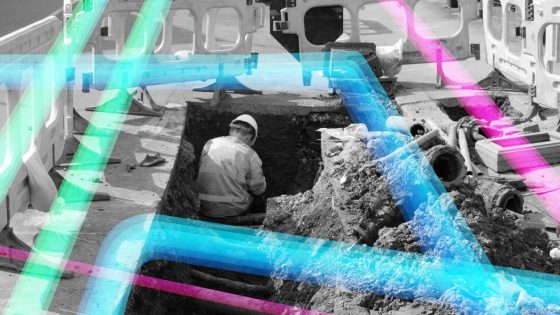
First reported on New Civil Engineer
30 Second Briefing
Data sharing across infrastructure projects is being pushed as “the lifeblood” of digital delivery, but civil engineers are warned that insecure exchanges of BIM models, sensor feeds and asset registers expose clients to escalating cyber risk. Opinion focuses on securing cloud-based common data environments, enforcing role-based access to design and geotechnical data, and encrypting operational technology links to bridges, tunnels and water networks. For practitioners, the message is to treat data governance and cybersecurity as core design parameters alongside structural capacity and serviceability.
Technical Brief
- Security design must address both IT systems and operational technology controlling physical assets and processes.
- Cloud-hosted common data environments require hardened identity management, audit trails and segregation of client datasets.
- Role-based access control needs to be granular enough to separate concept design, detailed design and as-built data.
- Encryption of data in transit is particularly critical for live sensor feeds and remote condition monitoring channels.
- Offline export of BIM or geotechnical models to USB or email is flagged as a major leakage route.
- Third-party contractors connecting via VPNs or APIs are identified as a weak link needing stricter onboarding and monitoring.
- Incident response plans must now explicitly cover compromise of digital twins and potential manipulation of design parameters.
- For future infrastructure programmes, cyber risk is framed as a core CDM-style duty alongside physical site safety.
Our Take
Within the 402 Infrastructure stories in our database, relatively few Op-Eds explicitly combine ‘Safety’ and ‘Projects’, suggesting New Civil Engineer is using its opinion space to push more systemic thinking on digital risk rather than treating it as a narrow IT issue.
For project-delivery teams, secure data sharing is increasingly being treated as part of safety management systems in our coverage, meaning that failures in information security are starting to be framed alongside physical site hazards when clients set contractual requirements.
Because this piece sits under ‘Projects’ rather than pure ‘Technology’ in our tagging, it signals that New Civil Engineer’s audience is expected to see secure data exchange as a core project-governance concern affecting procurement, design liability and CDM compliance, not just a back-office function.
Prepared by collating external sources, AI-assisted tools, and Geomechanics.io’s proprietary mining database, then reviewed for technical accuracy & edited by our geotechnical team.
Related Articles


Related Industries & Products
Construction
Quality control software for construction companies with material testing, batch tracking, and compliance management.
Mining
Geotechnical software solutions for mining operations including CMRR analysis, hydrogeological testing, and data management.
CMRR-io
Streamline coal mine roof stability assessments with our cloud-based CMRR software featuring automated calculations, multi-scenario analysis, and collaborative workflows.
HYDROGEO-io
Comprehensive hydrogeological testing platform for managing, analysing, and reporting on packer tests, lugeon values, and hydraulic conductivity assessments.
GEODB-io
Centralised geotechnical data management solution for storing, accessing, and analysing all your site investigation and material testing data.