Geomechanics.io

  • Free Tools
Sign UpLog In

Geomechanics.io

Geomechanics, Streamlined.

© 2026 Geomechanics.io. All rights reserved.

Geomechanics.io

CMRR-ioGEODB-ioHYDROGEO-ioQCDB-ioFree Tools & CalculatorsBlogLatest Industry News

Industries

MiningConstructionTunnelling

Company

Terms of UsePrivacy PolicyLinkedIn
    Projects
    Sustainability

    Scottish sites for new nuclear: siting criteria and next steps for engineers

    July 7, 2026|

    Reviewed by Tom Sullivan

    Scottish sites for new nuclear: siting criteria and next steps for engineers

    First reported on New Civil Engineer

    30 Second Briefing

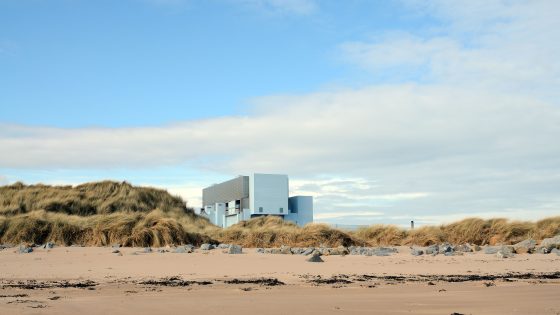
    Several sites in Scotland have been flagged as technically suitable for new nuclear power stations in a UK Government-commissioned siting study, despite the Scottish Government’s current opposition to new nuclear build. The assessment focuses on factors such as coastal locations with access to large-volume cooling water, seismic stability and low flood risk, and proximity to the existing 400kV transmission network. For civil and geotechnical teams, the work signals where future detailed site investigations, coastal defence design and grid-connection studies may be requested if policy barriers ease.

    Technical Brief

    • For other UK regions, the methodology signals how early national siting screens can de-risk later project-specific investigations.

    Our Take

    The related June 18 coverage on industry concern over diverting UK Government funds to the Defence Investment Plan suggests any move from ‘technical potential’ to actual nuclear projects in Scotland will have to compete directly with road, rail and port upgrades for capital and political bandwidth.

    Given New Civil Engineer’s recent focus on coastal erosion communities and Shoreline Management Plans, Scottish nuclear siting near the coast would likely intersect with evolving SMP policies, forcing more integrated geotechnical and flood‑risk design requirements at candidate locations.

    Geotechnical Software for Modern Teams

    Centralise site data, logs, and lab results with GEODB-io, CMRR-io, and HYDROGEO-io.

    No credit card required.

    • Save and export unlimited calculations
    • Advanced data visualisation
    • Generate professional PDF reports
    • Cloud storage for all your projects

    Prepared by collating external sources, AI-assisted tools, and Geomechanics.io’s proprietary mining database, then reviewed for technical accuracy & edited by our geotechnical team.

    Related Articles

    UK infrastructure funding cuts for DIP: pipeline impacts for civil engineers
    Policy
    3 days ago

    UK infrastructure funding cuts for DIP: pipeline impacts for civil engineers

    Cuts to UK infrastructure spending to fund the £15bn Defence Investment Plan will cause a net loss of 10,200 jobs, according to new modelling by the Transition Security Project. The analysis estimates that diverting capital from transport, utilities and construction projects into defence procurement will reduce employment in civil engineering, specialist contractors and materials supply chains more than gains created in defence manufacturing. For geotechnical and civils firms, the report signals a thinner pipeline of publicly funded works and increased competition for remaining major projects.

    Scrapping NSIP pre-application consultation: programme and risk notes for project teams
    Policy
    3 days ago

    Scrapping NSIP pre-application consultation: programme and risk notes for project teams

    Mandatory pre-application consultation for nationally significant infrastructure projects (NSIPs) is being scrapped by the UK government, which claims this could cut pre-application timelines by up to 12 months. Ministers estimate the change will save promoters around £1bn across major schemes such as energy, transport and water infrastructure that currently pass through the Development Consent Order regime. Developers may gain programme certainty and earlier start dates for large projects, while local authorities and communities will need to rely more heavily on examination-stage engagement and statutory environmental assessments.

    DRIPA ‘confusion’ in British Columbia mining: permitting risks for project teams
    Policy
    4 days ago

    DRIPA ‘confusion’ in British Columbia mining: permitting risks for project teams

    British Columbia’s 2019 Declaration on the Rights of Indigenous Peoples Act (DRIPA) is creating legal uncertainty for miners, with West High Yield Resources’ C$30-million Record Ridge magnesium project halted for six weeks by an injunction despite an agreement with the Osoyoos Indian Band and now facing downriver opposition from a US-based First Nation. A December BC Court of Appeal ruling found the Mineral Tenure Act’s automated claim-staking inconsistent with UNDRIP and confirmed courts can test DRIPA compliance, prompting a Supreme Court of Canada appeal due for responses by 24 September. While exploration and evaluation spending in BC hit a record C$751 million in 2025, AME and financiers warn unclear FPIC and consultation requirements are delaying the “next wave” of junior projects and complicating ground-disturbance permitting.

    Related Industries & Products

    Mining

    Geotechnical software solutions for mining operations including CMRR analysis, hydrogeological testing, and data management.

    Construction

    Quality control software for construction companies with material testing, batch tracking, and compliance management.

    HYDROGEO-io

    Comprehensive hydrogeological testing platform for managing, analysing, and reporting on packer tests, lugeon values, and hydraulic conductivity assessments.

    GEODB-io

    Centralised geotechnical data management solution for storing, accessing, and analysing all your site investigation and material testing data.

    AllGeotechnicalMiningInfrastructureMaterialsHazardsEnvironmentalSoftwarePolicy