Rock Tech’s $144M Red Rock lithium plant: project economics and design notes
Reviewed by Joe Ashwell
First reported on MINING.com
30 Second Briefing
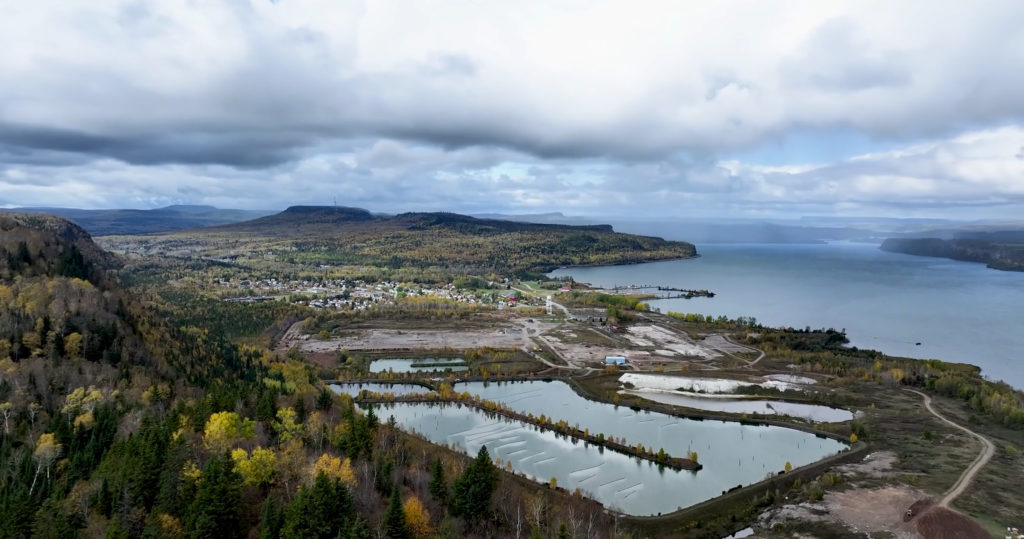
Rock Tech Lithium has secured a C$200 million investment from Canadian developer BMI Group to advance its Red Rock lithium converter in northern Ontario, designed to produce up to 32,000 tonnes per year of battery-grade lithium carbonate equivalent using a fully engineered and permitted converter design from its Guben, Germany operation. The 337-acre former Norampac paper mill site, about 100 km east of Thunder Bay, offers rail and road access plus roughly 120 MW of power capacity, with up to C$30 million earmarked for engineering, permitting and early works ahead of a 2026 final investment decision. Feedstock is planned from Rock Tech’s Georgia Lake project 60 km north, which has 10.6 million indicated tonnes at 0.88% Li₂O and 4.2 million inferred tonnes at 1% Li₂O, with mine capex estimated at about C$291 million for a nine-year life and converter start-up targeted for 2029.
Technical Brief
- BMI Group will act as lead limited partner, with Rock Tech retaining development, engineering and operating control.
- Up to C$30 million is ringfenced specifically for engineering, permitting, environmental work and early site development.
- Converter process design is being directly replicated from Rock Tech’s fully engineered and permitted Guben, Germany plant.
- The 337-acre Red Rock site reuses the former Norampac paper mill main building for processing infrastructure.
- Existing site services include rail and road connections plus about 120 MW of installed power capacity.
- Red Rock forms part of BMI’s “Critical Minerals Corridor” of repurposed industrial hubs across Ontario and Quebec.
- Georgia Lake mineral resource stands at 10.6 Mt indicated at 0.88% Li₂O and 4.2 Mt inferred at 1.0% Li₂O.
- The 2022 Georgia Lake prefeasibility study estimated total mine capital costs at approximately C$291 million over nine years.
- Final investment decision is targeted by end-2026, with Rock Tech’s recent investor presentation confirming the converter capacity case.
- Use of brownfield, power-rich industrial platforms like Red Rock is becoming a common strategy to compress converter delivery schedules.
Our Take
The earlier MoU with Siemens Canada to apply Digital Twin tools at the Red Rock lithium converter suggests Rock Tech Lithium is positioning this Ontario asset as a showcase for highly digitalised processing, which could be important for meeting ESG and traceability expectations in North American battery supply chains.
With Georgia Lake’s indicated and inferred resources supporting only a nine‑year mine life in the current prefeasibility work, the decision to anchor a converter at Red Rock implies Rock Tech will likely need third‑party spodumene feed or resource expansion to fully utilise the planned processing platform over the long term.
In our database of 1216 Mining stories, relatively few lithium pieces feature converter NPVs in the billion‑dollar range, so the US$1.7 billion figure attached to Rock Tech’s Ontario scoping work places this project in the upper tier of lithium value‑addition plays rather than a typical single‑mine development.
Prepared by collating external sources, AI-assisted tools, and Geomechanics.io’s proprietary mining database, then reviewed for technical accuracy & edited by our geotechnical team.
Related Articles
Related Industries & Products
Mining
Geotechnical software solutions for mining operations including CMRR analysis, hydrogeological testing, and data management.
Construction
Quality control software for construction companies with material testing, batch tracking, and compliance management.
CMRR-io
Streamline coal mine roof stability assessments with our cloud-based CMRR software featuring automated calculations, multi-scenario analysis, and collaborative workflows.
HYDROGEO-io
Comprehensive hydrogeological testing platform for managing, analysing, and reporting on packer tests, lugeon values, and hydraulic conductivity assessments.
GEODB-io
Centralised geotechnical data management solution for storing, accessing, and analysing all your site investigation and material testing data.