Rio Tinto doubles down on copper: project pipeline and capex lens for mine planners
Reviewed by Joe Ashwell
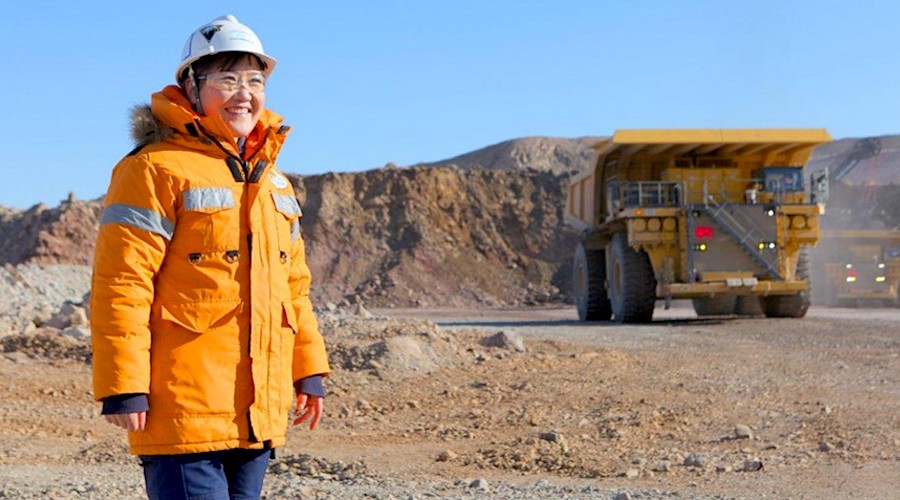
First reported on MINING.com
30 Second Briefing
Rio Tinto is pivoting hard to copper, doubling copper profit to nearly $7.4 billion on an 11% production increase from the Oyu Tolgoi underground ramp-up and directing 85% of its exploration budget to the metal after walking away from a Glencore mega-merger. Group EBITDA rose 9% to $25.4 billion and underlying earnings hit $10.87 billion, while net profit slipped 14% to $10 billion on higher depreciation, tax and financing costs. Iron ore remains dominant with 323–338 Mt Pilbara shipments forecast for 2026 and initial Simandou exports targeting 5–10 Mt.
Technical Brief
- Oyu Tolgoi underground ramp-up in Mongolia is the primary driver of Rio’s higher copper output.
- CEO Simon Trott has redirected 85% of group exploration spend specifically into copper targets.
- Trott’s portfolio refocus includes smaller bolt-on deals rather than large-scale M&A such as Glencore.
- Rio has acquired a Brazilian aluminium producer in partnership with Chinese investors to optimise smelting exposure.
- The company has increased its equity stake in Nemaska Lithium, securing additional lithium supply from Quebec.
- Four of five Pilbara replacement iron ore mines in Western Australia are either ramping up or under construction.
- Initial Simandou exports from Guinea have commenced, with a step-up to 5–10 Mt sales targeted for 2026.
- Iron ore division underlying earnings declined 11% year-on-year due to weaker prices and flat shipment volumes.
Our Take
Rio Tinto’s decision to channel about 85% of its exploration budget into copper comes just weeks after it walked away from a proposed merger with Glencore that analysts said could have controlled about 7% of global copper output, signalling a preference for organic and brownfield growth over scale via M&A.
Glencore is also accelerating copper exposure through assets like Kamoto in the DRC, so Rio Tinto’s push at Oyu Tolgoi and other copper projects positions it as a direct rival in the copper growth pipeline rather than a consolidation partner, which will matter for future competition over tier‑one deposits in Africa and Latin America.
Within our 1070 Mining stories, copper repeatedly appears alongside decarbonisation themes, and Rio Tinto’s simultaneous build‑out of Western Australia replacement iron ore mines and the Simandou project suggests it is hedging between traditional bulk revenue (Pilbara and Guinea iron ore) and higher‑margin energy‑transition metals (copper, aluminium, lithium).
Prepared by collating external sources, AI-assisted tools, and Geomechanics.io’s proprietary mining database, then reviewed for technical accuracy & edited by our geotechnical team.
Related Articles

Related Industries & Products
Mining
Geotechnical software solutions for mining operations including CMRR analysis, hydrogeological testing, and data management.
Construction
Quality control software for construction companies with material testing, batch tracking, and compliance management.
CMRR-io
Streamline coal mine roof stability assessments with our cloud-based CMRR software featuring automated calculations, multi-scenario analysis, and collaborative workflows.
HYDROGEO-io
Comprehensive hydrogeological testing platform for managing, analysing, and reporting on packer tests, lugeon values, and hydraulic conductivity assessments.
GEODB-io
Centralised geotechnical data management solution for storing, accessing, and analysing all your site investigation and material testing data.