Revival Gold’s Mercur project: shallow oxide gold and PFS notes for mine planners
Reviewed by Tom Sullivan
First reported on MINING.com
30 Second Briefing
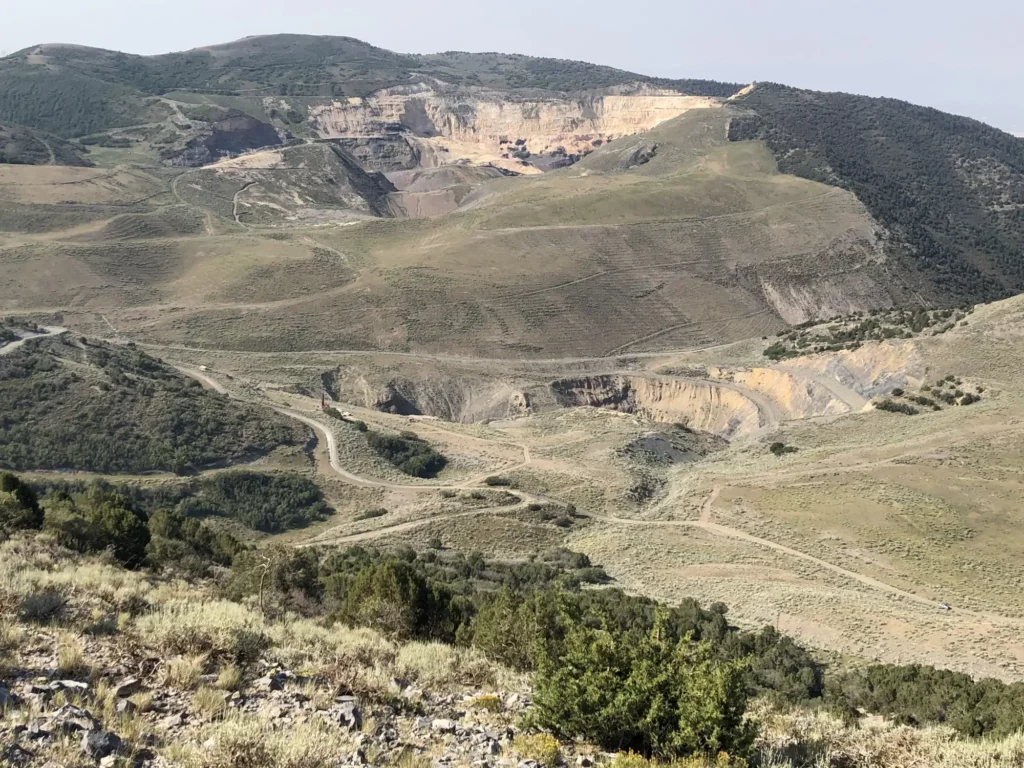
Recent drilling at Revival Gold’s past-producing Mercur project in Utah has returned shallow oxide-style intercepts suited to heap leach, including 25.9 metres grading 1.8 g/t gold from 6.1 metres in hole RM25-144 and 21.9 metres at 1.3 g/t from 16.8 metres in RMC25-019. A pre-feasibility study is planned this year on a 10-year, 95,000 oz./yr operation requiring an estimated $208 million capex, with environmental baseline work and archaeological mitigation planning now underway. Revival has also initiated metallurgical test programmes, is rehabilitating historic water supply wells, and has appointed veteran engineer Timothy Barnett as Mercur general manager.
Technical Brief
- Additional intercepts include 29 m at 0.7 g/t Au from 21 m in RM25-131.
- Hole RMC25-124 returned 18 m at 0.77 g/t Au from ~24 m depth.
- Revival reports results are confirming both grade tenor and leachability in Mercur’s main zone.
- Mercur property spans ~66 km², located 57 km from Salt Lake City, aiding existing infrastructure access.
- Historical production totals 2.6 Moz Au, including 900 koz at ~7 g/t, indicating established mineralised systems.
- Environmental baseline fieldwork is scheduled to run for about one year before permitting advances.
- Discussions with Utah regulators focus on mitigation of historic mining-related archaeological sites as a permitting prerequisite.
- Metallurgical test programmes and rehabilitation of historic water supply wells are being mobilised to support process and water-supply design.
- Veteran engineer Timothy Barnett has been appointed general manager, bringing 30 years’ engineering, operations and construction management experience.
Our Take
At a projected US$208 million build cost for a 10-year life, Mercur sits in the smaller-capex end of US gold projects in our database, which typically gives juniors like Revival Gold more optionality on phased development or partial project financing rather than needing a single large strategic backer.
Shallow intercepts starting from about 6–25 metres downhole at Mercur are consistent with near-surface, open-pittable oxide-style gold systems seen elsewhere in the western US, which can materially lower strip ratios and shorten construction schedules if permitting proceeds as planned.
Revival Gold’s C$207 million market value places it in the lower mid-tier of gold developers in our coverage, meaning any step-change in Mercur’s resource base or permitting de-risking this year could have an outsized impact on valuation compared with larger, multi-asset peers.
Prepared by collating external sources, AI-assisted tools, and Geomechanics.io’s proprietary mining database, then reviewed for technical accuracy & edited by our geotechnical team.
Related Articles


Related Industries & Products
Mining
Geotechnical software solutions for mining operations including CMRR analysis, hydrogeological testing, and data management.
Construction
Quality control software for construction companies with material testing, batch tracking, and compliance management.
CMRR-io
Streamline coal mine roof stability assessments with our cloud-based CMRR software featuring automated calculations, multi-scenario analysis, and collaborative workflows.
HYDROGEO-io
Comprehensive hydrogeological testing platform for managing, analysing, and reporting on packer tests, lugeon values, and hydraulic conductivity assessments.
GEODB-io
Centralised geotechnical data management solution for storing, accessing, and analysing all your site investigation and material testing data.