Geomechanics.io

  • Free Tools
Sign UpLog In

    Geomechanics.io

    Geomechanics, Streamlined.

    © 2026 Geomechanics.io. All rights reserved.

    Geomechanics.io

    CMRR-ioGEODB-ioHYDROGEO-ioQCDB-ioFree Tools & CalculatorsBlogLatest Industry News

    Industries

    MiningConstructionTunnelling

    Company

    Terms of UsePrivacy PolicyLinkedIn
    Standard/Guideline
    Projects

    Revised NPS for ports: DCO approvals and design implications for engineers

    July 8, 2026|

    Reviewed by Joe Ashwell

    Revised NPS for ports: DCO approvals and design implications for engineers

    First reported on New Civil Engineer

    30 Second Briefing

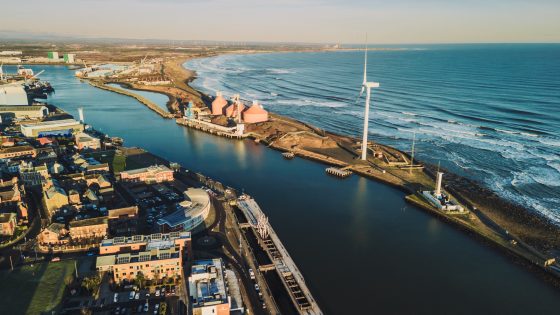
    The government has issued a revised National Policy Statement for ports, published on 6 July, introducing a stronger presumption in favour of granting development consent orders (DCOs) for port projects. The update is expected to shorten examination and decision timelines for nationally significant infrastructure, particularly for deep-water berths, container terminals and associated road and rail links. Port sponsors and their geotechnical and civil teams can now place greater weight on NPS conformity in design development, environmental impact assessments and land-side ground engineering strategies.

    Technical Brief

    • Stronger policy weight on ports means geotechnical options appraisals should be aligned early with safeguarded expansion land.
    • Shoreline change, dredging regimes and berth deepening impacts will need tighter linkage to NPS-compliant coastal processes assessments.
    • Landside ground engineering for new rail and highway links will be scrutinised against NPS transport integration objectives.
    • Expect Examining Authorities to place less emphasis on need arguments and more on mitigation design robustness.

    Geotechnical Software for Modern Teams

    Centralise site data, logs, and lab results with GEODB-io, CMRR-io, and HYDROGEO-io.

    No credit card required.

    • Save and export unlimited calculations
    • Advanced data visualisation
    • Generate professional PDF reports
    • Cloud storage for all your projects

    Prepared by collating external sources, AI-assisted tools, and Geomechanics.io’s proprietary mining database, then reviewed for technical accuracy & edited by our geotechnical team.

    Related Articles

    Faster penalties for offending water companies: compliance lessons for asset engineers
    Policy
    about 3 hours ago

    Faster penalties for offending water companies: compliance lessons for asset engineers

    Faster penalties of up to £500,000 per breach are being introduced so the Environment Agency can sanction water companies more quickly for pollution and other environmental offences on rivers and coastal waters. The regime forms part of the government’s wider overhaul of England’s water system, tightening enforcement around sewage discharges, abstraction limits and permit non-compliance. Asset managers and project teams should expect closer scrutiny of CSO performance, treatment works upgrades and network resilience, with reduced scope to rely on lengthy investigations before fines are imposed.

    Madeleine King’s supply chain resilience push: key signals for critical minerals projects
    Policy
    about 15 hours ago

    Madeleine King’s supply chain resilience push: key signals for critical minerals projects

    Australia’s planned $28 billion critical minerals package targets new domestic processing and refining capacity to cut exposure to highly concentrated offshore supply, particularly for battery and magnet metals. Federal Resources Minister Madeleine King told the National Security College at the Australian National University that Australia must move beyond raw ore exports into value-added stages such as hydrometallurgical refining and precursor production. For miners and processors, the signal is stronger policy backing for downstream plants, long-term offtake structures and supply-chain security aligned with national security objectives.

    Scottish sites for new nuclear: siting criteria and next steps for engineers
    Policy
    1 day ago

    Scottish sites for new nuclear: siting criteria and next steps for engineers

    Several sites in Scotland have been flagged as technically suitable for new nuclear power stations in a UK Government-commissioned siting study, despite the Scottish Government’s current opposition to new nuclear build. The assessment focuses on factors such as coastal locations with access to large-volume cooling water, seismic stability and low flood risk, and proximity to the existing 400kV transmission network. For civil and geotechnical teams, the work signals where future detailed site investigations, coastal defence design and grid-connection studies may be requested if policy barriers ease.

    Related Industries & Products

    Mining

    Geotechnical software solutions for mining operations including CMRR analysis, hydrogeological testing, and data management.

    Construction

    Quality control software for construction companies with material testing, batch tracking, and compliance management.

    CMRR-io

    Streamline coal mine roof stability assessments with our cloud-based CMRR software featuring automated calculations, multi-scenario analysis, and collaborative workflows.

    HYDROGEO-io

    Comprehensive hydrogeological testing platform for managing, analysing, and reporting on packer tests, lugeon values, and hydraulic conductivity assessments.

    GEODB-io

    Centralised geotechnical data management solution for storing, accessing, and analysing all your site investigation and material testing data.

    AllGeotechnicalMiningInfrastructureMaterialsHazardsEnvironmentalSoftwarePolicy