Geomechanics.io

  • Free Tools
Sign UpLog In

Geomechanics.io

Geomechanics, Streamlined.

© 2026 Geomechanics.io. All rights reserved.

Geomechanics.io

CMRR-ioGEODB-ioHYDROGEO-ioQCDB-ioFree Tools & CalculatorsBlogLatest Industry News

Industries

MiningConstructionTunnelling

Company

Terms of UsePrivacy PolicyLinkedIn
    AllGeotechnicalMiningInfrastructureMaterialsHazardsEnvironmentalSoftwarePolicy
    Failure
    Safety

    One-tonne block crush incident: CDM and LOLER lessons for yard engineers

    April 17, 2026|

    Reviewed by Joe Ashwell

    One-tonne block crush incident: CDM and LOLER lessons for yard engineers

    First reported on New Civil Engineer

    30 Second Briefing

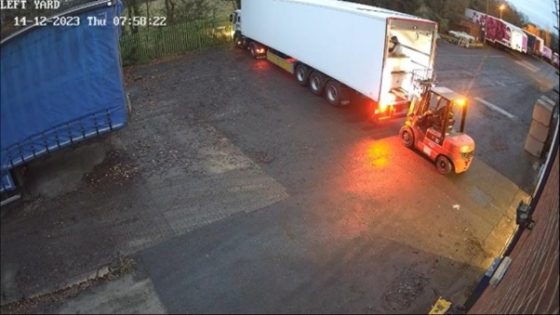
    A Worcestershire vehicle maintenance firm has been fined £30,000 plus £4,325 in costs after a worker was crushed beneath a one-tonne concrete block, sustaining what the court described as “devastating” injuries. The incident involved a precast block used on the company’s site, with inadequate control of lifting and securing operations identified as the core failure. The case signals continued regulatory pressure on small depots and workshops to apply full CDM- and LOLER-level rigour to handling heavy concrete units and temporary yard structures.

    Technical Brief

    • Likely failure mechanism: unrestrained block toppled or slid during loading/unloading without mechanical restraint or chocking.
    • Investigation would focus on lifting accessories, anchor points, sling configuration and any temporary propping used in the trailer.
    • HSE inquiry would examine whether a formal lifting plan, risk assessment and method statement existed for handling the block.
    • Monitoring improvements could include mandatory pre-lift checks, tag-out of non-compliant lifting gear and routine yard audits.
    • Remedial controls typically involve engineered restraints for precast units in trailers, e.g. bolted stops, wedges or proprietary frames.
    • Similar depots handling precast blocks or barriers need explicit segregation, exclusion zones and banksman control around HGV trailers.

    Our Take

    In our database, several other Failure-tagged cases involving single heavy items rather than full structural collapse show that even small, one-off lifts can carry disproportionate risk, suggesting supervisors should treat any ad hoc repositioning of blocks or panels as a full lifting operation with formal controls.

    Geotechnical Software for Modern Teams

    Centralise site data, logs, and lab results with GEODB-io, CMRR-io, and HYDROGEO-io.

    No credit card required.

    • Save and export unlimited calculations
    • Advanced data visualisation
    • Generate professional PDF reports
    • Cloud storage for all your projects

    Prepared by collating external sources, AI-assisted tools, and Geomechanics.io’s proprietary mining database, then reviewed for technical accuracy & edited by our geotechnical team.

    Related Articles
    Melbourne sinkhole investigations: geotechnical lessons for tunnel project teams
    Hazards
    in 2 months

    Melbourne sinkhole investigations: geotechnical lessons for tunnel project teams

    A sinkhole roughly 8–10 m wide and several metres deep has opened on the AJ Burkitt Reserve sporting oval in Heidelberg, directly adjacent to the North East Link tunnel alignment in Melbourne’s northeast. Victorian Infrastructure Delivery Authority has confirmed the “surface hole” is in the vicinity of active tunnelling operations, leading to a work pause while engineers and emergency crews carry out geotechnical investigations and monitoring. No injuries or structural damage have been reported, but the area remains fully cordoned off pending cause determination and stability assessment.

    Hazards
    3 days ago

    LEEA Global Lifting Awareness Day 2026: specification and safety lessons for engineers

    The Lifting Equipment Engineers Association has set Thursday 2 July 2026 for the seventh Global Lifting Awareness Day, built around the theme “Not all lifting equipment is created equal.” LEEA plans to use the campaign, run with member companies and sector partners, to push better specification and inspection of cranes, hoists and below-the-hook devices in mining and other heavy industries. The initiative will culminate in a new guidance document aimed at reducing failures linked to substandard or misapplied lifting gear.

    Deep borehole investigations for UK GDF: siting and design notes for engineers
    Hazards
    4 days ago

    Deep borehole investigations for UK GDF: siting and design notes for engineers

    Deep borehole investigations for the UK’s geological disposal facility (GDF) for higher-activity radioactive waste are set to begin once the government confirms the first site selection, following a formal letter to the project manager. The programme will involve multi-kilometre boreholes to characterise deep rock formations and groundwater regimes, providing data on long-term containment performance and engineered barrier design. Early site choice will influence drilling logistics, monitoring networks and subsequent underground laboratory planning for the GDF.

    Related Industries & Products

    Mining

    Geotechnical software solutions for mining operations including CMRR analysis, hydrogeological testing, and data management.

    Construction

    Quality control software for construction companies with material testing, batch tracking, and compliance management.

    CMRR-io

    Streamline coal mine roof stability assessments with our cloud-based CMRR software featuring automated calculations, multi-scenario analysis, and collaborative workflows.

    HYDROGEO-io

    Comprehensive hydrogeological testing platform for managing, analysing, and reporting on packer tests, lugeon values, and hydraulic conductivity assessments.

    GEODB-io

    Centralised geotechnical data management solution for storing, accessing, and analysing all your site investigation and material testing data.