North West farm powerline strikes: design and clearance lessons for engineers
Reviewed by Tom Sullivan
First reported on New Civil Engineer
30 Second Briefing
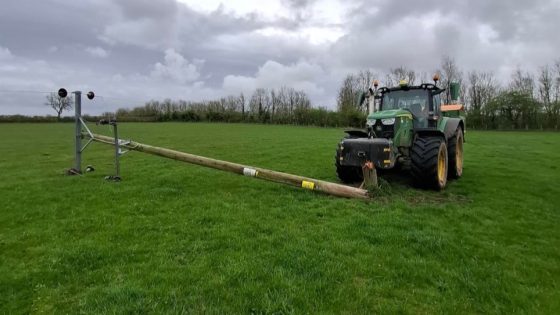
Farm machinery and agricultural vehicles have struck overhead powerlines and other electrical assets 22 times in the past 12 months in the North West of England, prompting a formal safety warning from the regional network operator. Incidents typically involve high-reach kit such as telehandlers, slurry tankers and combine harvesters contacting 11kV and 33kV lines on field margins and farm access tracks. Civil and farm infrastructure designers are being urged to review clearance envelopes, access road alignments and signage to reduce strike risk during peak harvesting and slurry-spreading operations.
Technical Brief
- Strike data provide a basis for revising design assumptions on agricultural vehicle envelopes near wayleaves.
- Incident frequency suggests current wayleave widths and offset distances may be inadequate for modern machinery.
- Safety warning places onus on designers to integrate electrical hazard mapping into farm infrastructure layouts.
- For civil schemes adjoining farmland, CDM risk registers should explicitly address plant–conductor interaction scenarios.
- Similar strike statistics, if collected nationally, could inform future revisions to overhead line clearance guidance.
Our Take
For civil and infrastructure projects in the North West of England, these strike statistics imply that temporary works and access planning near existing overhead lines need closer coordination with distribution network operators, especially where farm tracks double as plant haul routes.
New Civil Engineer’s broader coverage of digital asset management and ‘data handover gaps’ indicates that integrating precise overhead line locations and exclusion zones into farm and rural project GIS/BIM models could materially reduce this type of failure event during construction and maintenance activities.
Prepared by collating external sources, AI-assisted tools, and Geomechanics.io’s proprietary mining database, then reviewed for technical accuracy & edited by our geotechnical team.