North Sea 100GW offshore wind pact: design and delivery notes for contractors
Reviewed by Tom Sullivan
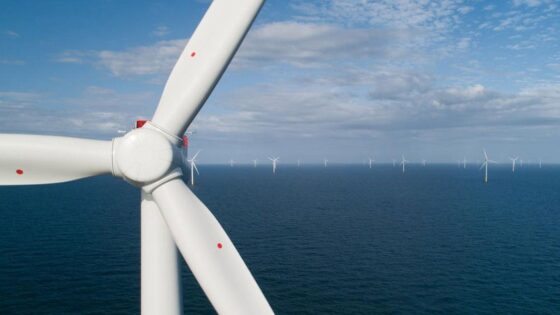
First reported on New Civil Engineer
30 Second Briefing
North Sea energy ministers from the UK, Germany, Denmark, the Netherlands and six other European states have signed a joint declaration in Hamburg to deliver 100GW of offshore wind capacity and expand cross‑border electricity interconnectors. The agreement centres on large-scale co‑ordination of seabed planning, grid integration and shared offshore hubs in the North Sea basin. For civil and marine contractors, this signals a sustained pipeline of foundations, subsea cables and converter platforms in increasingly deeper, harsher offshore conditions.
Technical Brief
- Cross‑border co‑ordination is expected to streamline marine spatial planning and reduce permitting clashes between adjacent lease areas.
- Shared offshore infrastructure implies multi‑terminal HVDC nodes, affecting platform sizing, topside weights and piling demands.
- Contractors can anticipate harmonised technical standards across participating states, simplifying design replication for jackets and monopiles.
- Long‑term interconnector planning will drive demand for deep‑water cable‑laying spreads and HDD shore‑landing works.
- Agreement scope suggests more complex interface risk between national TSOs, offshore wind developers and marine civil contractors.
- For similar basins, the model points towards basin‑wide grid codes and joint seabed zoning frameworks.
Our Take
Within the 542 Infrastructure stories in our database, very few involve multi-country coordination on this scale, so a 10-nation North Sea framework is likely to set reference standards for grid integration, consenting and marine spatial planning that individual UK projects will have to align with.
For UK-based offshore contractors and port authorities, a 100 GW joint North Sea build-out implies a sustained regional pipeline rather than a purely domestic one, which typically supports investment in larger fabrication yards, installation vessels and cable-laying capacity anchored around North Sea hubs such as those linked to Hamburg.
Given that this sits in the ‘Projects’ and ‘Sustainability’ cluster of 1,455 tag-matched pieces, the North Sea agreement signals that future UK offshore wind tenders are likely to be judged not just on price but also on cross-border system benefits, including interconnector readiness and shared balancing of variable generation.
Prepared by collating external sources, AI-assisted tools, and Geomechanics.io’s proprietary mining database, then reviewed for technical accuracy & edited by our geotechnical team.
Related Articles


Related Industries & Products
Construction
Quality control software for construction companies with material testing, batch tracking, and compliance management.
Mining
Geotechnical software solutions for mining operations including CMRR analysis, hydrogeological testing, and data management.
CMRR-io
Streamline coal mine roof stability assessments with our cloud-based CMRR software featuring automated calculations, multi-scenario analysis, and collaborative workflows.
HYDROGEO-io
Comprehensive hydrogeological testing platform for managing, analysing, and reporting on packer tests, lugeon values, and hydraulic conductivity assessments.
GEODB-io
Centralised geotechnical data management solution for storing, accessing, and analysing all your site investigation and material testing data.