National Highways’ £968M concrete roads framework: delivery and pavement notes for engineers
Reviewed by Joe Ashwell
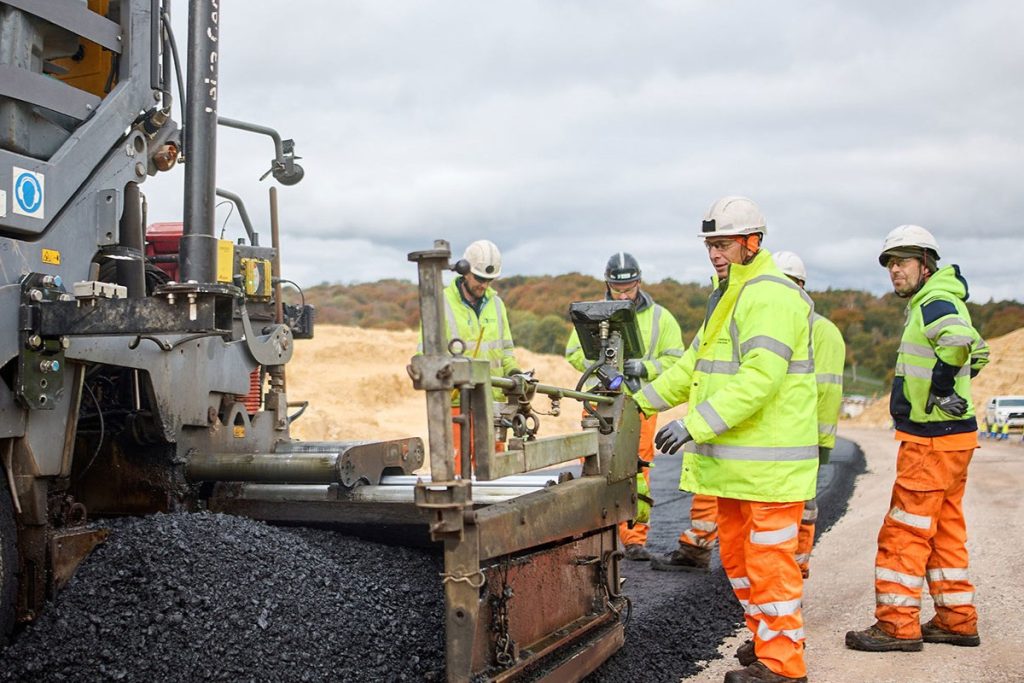
First reported on New Civil Engineer
30 Second Briefing
National Highways has awarded a £968M framework to Graham, John Sisk & Son and Kier to reconstruct ageing concrete pavements across the Strategic Road Network in England. The multi-year programme will target rigid carriageways nearing or beyond design life, replacing them with modern concrete or composite pavement structures designed for higher traffic loading and reduced maintenance interventions. Contractors are expected to deploy large-scale slab removal, fast-track slipform paving and night-time possession strategies to keep key motorways and trunk roads operational during works.
Technical Brief
- Appointments cover England’s Strategic Road Network, focusing on rigid concrete sections rather than flexible asphalt assets.
- Works packages will likely be let as individual schemes, enabling phasing by route priority and pavement condition.
- National Highways can call off schemes over several years, giving contractors continuity of specialist concrete plant and crews.
- Framework enables standardised pavement details, joint layouts and reinforcement strategies across multiple motorway and trunk road schemes.
- Concentrating concrete reconstruction with three Tier 1s should streamline traffic management planning and interface with regional maintenance contracts.
Our Take
Graham’s recent wins on the £70m Fermanagh Lakeland Forum and the £286m Cambridge Halls redevelopment suggest it now has a strong UK public‑sector workload mix, so resourcing and supply-chain coordination across these and the National Highways framework will be a live risk to manage.
Kier’s presence here follows its near‑miss on Sefton Council’s £73m Marine Lake Events Centre, indicating that highways and national frameworks remain a core pipeline even as it faces tougher competition on regional civic projects.
Within our 726 Infrastructure stories, National Highways features disproportionately in large multi‑year frameworks, signalling that long-term, programme-style delivery models are now the default route for major pavement and asset renewal in England rather than one‑off schemes.
Prepared by collating external sources, AI-assisted tools, and Geomechanics.io’s proprietary mining database, then reviewed for technical accuracy & edited by our geotechnical team.
Related Articles


Related Industries & Products
Construction
Quality control software for construction companies with material testing, batch tracking, and compliance management.
Mining
Geotechnical software solutions for mining operations including CMRR analysis, hydrogeological testing, and data management.
QCDB-io
Comprehensive quality control database for manufacturing, tunnelling, and civil construction with UCS testing, PSD analysis, and grout mix design management.