Geomechanics.io

  • Free Tools
Sign UpLog In

Geomechanics.io

Geomechanics, Streamlined.

© 2026 Geomechanics.io. All rights reserved.

Geomechanics.io

CMRR-ioGEODB-ioHYDROGEO-ioQCDB-ioFree Tools & CalculatorsBlogLatest Industry News

Industries

MiningConstructionTunnelling

Company

Terms of UsePrivacy PolicyLinkedIn
    Projects
    Product

    Mine site rare-earth sensor: process control gains for plant metallurgists

    February 24, 2026|

    Reviewed by Tom Sullivan

    Mine site rare-earth sensor: process control gains for plant metallurgists

    First reported on Australian Mining

    30 Second Briefing

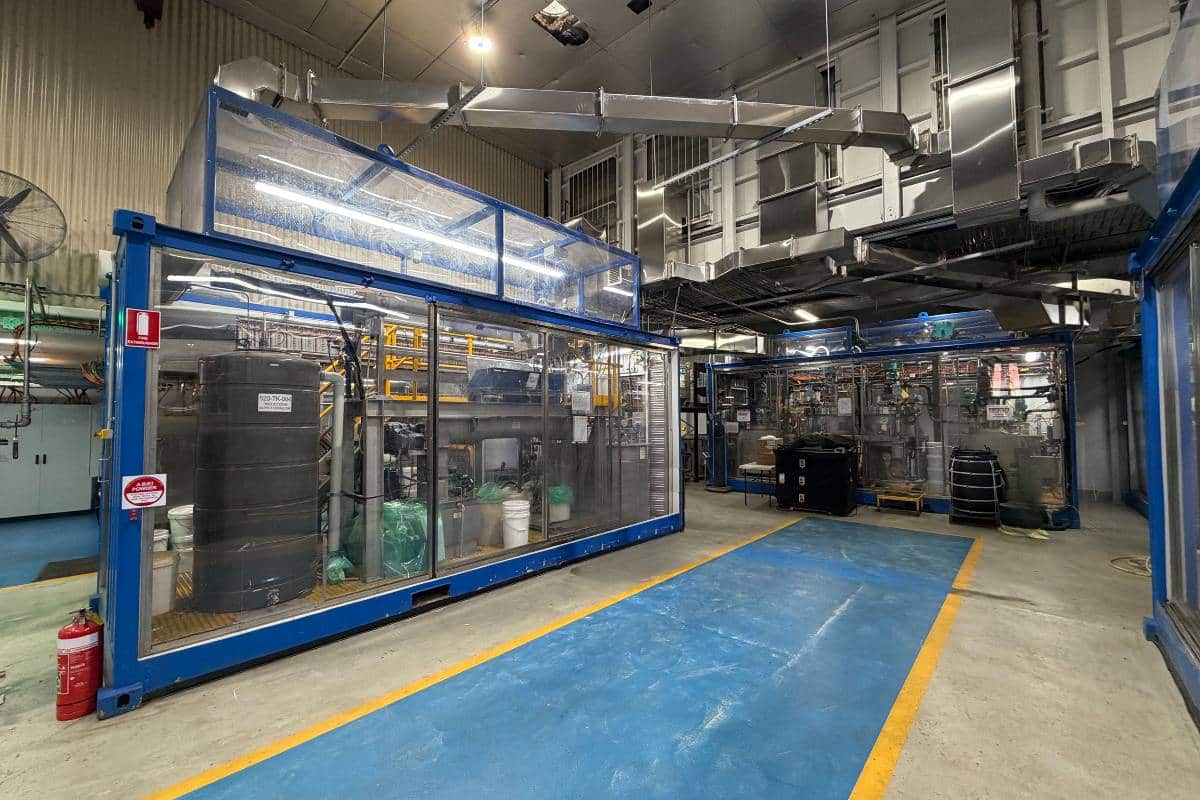
    Adelaide-based quantum technology company QuantX Labs will receive $2.4 million from the Australian Government to build Australia’s first real-time, mine-site rare earths sensor for deployment on processing circuits. The system will use quantum-enabled radio-frequency sensors to measure rare earth concentrations in slurries and ores in situ, rather than relying on off-site assay labs with multi-day turnaround. For plant metallurgists, continuous grade data at the mill or flotation cells could tighten cut-off control, reduce reagent overuse and lift recoveries from complex rare earth deposits.

    Technical Brief

    • Similar quantum RF sensing architectures could later be adapted for base metals or battery mineral circuits.

    Our Take

    Rare earth coverage in our mining database is relatively thin compared with bulk commodities, so an Australia-based sensor project suggests operators are now looking harder at process-side gains rather than just new orebodies.

    Australian Government backing in Adelaide for rare earth–linked technology implies policy support is extending beyond mine approvals into plant-level innovation, which can help local producers compete against lower-cost Chinese refiners without matching their scale.

    For rare earth projects in Australia, on-site sensing that improves recoveries can materially shift marginal deposits into viable territory, especially where environmental approvals constrain the option of simply increasing throughput or tailings volumes.

    Geotechnical Software for Modern Teams

    Centralise site data, logs, and lab results with GEODB-io, CMRR-io, and HYDROGEO-io.

    No credit card required.

    • Save and export unlimited calculations
    • Advanced data visualisation
    • Generate professional PDF reports
    • Cloud storage for all your projects

    Prepared by collating external sources, AI-assisted tools, and Geomechanics.io’s proprietary mining database, then reviewed for technical accuracy & edited by our geotechnical team.

    Related Articles
    Mining
    about 11 hours ago

    Thiess adds fourth Liebherr R 9800 at Lake Vermont: fleet and productivity notes for engineers

    Thiess has mobilised a fourth Liebherr R 9800 hydraulic excavator to Jellinbah Group’s Lake Vermont coal mine in Queensland, expanding a fleet already built around ultra-class loading units. The R 9800, typically paired with 220–300 t class haul trucks and capable of 40–80 m³ bucket capacities depending on configuration, is being deployed to meet rising production requirements and tighten truck–shovel match. The move signals continued capital commitment to high‑productivity primary loading assets and supports longer-term planning for efficient strip mining and overburden removal.

    Mining
    about 11 hours ago

    Finning–McCloskey 10,000th Cat engine: fleet planning notes for plant engineers

    Finning UK & Ireland has supplied its 10,000th Cat® industrial engine to McCloskey International, extending a supply partnership that began in 2006 when McCloskey established manufacturing in Northern Ireland. The engines power McCloskey’s mobile crushing, screening and material handling equipment, which is seeing rising global demand in aggregates and mining applications. For plant operators, the milestone signals long-term parts and service continuity for Cat-powered McCloskey units, an important factor in lifecycle planning and fleet standardisation.

    Mining
    about 11 hours ago

    Glencore Sudbury INO mine rescue win: training takeaways for deep nickel operations

    Glencore’s Sudbury Integrated Nickel Operations (INO) mine rescue team has taken the 2026 Ontario Mine Rescue overall champion title in Sudbury, outperforming seven other regional winners in a province-wide final. The team completed a complex mock underground emergency scenario designed by Ontario Mine Rescue (OMR), typically involving live-fire suppression, casualty extrication and use of closed-circuit breathing apparatus under time and communication constraints. For mine operators, the result reinforces the value of rigorous, scenario-based training regimes and standardised emergency procedures across multi-level, deep nickel operations.

    Related Industries & Products

    Mining

    Geotechnical software solutions for mining operations including CMRR analysis, hydrogeological testing, and data management.

    CMRR-io

    Streamline coal mine roof stability assessments with our cloud-based CMRR software featuring automated calculations, multi-scenario analysis, and collaborative workflows.

    HYDROGEO-io

    Comprehensive hydrogeological testing platform for managing, analysing, and reporting on packer tests, lugeon values, and hydraulic conductivity assessments.

    GEODB-io

    Centralised geotechnical data management solution for storing, accessing, and analysing all your site investigation and material testing data.

    AllGeotechnicalMiningInfrastructureMaterialsHazardsEnvironmentalSoftwarePolicy