Liverpool Street Station £1bn redevelopment: design and capacity notes for engineers
Reviewed by Tom Sullivan
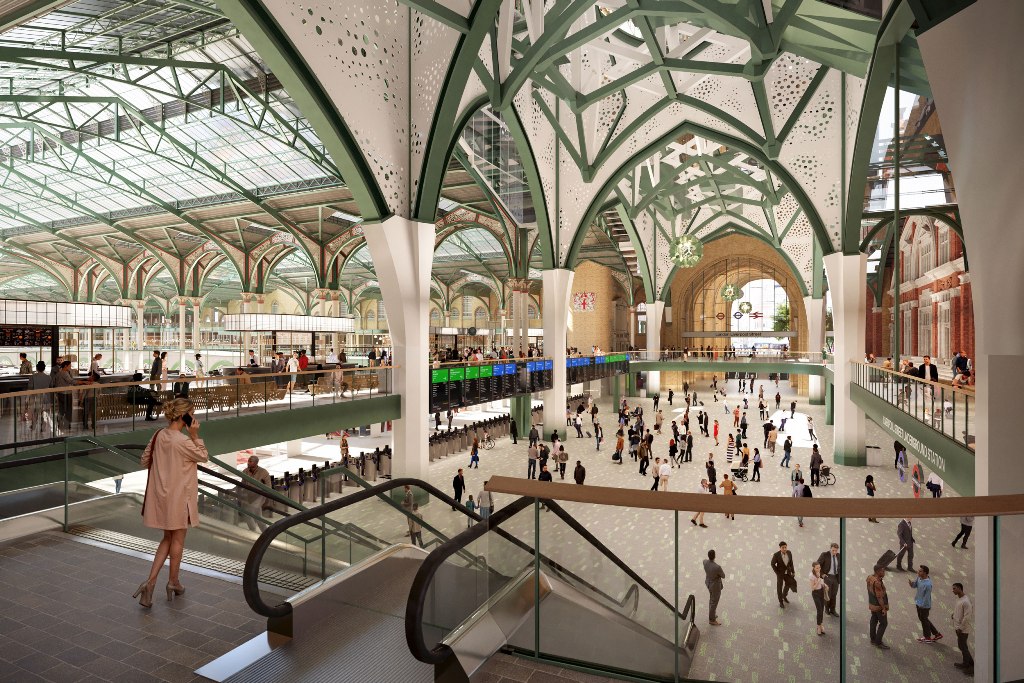
First reported on The Construction Index
30 Second Briefing
Approval of a £1bn redevelopment will expand Liverpool Street Station’s capacity from today’s 98 million passengers a year towards more than 200 million, responding to a forecast 35% rise to 158 million by 2041. The Network Rail scheme, with Aecom as lead consulting engineer alongside Platform4 and Acme, focuses on improved access, circulation and accessibility while adding new commercial, cultural and public spaces. Design development has been driven by detailed heritage assessments, multi‑disciplinary engineering and formal environmental impact assessments.
Technical Brief
- Passenger throughput has already tripled since 1991, driving stringent crowd‑flow, egress and fire‑safety design checks.
- Detailed heritage assessments constrain interventions around historic fabric, influencing load paths, demolition limits and façade retention.
- Robust environmental impact assessments will govern construction phasing, noise, dust and night‑time working in the dense urban setting.
- Scheme is positioned as a long‑term investment model where sensitively integrated commercial space cross‑subsidises transport infrastructure upgrades.
Our Take
With Liverpool Street Station in the United Kingdom forecast to handle up to 158 million passengers annually by 2041 against a design capacity of 200 million, the scheme pushes the asset into the same utilisation band as the highest-intensity transport hubs in our 690-item Infrastructure database, which typically drives more complex crowd-flow and structural loading requirements for concourse and platform works.
The £1bn redevelopment being led by Network Rail and design firms including Aecom, Platform4 and Acme aligns with a subset of ‘Projects’ and ‘Sustainability’ pieces in our coverage where major UK transport upgrades are justified primarily by long-range demand forecasts rather than current congestion, signalling that value engineering and phasing will likely be scrutinised closely as passenger numbers ramp.
A 35-year gap since the last major works at Liverpool Street Station is longer than the typical 25–30 year heavy refurbishment cycle seen in other large UK rail assets in our database, which suggests practitioners should expect more intrusive interventions on legacy foundations, tunnel interfaces and utilities than on more frequently renewed stations.
Prepared by collating external sources, AI-assisted tools, and Geomechanics.io’s proprietary mining database, then reviewed for technical accuracy & edited by our geotechnical team.
Related Articles


Related Industries & Products
Construction
Quality control software for construction companies with material testing, batch tracking, and compliance management.
Mining
Geotechnical software solutions for mining operations including CMRR analysis, hydrogeological testing, and data management.
QCDB-io
Comprehensive quality control database for manufacturing, tunnelling, and civil construction with UCS testing, PSD analysis, and grout mix design management.