Lara’s Planalto drilling push: NPV, throughput and pit design notes for mine planners
Reviewed by Joe Ashwell
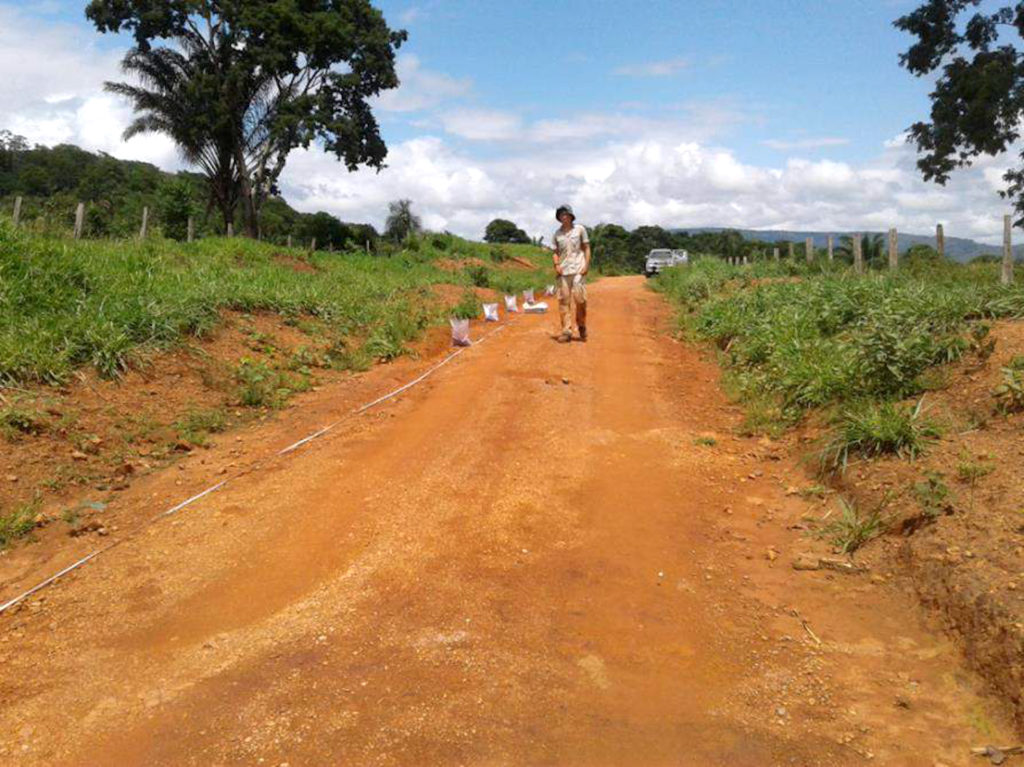
First reported on MINING.com
30 Second Briefing
Lara Exploration has seven rigs turning in a 14,000-metre campaign at the Planalto copper-gold project in Brazil’s Carajás belt, testing whether an 8-million-tonne-per-year open pit producing 36,000 tonnes copper annually can justify a post-tax NPV rising from US$378 million to a January spot-price case of US$1.2 billion. The PEA outlines an 18-year operation yielding 560,000 tonnes copper and 111,000 oz. gold, fed by 47.7 million indicated tonnes at 0.53% Cu plus 154 million inferred tonnes at 0.36% Cu, producing 120,000 tonnes per year of 28% Cu, arsenic-free chalcopyrite concentrate. Proximity to PA-160, high-tension power within 4 km, cleared ranch land and nearby mining towns, plus Atalaya Mining’s US$13.5-million equity stake, position Planalto as a potential build-and-sell candidate once resources are upgraded and Pará state permitting advances.
Technical Brief
- Seven drill rigs are executing a 14,000 m programme focused on upgrading pit-constrained resources.
- Current drilling targets a higher-grade core at Cupuzeiro and multiple Silica Cap trend anomalies.
- Strong visible chalcopyrite mineralisation is reported in new core, with assays pending to confirm continuity.
- Initial capex is estimated at US$546 million with a projected 3.5-year post-start payback.
- Site lies ~4 km from PA-160 highway and high-tension power, reducing greenfield infrastructure requirements.
- Project area is cleared private ranch land near Canaã dos Carajás and Parauapebas, easing access and labour sourcing.
- Environmental baseline work spans wet and dry seasons, covering water, fauna, dust, noise and community health.
- Pará’s state-level permitting route is being followed, leveraging recent mine approvals in the same Carajás district.
- Atalaya Mining invested US$13.5 million for 4.5 million Lara shares, signalling strategic interest from an operator with similar-grade assets.
- Early-stage status means no reserves yet; further drilling and higher-level engineering are prerequisites for any construction decision.
Our Take
With an initial capex of US$546 million for an 8 Mt/y operation and an after-tax PEA NPV of US$378 million rising to US$1.2 billion at spot prices, Planalto in Pará sits in the middle of our copper project cost curve but moves into the more competitive tier under stronger price decks, which is likely key to Atalaya Mining’s US$13.5 million strategic share purchase.
The proximity of Planalto to Vale’s Sossego mine and Cristalino deposit in the Carajás belt, combined with only 4 km to highway PA-160 and high-tension power, suggests potential for shared or incremental infrastructure solutions rather than fully greenfield builds, which could materially influence eventual capex and permitting risk.
Prepared by collating external sources, AI-assisted tools, and Geomechanics.io’s proprietary mining database, then reviewed for technical accuracy & edited by our geotechnical team.
Related Articles

Related Industries & Products
Mining
Geotechnical software solutions for mining operations including CMRR analysis, hydrogeological testing, and data management.
Construction
Quality control software for construction companies with material testing, batch tracking, and compliance management.
CMRR-io
Streamline coal mine roof stability assessments with our cloud-based CMRR software featuring automated calculations, multi-scenario analysis, and collaborative workflows.
HYDROGEO-io
Comprehensive hydrogeological testing platform for managing, analysing, and reporting on packer tests, lugeon values, and hydraulic conductivity assessments.
GEODB-io
Centralised geotechnical data management solution for storing, accessing, and analysing all your site investigation and material testing data.