Geomechanics.io

  • Free Tools
Sign UpLog In

Geomechanics.io

Geomechanics, Streamlined.

© 2026 Geomechanics.io. All rights reserved.

Geomechanics.io

CMRR-ioGEODB-ioHYDROGEO-ioQCDB-ioFree Tools & CalculatorsBlogLatest Industry News

Industries

MiningConstructionTunnelling

Company

Terms of UsePrivacy PolicyLinkedIn
    Projects
    Sustainability

    Karnalyte’s 70‑year Canadian potash mine: design and risk notes for engineers

    November 28, 2025|

    Reviewed by Tom Sullivan

    Karnalyte’s 70‑year Canadian potash mine: design and risk notes for engineers

    First reported on MINING.com

    30 Second Briefing

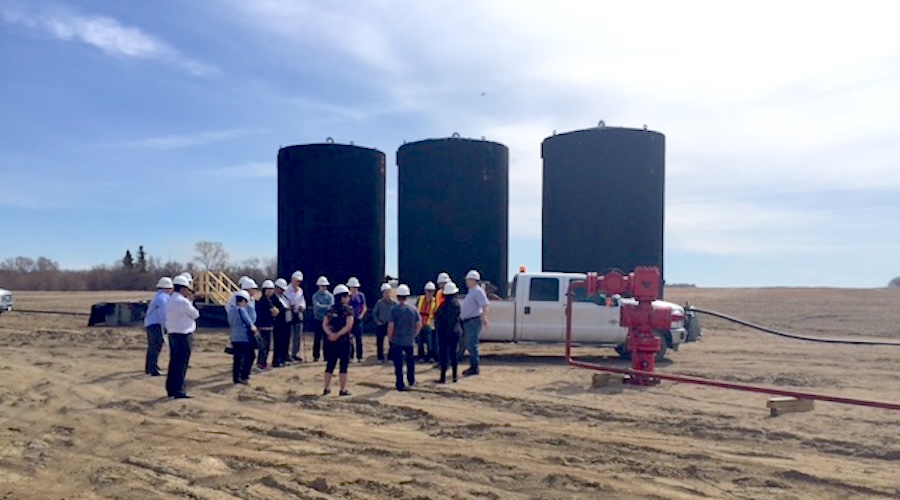
    Karnalyte Resources is promoting a proposed 70‑year potash operation 175 km east of Saskatoon, designed to produce 2.2 million tonnes of potash and 104,000 tonnes of hydromagnesite annually. The long mine life and dual‑product output signal a large, stable brine and ore resource, with implications for long‑term tailings, brine management and process plant design. For contractors and consultants, the scale suggests sustained demand for solution mining expertise, evaporation pond or crystalliser design, and associated rail and bulk handling infrastructure.

    Technical Brief

    • Solution mining in this region typically contends with cold climate brine handling and winter evaporation constraints.
    • Long-duration brine fields in Saskatchewan require robust well integrity management to mitigate casing corrosion and subsidence.

    Our Take

    A 70-year mine life at 2.2 Mt/y of potash in Saskatchewan would sit at the long-life end of projects in our database, which typically model 20–40 years, implying a strong focus on very gradual resource depletion and long-term infrastructure planning.

    Locating a major potash operation 175 km east of Saskatoon places it within Canada’s established fertiliser export corridor, which likely eases rail and port logistics compared with greenfield potash projects in less developed jurisdictions.

    Hydromagnesite as a co-commodity is unusual in our coverage and is often discussed in academic and pilot-scale contexts for CO₂ sequestration, so integrating it into a commercial potash mine plan could give the project additional sustainability and by-product revenue angles if processing is proven at scale.

    Geotechnical Software for Modern Teams

    Centralise site data, logs, and lab results with GEODB-io, CMRR-io, and HYDROGEO-io.

    No credit card required.

    • Save and export unlimited calculations
    • Advanced data visualisation
    • Generate professional PDF reports
    • Cloud storage for all your projects

    Prepared by collating external sources, AI-assisted tools, and Geomechanics.io’s proprietary mining database, then reviewed for technical accuracy & edited by our geotechnical team.

    Related Articles

    Mining
    about 10 hours ago

    Cementation Africa early dewatering designs: key lessons for mine planners

    Cementation Africa is pushing for underground mine dewatering to be designed from the earliest study phases, with hydrogeological investigations embedded in scoping and pre-feasibility work rather than added after shaft sinking. Study Manager Mine Engineering John Goulding stresses that early characterisation of aquifers, inflow rates and pore pressures allows proper sizing and siting of pump stations, sumps and grout curtains, and integration with shaft and decline layouts. For geotechnical and mine planners, this approach reduces unplanned inflows, avoids costly retrofits and supports more reliable ground support and excavation sequencing.

    Mining
    about 10 hours ago

    JordProxa at Lilac’s Great Salt Lake DLE plant: process design notes for engineers

    JordProxa has been selected as technology and equipment partner for Lilac Solutions’ Phase 1 commercial lithium carbonate plant on Utah’s Great Salt Lake, which targets 5,000 t/y of battery-grade lithium carbonate using direct lithium extraction. The partnership covers the downstream conversion process, integrating JordProxa’s thermal and process equipment with Lilac’s ion-exchange DLE system. First lithium production is planned for 2028, signalling a move from pilot-scale brine processing to a full commercial facility in a chemically complex salt-lake environment.

    Mining
    about 10 hours ago

    Orica Digital Solutions’ Axis Mining support in North Bay: reliability gains for drill teams

    Orica Digital Solutions has opened an Axis Mining Technology Technical Support & Service Centre in North Bay, Ontario, extending on-the-ground backing for its orebody intelligence systems to Canadian and wider North American mines. The facility will support deployment and maintenance of Axis downhole navigation and drillhole survey tools, improving turnaround for calibration, repairs and firmware updates that previously relied on distant service hubs. For geologists and drill and blast teams, closer support should reduce downtime on production and definition drilling and enable more consistent high-precision orebody data.

    Related Industries & Products

    Mining

    Geotechnical software solutions for mining operations including CMRR analysis, hydrogeological testing, and data management.

    Construction

    Quality control software for construction companies with material testing, batch tracking, and compliance management.

    CMRR-io

    Streamline coal mine roof stability assessments with our cloud-based CMRR software featuring automated calculations, multi-scenario analysis, and collaborative workflows.

    HYDROGEO-io

    Comprehensive hydrogeological testing platform for managing, analysing, and reporting on packer tests, lugeon values, and hydraulic conductivity assessments.

    GEODB-io

    Centralised geotechnical data management solution for storing, accessing, and analysing all your site investigation and material testing data.

    AllGeotechnicalMiningInfrastructureMaterialsHazardsEnvironmentalSoftwarePolicy