Industrialising SMR delivery in the UK: design and layout notes for engineers
Reviewed by Joe Ashwell
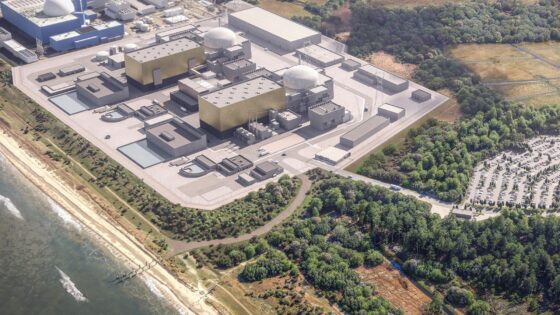
First reported on New Civil Engineer
30 Second Briefing
Industrialising delivery of small modular reactors (SMRs) is being pushed as critical if the UK is to convert its renewed nuclear ambitions into a scalable, low‑carbon baseload fleet. Proponents argue for factory‑fabricated reactor modules, standardised civil works and repeatable balance‑of‑plant designs, rather than bespoke, site‑specific construction seen on gigawatt‑scale projects like Hinkley Point C. For civil and geotechnical engineers, this points to highly standardised nuclear island foundations, modular containment structures and logistics‑driven site layouts that can be replicated rapidly across multiple locations.
Technical Brief
- Factory fabrication of nuclear island modules shifts critical-path work off constrained, security-controlled sites.
- Repeatable civil layouts allow standardised excavation geometries, crane pads and heavy-lift routes across multiple SMR sites.
- Modular containment and auxiliary buildings enable parallel groundworks and superstructure assembly, compressing on-site schedules.
- Standard nuclear basemat and pedestal designs simplify soil–structure interaction modelling and licensing for varied UK ground conditions.
- Pre-qualified supply chains for rebar cages, embedments and nuclear-grade concrete mixes are essential to repeatability.
- Digital twins of “reference” SMR sites support clash detection, logistics planning and serial construction optimisation.
Our Take
Within our 808 Infrastructure stories, the United Kingdom features heavily on complex energy-transition projects, so a UK-focused small modular reactor (SMR) build-out would be competing for delivery capacity with other major infrastructure programmes rather than starting from a blank slate.
New Civil Engineer’s role in convening innovation-focused initiatives like the TechFest Awards 2025 and the Heathrow Early Careers Innovation Challenge suggests there is already an ecosystem of UK contractors and consultants familiar with industrialised, modular delivery models that SMR programmes would need to tap into.
Across the 2,264 tag-matched ‘Projects’ and ‘Sustainability’ pieces in our database, nuclear is still a minority pathway compared with renewables and grid schemes, implying that any UK SMR rollout will need clear procurement and regulatory signals to attract civil engineering firms that are currently geared towards wind, solar, and interconnector work.
Prepared by collating external sources, AI-assisted tools, and Geomechanics.io’s proprietary mining database, then reviewed for technical accuracy & edited by our geotechnical team.
Related Articles


Related Industries & Products
Construction
Quality control software for construction companies with material testing, batch tracking, and compliance management.
Mining
Geotechnical software solutions for mining operations including CMRR analysis, hydrogeological testing, and data management.
QCDB-io
Comprehensive quality control database for manufacturing, tunnelling, and civil construction with UCS testing, PSD analysis, and grout mix design management.