HS2 4,600-tonne viaduct slid over live M6: method and risk notes for engineers
Reviewed by Joe Ashwell
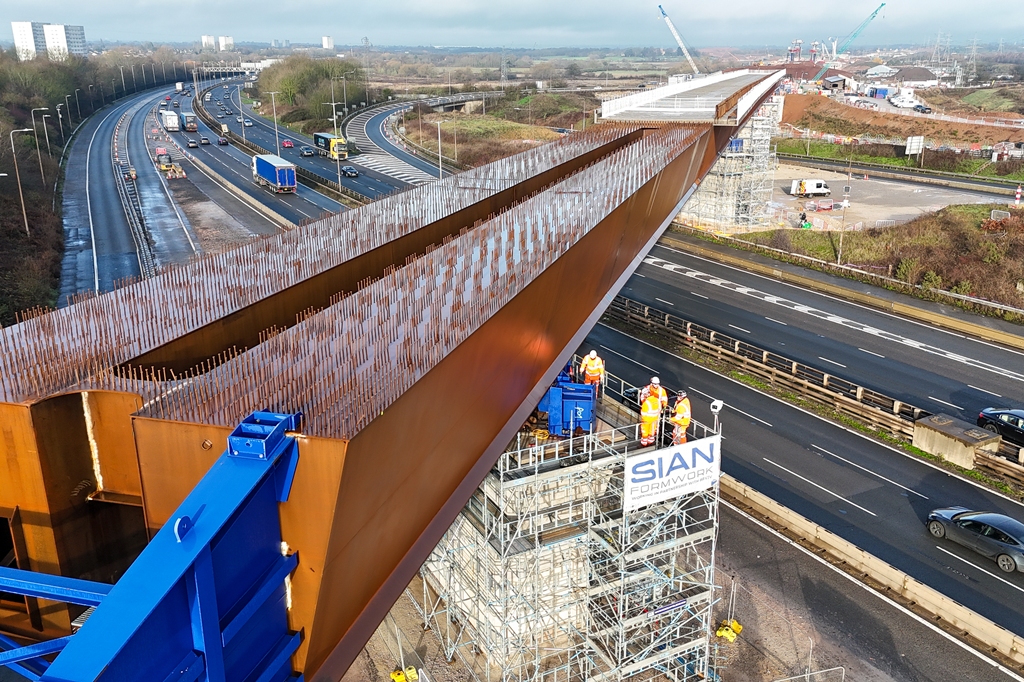
First reported on The Construction Index
30 Second Briefing
A 4,600-tonne, 315-metre HS2 viaduct deck was slid over the live M6 between Junctions 4 and 5 in a 17-hour operation, using a ‘fully restrained’ strand-jack system with Teflon pads to keep the motorway open except for an M42 slip closure. The east deck’s third and final launch, preceded by a 12-metre pre-shift under full closure, is thought to be the first fully restrained slide over a UK motorway and marks halfway completion of the M6 South viaduct. Each hollow double-box weathering steel deck sits on four pairs of concrete piers up to 9.9 metres high, with 82 precast slabs pre-installed and a 4.5-metre-high parapet planned for noise control.
Technical Brief
- Initial 12 m pre-shift under full M6 closure ensured both beam ends remained pier-supported during main slide.
- Strand jacks provided controlled longitudinal movement while ‘fully restrained’ bearings limited transverse and rotational freedom above live traffic.
- Teflon sliding pads reduced friction at the steel–concrete interface, lowering jacking forces and minimising dynamic effects.
- Traffic management limited full M6 closure to one overnight window, with only the M42 slip shut during the main launch.
Our Take
HS2–linked pieces in our database increasingly highlight complex interfaces with existing infrastructure, and this M6 South viaduct slide by Balfour Beatty Vinci sits alongside recent HS2 items on green tunnels and road realignments as examples of the scheme’s reliance on heavy temporary works to keep strategic roads open.
The decision to launch a 315 m deck over a live motorway at around 13 m/h indicates a preference for controlled incremental launching over longer full-closure windows, which other UK clients such as National Highways are likely to reference when planning future replacements on ageing structures flagged in Network Rail’s recent Control Period 7 challenge note.
With 82 precast slabs and tall piers up to 9.9 m, this viaduct package reinforces how HS2 is sustaining demand for large precast and concrete operations at the same time as disputes over HS2-related compulsory purchase, such as Cemex UK’s High Court compensation case, underline the commercial exposure of materials suppliers around the route.
Prepared by collating external sources, AI-assisted tools, and Geomechanics.io’s proprietary mining database, then reviewed for technical accuracy & edited by our geotechnical team.
Related Articles


Related Industries & Products
Construction
Quality control software for construction companies with material testing, batch tracking, and compliance management.
Tunnelling
Specialised solutions for tunnelling projects including grout mix design, hydrogeological analysis, and quality control.
CMRR-io
Streamline coal mine roof stability assessments with our cloud-based CMRR software featuring automated calculations, multi-scenario analysis, and collaborative workflows.
HYDROGEO-io
Comprehensive hydrogeological testing platform for managing, analysing, and reporting on packer tests, lugeon values, and hydraulic conductivity assessments.
GEODB-io
Centralised geotechnical data management solution for storing, accessing, and analysing all your site investigation and material testing data.