Hormuz Strait closure and sulphur shock: implications for copper leach projects
Reviewed by Joe Ashwell
First reported on MINING.com
30 Second Briefing
A prolonged closure of the Strait of Hormuz, which normally carries over 40% of global sulphur exports, combined with China’s 2.7‑million‑tonne annual sulphuric acid export ban from 1 May, is driving sulphuric acid prices above $500/t and threatening about 20% of global copper supply that depends on acid leaching. Ivanhoe Mines’ Kamoa‑Kakula complex, hosting Africa’s largest copper smelter, produced 117,871 tonnes of high‑strength sulphuric acid and 71,417 tonnes of copper anode in Q1, giving it a cost and supply advantage as a net acid seller. Despite this, Ivanhoe has cut 2026 copper anode guidance to 290,000–330,000 tonnes and is implementing contingency measures, including advanced diesel purchases, to sustain operations during the US‑led war on Iran.
Technical Brief
- Closure of the Strait of Hormuz removes about 50% of global seaborne sulphur supply, tightening acid feedstock.
- China’s 1 May export ban targets sulphuric acid by-product from domestic copper and zinc smelters.
- Asia’s largest economy had been exporting ~2.7 Mt/y of sulphuric acid, with Chile as top destination.
- Phosphate fertiliser production consumes 54% of global sulphuric acid demand, versus 10% for metals and mining.
- Within metals and mining, copper smelting accounts for 62 Mt of an 89 Mt sulphuric acid consumption base.
- Realised sulphuric acid prices have already exceeded US$500/t under current supply constraints.
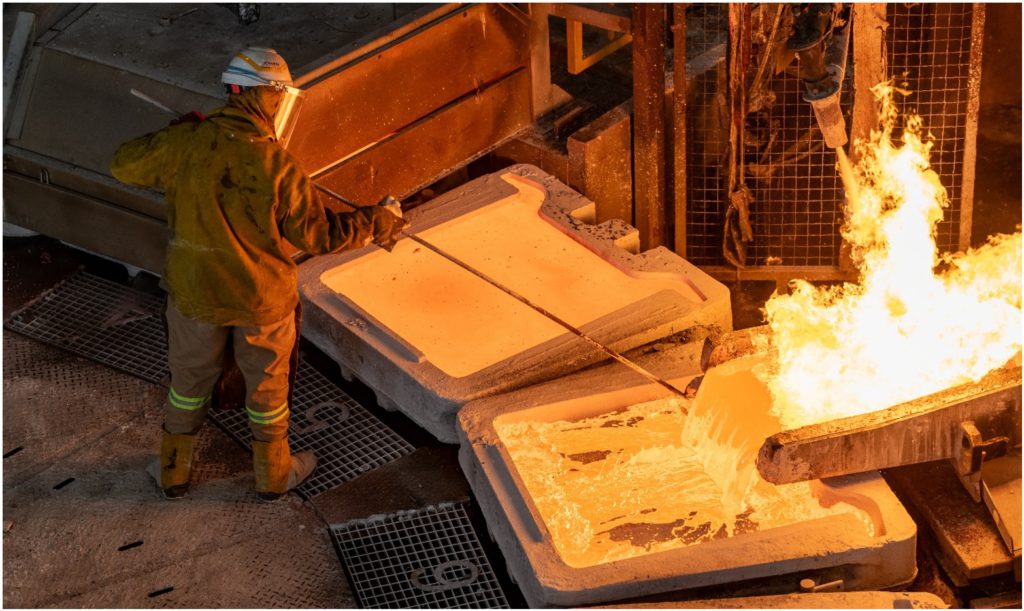
- Kamoa-Kakula’s smelter produced 63,671 t copper in anode plus 117,871 t high-strength sulphuric acid in Q1.
- Additional 7,746 t of copper in blister were produced at the Lualaba smelter in Kolwezi during the quarter.
- Kamoa-Kakula’s resource stands at ~1.3 Bt grading 2.65% Cu, containing ~34 Mt copper metal.
- Ivanhoe’s contingency planning for the US-led war on Iran includes forward purchasing of diesel for operations continuity.
Our Take
Ivanhoe Mines has been a recurring name in our recent coverage, from Kamoa-Kakula guidance cuts in early April 2026 to US-facing offtake discussions for Kipushi concentrates, so any disruption to sulphur or sulphuric acid flows via the Middle East would compound an already complex logistics and marketing picture for the company’s African assets.
In our database of 1212 Mining stories, copper consistently appears alongside critical-mineral themes and US strategic stockpiling moves (e.g. the February 2026 US$12 billion stockpile piece), suggesting that any shock to Middle East sulphur exports could quickly be framed not just as a cost issue but as a supply-security concern for Western copper and fertiliser buyers.
Prepared by collating external sources, AI-assisted tools, and Geomechanics.io’s proprietary mining database, then reviewed for technical accuracy & edited by our geotechnical team.
Related Articles
Related Industries & Products
Mining
Geotechnical software solutions for mining operations including CMRR analysis, hydrogeological testing, and data management.
CMRR-io
Streamline coal mine roof stability assessments with our cloud-based CMRR software featuring automated calculations, multi-scenario analysis, and collaborative workflows.
HYDROGEO-io
Comprehensive hydrogeological testing platform for managing, analysing, and reporting on packer tests, lugeon values, and hydraulic conductivity assessments.
GEODB-io
Centralised geotechnical data management solution for storing, accessing, and analysing all your site investigation and material testing data.