Ero Copper’s Furnas project: 24-year mine NPV and capex lens for planners
Reviewed by Tom Sullivan
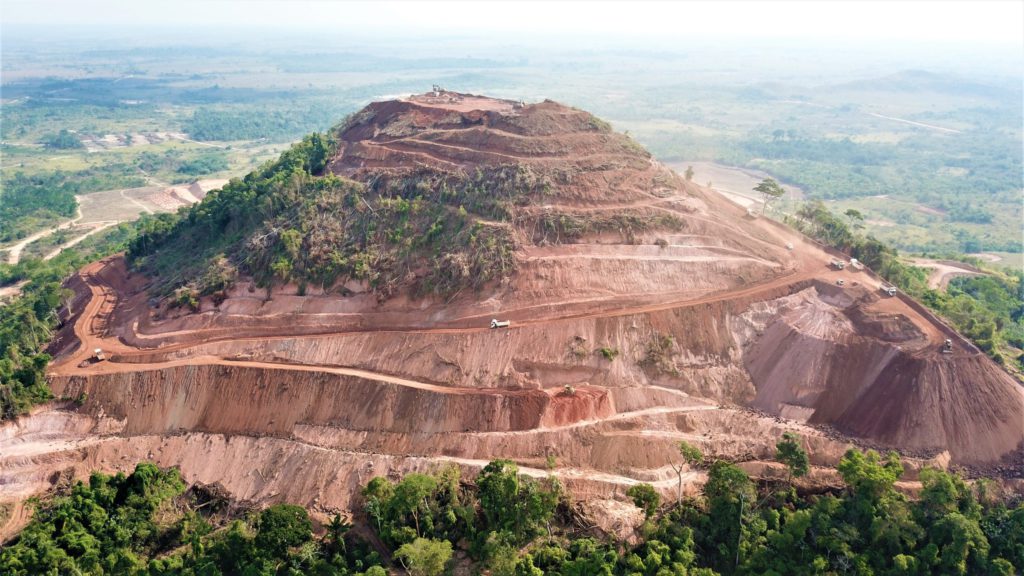
First reported on MINING.com
30 Second Briefing
Ero Copper’s Furnas project in Pará, Brazil, has delivered a first PEA outlining a 24-year, four-zone operation producing about 1.2 million tonnes of copper, 2 million oz. of gold and 9 million oz. of silver, with average copper-equivalent output of 108,000 tonnes per year over the first 15 years. Using long-term prices of $4.60/lb copper, $3,300/oz gold and $40/oz silver, the study reports an after-tax NPV8 of $2 billion, 27% IRR and initial capex of $1.3 billion (~$16,000/t CuEq). The 2,400-hectare Carajás property, 50 km from Vale’s Salobo mine, carries 275.6 Mt indicated at 0.83% CuEq and 195.9 Mt inferred at 0.76% CuEq from 28,000 metres of Phase 1 drilling.
Technical Brief
- Four distinct mining areas are planned within the Furnas project footprint, implying distributed infrastructure and haulage.
- Vale and Anglo American previously completed 90,000 m of drilling, providing a deep legacy dataset for modelling.
- Ero’s own work has added 45,000 m of drilling in two phases as sole exploration funder.
- Current resource estimate is based only on 28,000 m of Phase 1 drilling, leaving Phase 2 unmodelled.
- The 2,400-hectare property lies ~50 km southeast of Vale Base Metals’ Salobo copper operations in the Carajás province.
- Ero holds an earn-in right to 60% of Furnas under a 2024 agreement with Vale Base Metals.
- Indicated resources stand at 275.6 Mt at 0.83% CuEq; inferred at 195.9 Mt at 0.76% CuEq.
- 2024 PEA is described as the culmination of over a decade of engineering and technical studies on the asset.
Our Take
Using the stated 1.2 million tonnes of copper over 24 years, Furnas would average around mid-40 ktpa copper output, which in our database puts it in the mid-tier scale bracket for Latin American copper operations rather than among the Carajás mega-producers such as Salobo in Pará.
The 8% discount rate and US$4.60/lb copper price assumption used in the Furnas PEA are at the upper end of price decks seen in recent copper project studies in our coverage, suggesting that project economics could be more sensitive to downside price scenarios than some peer feasibility cases.
Ero Copper’s right to earn a 60% interest at Furnas, combined with an initial capex estimate of US$1.3 billion, implies a substantial funding requirement relative to its roughly US$3.5 billion market capitalisation, which in our database typically leads operators to consider staged development, streaming/royalty structures, or strategic partners for similar Latin American copper–gold builds.
Prepared by collating external sources, AI-assisted tools, and Geomechanics.io’s proprietary mining database, then reviewed for technical accuracy & edited by our geotechnical team.
Related Articles


Related Industries & Products
Mining
Geotechnical software solutions for mining operations including CMRR analysis, hydrogeological testing, and data management.
Construction
Quality control software for construction companies with material testing, batch tracking, and compliance management.
CMRR-io
Streamline coal mine roof stability assessments with our cloud-based CMRR software featuring automated calculations, multi-scenario analysis, and collaborative workflows.
HYDROGEO-io
Comprehensive hydrogeological testing platform for managing, analysing, and reporting on packer tests, lugeon values, and hydraulic conductivity assessments.
GEODB-io
Centralised geotechnical data management solution for storing, accessing, and analysing all your site investigation and material testing data.