Geomechanics.io

  • Free Tools
Sign UpLog In

Geomechanics.io

Geomechanics, Streamlined.

© 2026 Geomechanics.io. All rights reserved.

Geomechanics.io

CMRR-ioGEODB-ioHYDROGEO-ioQCDB-ioFree Tools & CalculatorsBlogLatest Industry News

Industries

MiningConstructionTunnelling

Company

Terms of UsePrivacy PolicyLinkedIn
    Projects
    Contract Award

    Energy Fuels rare earths BFS: capex, NPV and supply role for mine planners

    January 15, 2026|

    Reviewed by Tom Sullivan

    Energy Fuels rare earths BFS: capex, NPV and supply role for mine planners

    First reported on MINING.com

    30 Second Briefing

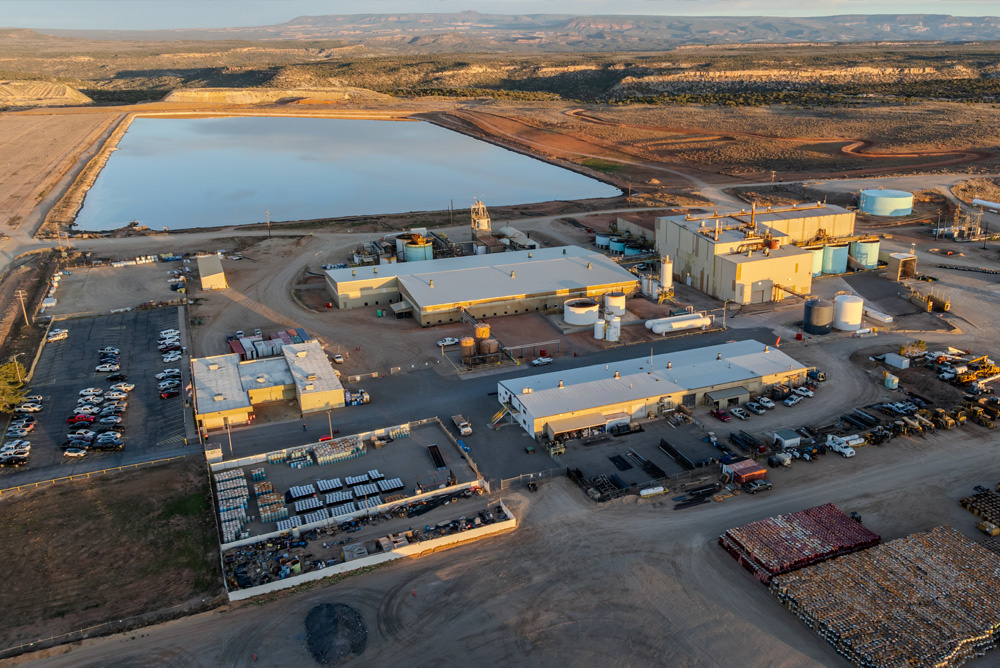
    Energy Fuels’ bankable feasibility study for its White Mesa mill in Utah projects stage-two circuit expansion to more than 7,500 tonnes per year of separated light and heavy rare earth products over a 40-year life, plus 198,000 lb. of uranium annually from the Pinyon Plain and La Sal mines. The project carries a post-tax NPV of US$1.9 billion and 33% IRR at US$410 million initial capex, with feedstock sourced from Astron’s Donald project in Victoria and Chemours’ Florida and Georgia operations. Benchmark data cited by the company suggest the expanded mill could meet 45% of US near-term rare earth demand and all heavy rare earth needs by 2030, positioning it alongside Lynas in non-Chinese separation capacity.

    Technical Brief

    • Stage-two circuit is a bankable feasibility study (BFS) design, not yet committed for construction.
    • White Mesa is currently the only operating conventional uranium mill in the United States.
    • It is also the only US plant presently capable of processing both light and heavy rare earths.
    • Mill lies about 500 km south-east of Salt Lake City, implying long overland logistics for feedstock.
    • Uranium feed is planned from Energy Fuels’ Pinyon Plain (Arizona) and La Sal (Utah) underground mines.
    • Benchmark Mineral Intelligence demand forecasts underpin the market sizing used for the BFS assumptions.

    Our Take

    Within our 47 keyword-matched pieces on rare earths and uranium, White Mesa in Utah stands out as one of the few Western assets combining uranium and rare earth elements at scale, which could give Energy Fuels more optionality than single-commodity peers like Lynas Rare Earths’ Mount Weld or MP Materials’ Mountain Pass.

    The 33% after-tax IRR on the White Mesa stage-two circuit, off an initial US$410 million capex, signals a relatively robust cost position that may pressure higher-cost Western rare earth projects in Australia and California when competing for offtake from OEMs such as BMW.

    Linking the White Mesa expansion with feed from Astron’s Vara Mada project in Madagascar to reach a combined US$3.7 billion NPV suggests a strategic pivot towards a more globally diversified rare earths supply chain anchored in North America, rather than relying solely on US or Australian ore sources.

    Geotechnical Software for Modern Teams

    Centralise site data, logs, and lab results with GEODB-io, CMRR-io, and HYDROGEO-io.

    No credit card required.

    • Save and export unlimited calculations
    • Advanced data visualisation
    • Generate professional PDF reports
    • Cloud storage for all your projects

    Prepared by collating external sources, AI-assisted tools, and Geomechanics.io’s proprietary mining database, then reviewed for technical accuracy & edited by our geotechnical team.

    Related Articles

    Magmatic’s Myall diamond drilling: design and resource implications for mine planners
    Mining
    about 3 hours ago

    Magmatic’s Myall diamond drilling: design and resource implications for mine planners

    Exploration activity across Australia’s resources sector this week includes Magmatic Resources commencing diamond drilling at its Myall copper–gold project in New South Wales, targeting deeper porphyry-style mineralisation beneath previous RC intercepts. Parallel campaigns involve new drill programmes and project development steps at multiple sites, signalling continued spend on brownfield extensions and greenfield targets despite cost pressures. Geotechs and mine planners should watch for updated resource models and potential shifts in pit-shells or underground designs as deeper porphyry and structurally controlled zones are tested.

    Golden Pole high-grade boosts Waihi: design and scheduling notes for mine planners
    Mining
    about 3 hours ago

    Golden Pole high-grade boosts Waihi: design and scheduling notes for mine planners

    High-grade gold intercepts from Ora Banda Mining’s Golden Pole deposit are boosting the underground potential of the Waihi project near Kalgoorlie, with targeted follow-up drilling extending mineralisation along strike and at depth. The company is focusing on narrow, high-grade lodes accessible from existing underground development, aiming to convert recent hits into JORC-compliant resources and near-term ore feed for the Davyhurst processing plant. For geotechs and mine planners, the results point to deeper stoping fronts, tighter ground control requirements and potential schedule changes for underground access development.

    Austral–Glencore Lady Loretta copper deal: planning and geotechnical notes for mines
    Mining
    about 4 hours ago

    Austral–Glencore Lady Loretta copper deal: planning and geotechnical notes for mines

    Austral Resources has agreed to acquire Glencore AG’s Lady Loretta underground copper mine in north-west Queensland, adding a high-grade sulphide operation to its existing heap leach–SX/EW oxide business at Anthill. The Lady Loretta asset, previously a major zinc–lead–silver producer near Mount Isa, includes established underground workings, a decline, ventilation infrastructure and a permitted mining lease, giving Austral a second ore source within trucking distance of regional concentrators. The deal signals a shift towards a mixed oxide–sulphide portfolio, with implications for new concentrator offtake, mine planning and geotechnical management of deeper stopes.

    Related Industries & Products

    Mining

    Geotechnical software solutions for mining operations including CMRR analysis, hydrogeological testing, and data management.

    Construction

    Quality control software for construction companies with material testing, batch tracking, and compliance management.

    CMRR-io

    Streamline coal mine roof stability assessments with our cloud-based CMRR software featuring automated calculations, multi-scenario analysis, and collaborative workflows.

    HYDROGEO-io

    Comprehensive hydrogeological testing platform for managing, analysing, and reporting on packer tests, lugeon values, and hydraulic conductivity assessments.

    GEODB-io

    Centralised geotechnical data management solution for storing, accessing, and analysing all your site investigation and material testing data.

    AllGeotechnicalMiningInfrastructureMaterialsHazardsEnvironmentalSoftwarePolicy