Energy Fuels 2026 uranium guidance: production and cost drivers for mine planners
Reviewed by Joe Ashwell
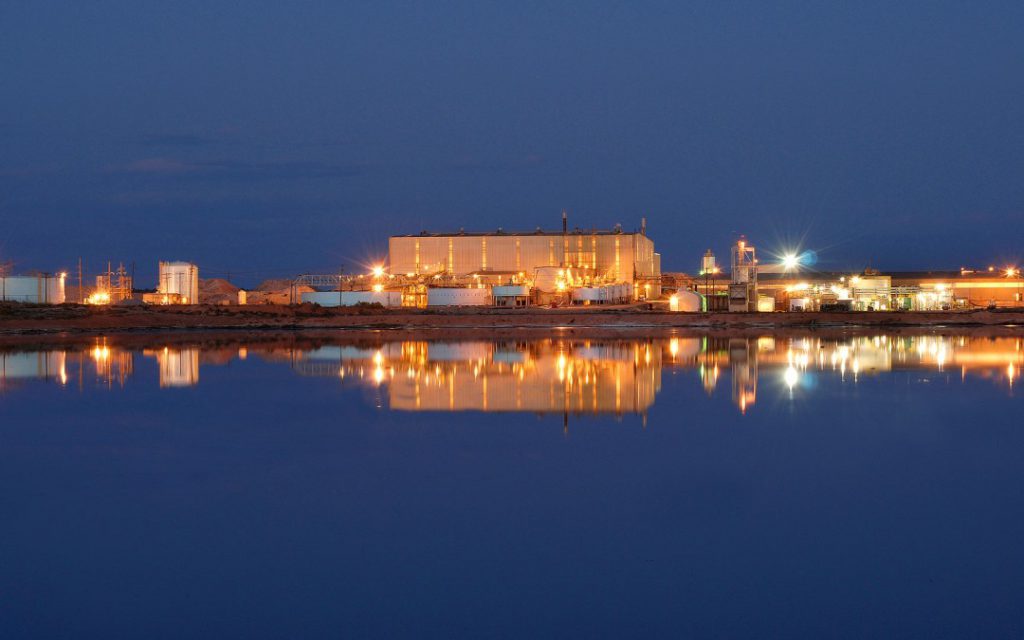
First reported on MINING.com
30 Second Briefing
Energy Fuels expects to reach its full-year 2026 uranium production guidance of 1.5–2.5 million lb U3O8 by the end of June, with White Mesa Mill output forecast at 1.6 million lb and monthly finished production above 265,000 lb from Pinyon Plain and the La Sal Complex. Processing costs at White Mesa are projected at US$9–12/lb U3O8, near historic lows, with ore grades and contained uranium expected to improve in H2 as ore stockpiles are rebuilt. From July, Phase 1 rare earth circuits will be modified to handle uranium-bearing mixed REE carbonates and heavy REEs, ahead of a Phase 2 expansion targeting about 6,300 tpa REE capacity by 2027–28.
Technical Brief
- White Mesa is currently the only fully licensed, operating conventional uranium mill in the US.
- Feedstock is sourced solely from Pinyon Plain (Arizona) and the La Sal Complex (Utah) conventional mines.
- Contained U3O8 in ore for H1 2026 is forecast at 750,000–850,000 lb before milling.
- Current uranium ore processing campaign at White Mesa is scheduled to finish by end of June 2026.
- Mill processing is planned to pause after June and restart in Q4 2026, contingent on mine output.
- Existing Phase 1 REE circuits already produce NdPr plus heavy REEs: Sm, Eu, Gd, Tb and Dy.
- From July, Phase 1 circuits will be modified to accept uranium-bearing mixed REE carbonates, including ionic-adsorption-clay MRECs.
- New MREC circuit will feed directly into solvent extraction, enabling simultaneous uranium recovery and separated REE production.
- Phase 2 expansion targets nearly 6,300 tpa total REE capacity at White Mesa, with permitting underway.
Our Take
Energy Fuels’ push to meet its 2026 uranium oxide guidance early comes as the White Mesa mill is being positioned, per our earlier coverage of its feasibility work, as a dual-purpose hub for both uranium and separated rare earth elements, which can improve mill utilisation and dilute unit processing costs in Utah and Colorado.
The presence of USA Rare Earth and Glencore alongside Energy Fuels and monazite/rare earth products in our database underlines how White Mesa and related monazite sand feedstocks are becoming a focal point for US-linked critical mineral supply chains, rather than purely a uranium play.
Within our uranium-tagged Mining coverage, Energy Fuels is one of the few US-based producers simultaneously scaling heavy rare earth output (including terbium and dysprosium) at the same site, which likely gives it additional leverage with North American utilities and OEMs seeking diversified, domestic-critical mineral offtake.
Prepared by collating external sources, AI-assisted tools, and Geomechanics.io’s proprietary mining database, then reviewed for technical accuracy & edited by our geotechnical team.
Related Articles
Related Industries & Products
Mining
Geotechnical software solutions for mining operations including CMRR analysis, hydrogeological testing, and data management.
CMRR-io
Streamline coal mine roof stability assessments with our cloud-based CMRR software featuring automated calculations, multi-scenario analysis, and collaborative workflows.
HYDROGEO-io
Comprehensive hydrogeological testing platform for managing, analysing, and reporting on packer tests, lugeon values, and hydraulic conductivity assessments.
GEODB-io
Centralised geotechnical data management solution for storing, accessing, and analysing all your site investigation and material testing data.