DP World London Gateway £36M automated system: design and staging notes for engineers
Reviewed by Joe Ashwell
First reported on New Civil Engineer
30 Second Briefing
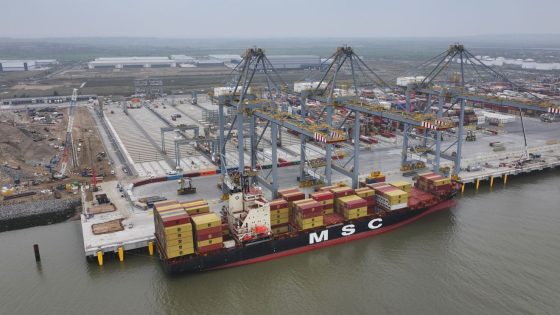
DP World’s London Gateway container terminal has launched procurement for a £36M main works contract to build a high-bay automated storage system dedicated to empty containers. The project will require substantial foundations, pavements and services to support stacked steel racking, automated handling equipment and associated control infrastructure within the existing port layout. Contractors will need to manage construction in a live terminal environment, integrating the new automated facility with current yard operations, utilities and heavy vehicle access routes.
Technical Brief
- High-bay racking for empties implies concentrated point loads, driving heavy-duty piled or ground-improved foundations.
- Automated system will require embedded services corridors for power, data, and control cabling beneath operational pavements.
- Live terminal construction will constrain working windows around ship calls, yard crane movements and HGV peaks.
- Integration with existing terminal operating systems will demand precise layout tolerances for automated guided equipment.
- Brownfield port setting increases buried-service clash risk, necessitating detailed utility surveys and staged diversions.
Our Take
Because the London Gateway terminal is deep-sea and rail-linked, high-bay automation for empty containers is likely aimed at freeing quay and rail interface space for laden boxes, a configuration that can materially improve vessel turnaround and rail slot utilisation without major landtake in the constrained Thames corridor.
Prepared by collating external sources, AI-assisted tools, and Geomechanics.io’s proprietary mining database, then reviewed for technical accuracy & edited by our geotechnical team.


