Dawsongroup’s first JCB hydrogen generator: hybrid site power notes for engineers
Reviewed by Tom Sullivan
First reported on The Construction Index
30 Second Briefing
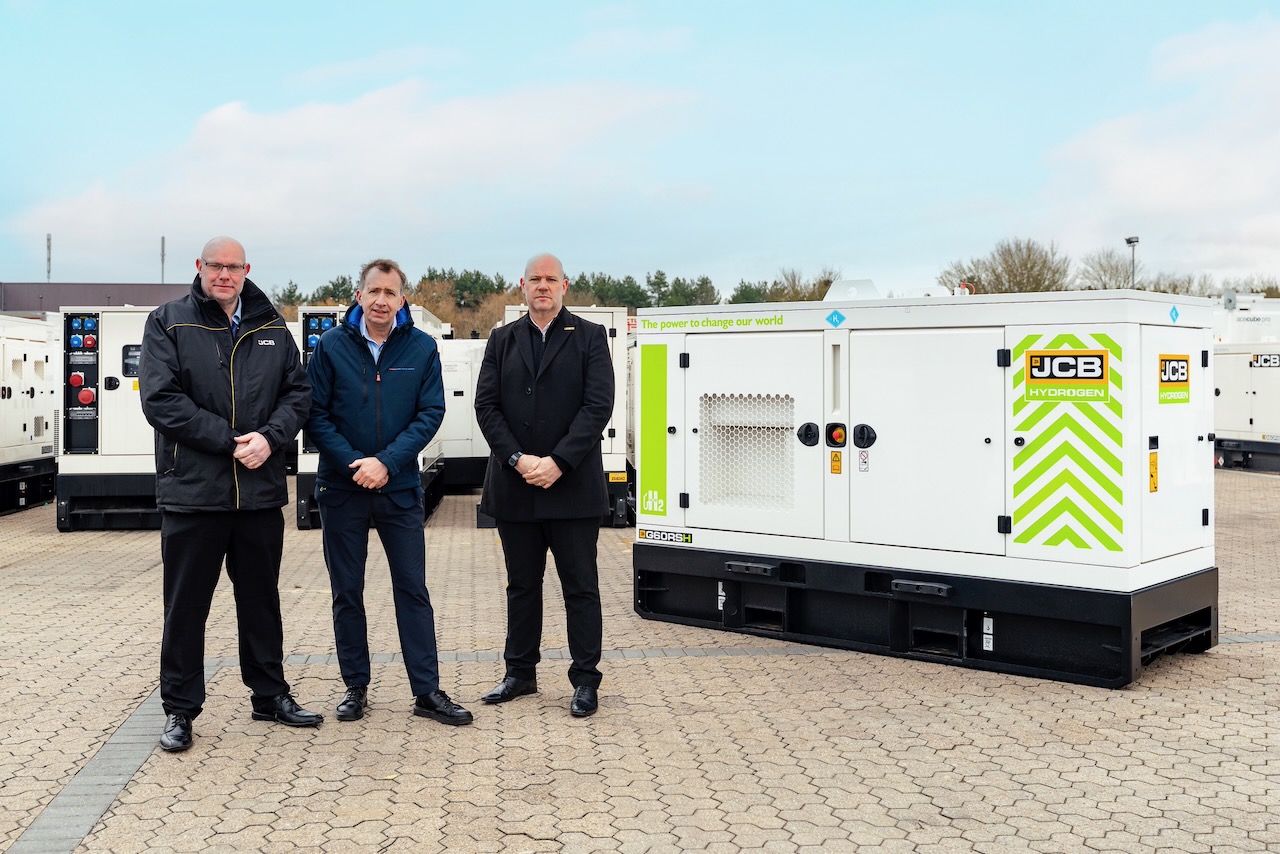
Dawsongroup Energy Solutions has taken delivery of JCB’s first hydrogen internal combustion engine-powered generator, configured to work alongside a battery system and three-phase grid supply. The unit is intended for top-up and peak power demands rather than continuous baseload, signalling early commercial deployment of hydrogen ICE technology in temporary and distributed power applications. For infrastructure contractors, the set-up points to hybrid site power schemes where hydrogen-fuelled generation covers short-duration peaks while batteries and grid handle steady loads.
Technical Brief
- Hydrogen generator uses a JCB internal combustion engine adapted for gaseous hydrogen fuel.
- Unit is supplied to Dawsongroup Energy Solutions for integration into its temporary power fleet.
- Hydrogen ICE layout allows use of largely conventional engine components and maintenance regimes.
- Package configuration is intended to interface directly with existing three-phase site distribution boards.
- System architecture anticipates rapid ramp-up capability to follow short-duration load spikes on construction sites.
- Hydrogen storage, delivery and safety management must be handled by Dawsongroup separately from the generator skid.
- For infrastructure compounds, configuration suits constrained sites where diesel emissions or noise are tightly regulated.
Our Take
Hydrogen appears across 17 keyword‑matched pieces in our database, but JCB’s role spans both supply (this generator) and demand, with its June 2026 move to FAME B100‑ready excavators signalling a multi‑fuel decarbonisation strategy rather than a single‑technology bet.
The Lower Thames Crossing’s £80m green hydrogen contract with GeoPura, which also references JCB, suggests that early adopters like Dawsongroup Energy Solutions could find ready rental markets on large UK infrastructure schemes looking to displace diesel on site.
Prepared by collating external sources, AI-assisted tools, and Geomechanics.io’s proprietary mining database, then reviewed for technical accuracy & edited by our geotechnical team.


