China’s Japan rare earth ban: supply chain risk notes for project teams
Reviewed by Tom Sullivan
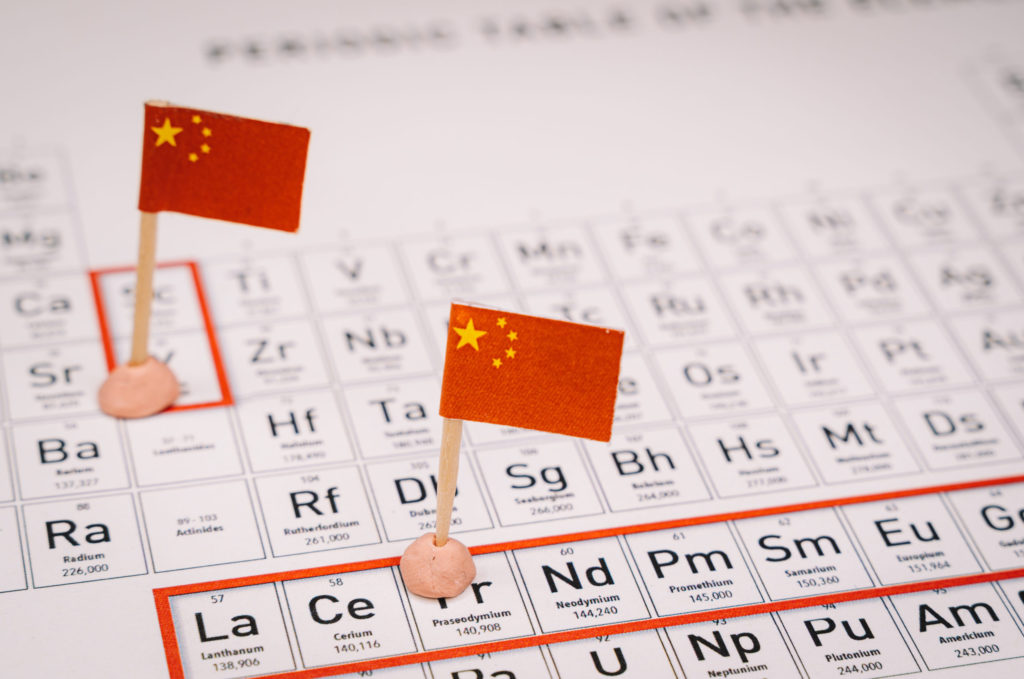
First reported on MINING.com
30 Second Briefing
China has confirmed that its January export ban on dual-use rare earth products for Japanese military use remains in force, despite a reported US request to resume sales over technology supply chain concerns. Foreign ministry spokesperson Lin Jian said rare earths stay classified as “dual-use materials” under Chinese law and linked the move to containing Japanese remilitarisation and nuclear ambitions, even as customs data show overall Chinese rare earth exports hitting a four‑month high in May but still below last year. Japan is responding by building alternative supply, including a A$1.6 billion rare earths deal with Australia and a “trilateral buyers” club with France and Canada.
Technical Brief
- Legal basis is Chinese export control law categorising rare earths as “dual-use materials” subject to prohibition.
- Measure is explicitly framed by Beijing as constraining Japanese remilitarisation and pursuit of nuclear weapons capability.
- Lin Jian’s reaffirmation followed a Bloomberg question referencing a reported US diplomatic request via Nikkei.
- Japan’s mitigation strategy includes a A$1.6 billion rare earths supply agreement with Australian counterparties.
- A “trilateral buyers” club between Japan, France and Canada is being structured to aggregate non‑Chinese offtake.
- For project planners, the case illustrates how end‑use controls can abruptly segment supply by jurisdiction, not volume.
Our Take
In our Policy coverage, rare earth elements and other critical minerals increasingly appear in stories about supply-chain security rather than individual mines, and this China–Japan–US dynamic will likely reinforce government-backed diversification plays in Australia, Canada and Brazil.
For project developers in Canada, Australia and Brazil targeting rare earths or broader critical minerals, this kind of explicit Chinese export stance tends to translate into stronger policy support at home (permitting priority, grants, and strategic offtake) as importing states seek to de-risk exposure to Asia-based refining.
Prepared by collating external sources, AI-assisted tools, and Geomechanics.io’s proprietary mining database, then reviewed for technical accuracy & edited by our geotechnical team.
Related Articles



Related Industries & Products
Mining
Geotechnical software solutions for mining operations including CMRR analysis, hydrogeological testing, and data management.
Construction
Quality control software for construction companies with material testing, batch tracking, and compliance management.
CMRR-io
Streamline coal mine roof stability assessments with our cloud-based CMRR software featuring automated calculations, multi-scenario analysis, and collaborative workflows.
HYDROGEO-io
Comprehensive hydrogeological testing platform for managing, analysing, and reporting on packer tests, lugeon values, and hydraulic conductivity assessments.
GEODB-io
Centralised geotechnical data management solution for storing, accessing, and analysing all your site investigation and material testing data.