China–Japan rare earth spat: supply risk and project notes for mine planners
Reviewed by Tom Sullivan

First reported on MINING.com
30 Second Briefing
China’s threat to restrict rare earth exports to Japan, alongside a formal ban on dual‑use items announced by China’s Ministry of Commerce, is raising the prospect of severe disruption to automotive magnets, drivetrains and battery supply chains, as well as semiconductors. Nomura Research Institute estimates a three‑month restriction could cost Japan about ¥660 billion and a year‑long curtailment up to ¥2.6 trillion, cutting annualised GDP by 0.43%. Japan has already reduced its reliance on Chinese rare earths from 90% in 2010 to 60–70% through deals such as Sojitz/Jogmec’s US$250 million agreement with Lynas’ Mount Weld operation.
Technical Brief
- China’s Ministry of Commerce has formally banned exports to Japan of dual-use civilian–military items.
- Beijing is additionally weighing tighter export permit issuance for specific rare earth-related products, beyond the dual-use ban.
- Japan’s automotive sector faces potential production cuts or shutdowns for magnet, drivetrain and battery lines, per Infinity LLC.
- Semiconductor and wider electronics manufacturing in Japan are flagged as particularly exposed to rare earth permit curbs.
- In 2024 Japan imported ¥200 billion of rare earths from China, within ¥10.7 trillion of tech-related imports.
- Electrical machinery and telecoms equipment imports from China reached ¥7.7 trillion; PCs and peripherals ¥2.4 trillion; precision optics ¥400 billion.
- The 2010 Senkaku Islands dispute triggered a prior sharp Chinese rare earth export cut to Japan lasting about two months.
Our Take
The 10‑year offtake between the US Department of Defense and MP Materials, with a $110/kg neodymium‑praseodymium price floor, effectively underwrites higher‑cost North American rare earths production and could blunt the impact of any China‑Japan export spat on US supply chains compared with Japan’s exposure.
Japan’s current 60–70% reliance on Chinese rare earths contrasts with the International Energy Forum’s warning (21 Dec 2025 item) that copper and nickel could see structural shortfalls by the mid‑2030s, suggesting Japanese policy may have to juggle diversification across several critical minerals at once rather than focusing solely on rare earths.
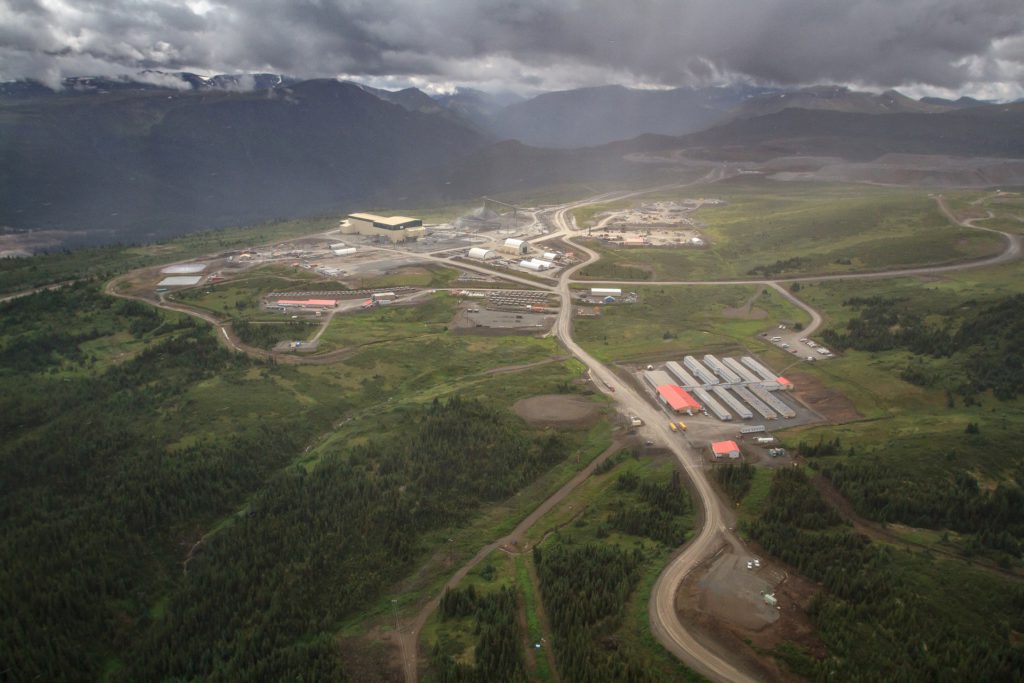
Lynas Rare Earths’ Mount Weld mine in Western Australia, already tied into Japanese supply via earlier deals, sits within a small group of non‑Chinese rare earth assets in our database, so any prolonged curbs from China are likely to increase competitive pressure for offtake from this and similar projects rather than immediately unlocking greenfield capacity.
Prepared by collating external sources, AI-assisted tools, and Geomechanics.io’s proprietary mining database, then reviewed for technical accuracy & edited by our geotechnical team.
Related Articles

Related Industries & Products
Mining
Geotechnical software solutions for mining operations including CMRR analysis, hydrogeological testing, and data management.
Construction
Quality control software for construction companies with material testing, batch tracking, and compliance management.
CMRR-io
Streamline coal mine roof stability assessments with our cloud-based CMRR software featuring automated calculations, multi-scenario analysis, and collaborative workflows.
QCDB-io
Comprehensive quality control database for manufacturing, tunnelling, and civil construction with UCS testing, PSD analysis, and grout mix design management.
HYDROGEO-io
Comprehensive hydrogeological testing platform for managing, analysing, and reporting on packer tests, lugeon values, and hydraulic conductivity assessments.