Geomechanics.io

  • Free Tools
Sign UpLog In

Geomechanics.io

Geomechanics, Streamlined.

© 2026 Geomechanics.io. All rights reserved.

Geomechanics.io

CMRR-ioGEODB-ioHYDROGEO-ioQCDB-ioFree Tools & CalculatorsBlogLatest Industry News

Industries

MiningConstructionTunnelling

Company

Terms of UsePrivacy PolicyLinkedIn
    AllGeotechnicalMiningInfrastructureMaterialsHazardsEnvironmentalSoftwarePolicy
    Research
    Sustainability

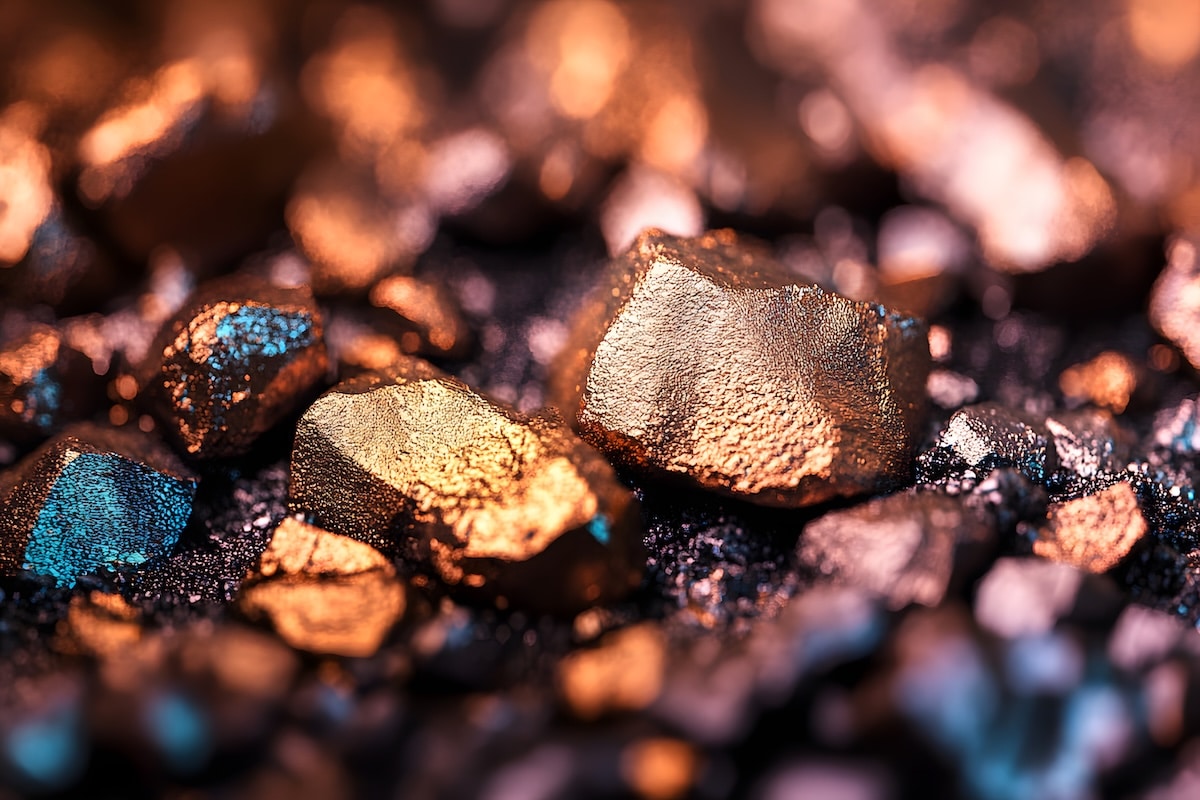
    Chalcopyrite’s silver lining: low‑temperature leach options for cleaner copper flowsheets

    April 16, 2026|

    Reviewed by Tom Sullivan

    Chalcopyrite’s silver lining: low‑temperature leach options for cleaner copper flowsheets

    First reported on Australian Mining

    30 Second Briefing

    Chalcopyrite, the dominant copper iron sulphide in most porphyry and VMS deposits, is being re‑examined as a route to cleaner copper production through alternative leaching and electrochemical pathways that avoid traditional high‑temperature smelting. Researchers are focusing on low‑temperature oxidative leach systems, including chloride and bioleach circuits, to accelerate chalcopyrite dissolution and cut SO₂ emissions and slag volumes. For mine operators and metallurgists, successful deployment would shift flowsheets towards heap or in‑situ leaching, change tailings mineralogy, and reduce reliance on large concentrate transport and smelter capacity.

    Technical Brief

    • Work centres on chalcopyrite’s mixed electronic–ionic conductivity, enabling controlled electrochemical dissolution pathways.
    • Researchers test chloride, sulphate and mixed-ligand systems under tightly controlled redox potential and pH windows.
    • Laboratory campaigns use finely ground chalcopyrite concentrates in batch reactors with continuous Eh–pH monitoring.
    • Kinetic data are derived from time-series solution assays and surface characterisation (e.g. SEM, XPS) of reacted grains.
    • Passivating layers (e.g. elemental sulphur, jarosite-type phases) are quantified as key rate-limiting mechanisms.
    • Electrochemical techniques, including cyclic voltammetry and impedance spectroscopy, are applied to map reaction mechanisms.
    • Operationally, outputs inform leach pad design envelopes, reagent selection and residence-time targets for chalcopyrite-rich ores.
    • Scope is presently limited to bench-scale systems; scale-up effects, heterogenous ore textures and field hydrology remain untested.

    Our Take

    If cleaner processing routes for chalcopyrite can also recover silver effectively, that could shift project economics for Australian copper deposits with polymetallic credits, potentially improving viability for lower-grade or more complex orebodies.

    Recent Australian Mining coverage has leaned heavily toward decarbonising equipment fleets and operations, so a process-level advance for copper and silver complements that trend by targeting embedded emissions in the concentrator and refinery rather than just in mobile equipment.

    Geotechnical Software for Modern Teams

    Centralise site data, logs, and lab results with GEODB-io, CMRR-io, and HYDROGEO-io.

    No credit card required.

    • Save and export unlimited calculations
    • Advanced data visualisation
    • Generate professional PDF reports
    • Cloud storage for all your projects

    Prepared by collating external sources, AI-assisted tools, and Geomechanics.io’s proprietary mining database, then reviewed for technical accuracy & edited by our geotechnical team.

    Related Articles
    Agnico–Rupert $2.1B Finland hub: production, capex and synergies for mine planners
    Mining
    about 3 hours ago

    Agnico–Rupert $2.1B Finland hub: production, capex and synergies for mine planners

    Agnico Eagle Mines is acquiring Rupert Resources for about C$2.9 billion and, together with deals for Aurion Resources and B2Gold’s 70% stake in the Fingold JV, will control roughly 2,492 sq. km in Finland’s Central Lapland Greenstone Belt. The consolidated hub will link the Kittila mine (3.3 Moz probable reserves) with Rupert’s Ikkari project (3.5 Moz probable reserves), targeting about 500,000 oz/year of gold production within a decade and up to $500 million in operating and development synergies. Agnico plans C$20 million of Ikkari drilling in 18 months and C$60–100 million in regional exploration over three years, with an internal mine evaluation due by end-2027.

    Southern Copper’s $1.8B Tía María reauthorisation: schedule and design notes for mine planners
    Mining
    about 5 hours ago

    Southern Copper’s $1.8B Tía María reauthorisation: schedule and design notes for mine planners

    Peru has reauthorised the mining permit for Southern Copper’s $1.8 billion Tía María project, clearing La Tapada open-pit’s first-stage operations after Minem confirmed compliance on environmental certification, ownership, and safety and health obligations, including previously incomplete waste dump design and project scheduling. The project, in Arequipa, is slated to produce 120,000 tonnes of copper per year for 20 years, with start-up targeted between late 2026 and early 2027, adding to Southern Copper’s Toquepala, Cuajone and Ilo operations. The decision lands amid a chaotic presidential run-off and roughly $7 billion of stalled copper projects linked to illegal mining.

    Mining
    about 6 hours ago

    Assarel-Medet Liebherr R 9350 E: design and haulage notes for mine engineers

    Assarel-Medet has taken delivery of a 300 t class Liebherr R 9350 E electric excavator for its Assarel copper mine at Bul in Bulgaria’s Pazardzhik province, the fifth large electric Liebherr excavator supplied to the company by Liebherr-Export and local partner Alki-L. The R 9350 E, powered by an electric drive rather than diesel, delivers zero on-site greenhouse gas emissions at the face, supporting lower ventilation demand and reduced fuel logistics for the open-pit operation.

    Related Industries & Products

    Mining

    Geotechnical software solutions for mining operations including CMRR analysis, hydrogeological testing, and data management.

    CMRR-io

    Streamline coal mine roof stability assessments with our cloud-based CMRR software featuring automated calculations, multi-scenario analysis, and collaborative workflows.

    HYDROGEO-io

    Comprehensive hydrogeological testing platform for managing, analysing, and reporting on packer tests, lugeon values, and hydraulic conductivity assessments.

    GEODB-io

    Centralised geotechnical data management solution for storing, accessing, and analysing all your site investigation and material testing data.