Geomechanics.io

  • Free Tools
Sign UpLog In

Geomechanics.io

Geomechanics, Streamlined.

© 2026 Geomechanics.io. All rights reserved.

Geomechanics.io

CMRR-ioGEODB-ioHYDROGEO-ioQCDB-ioFree Tools & CalculatorsBlogLatest Industry News

Industries

MiningConstructionTunnelling

Company

Terms of UsePrivacy PolicyLinkedIn
    AllGeotechnicalMiningInfrastructureMaterialsHazardsEnvironmentalSoftwarePolicy
    Product
    Projects

    Bromley cold lay asphalt trial: workflow and durability notes for road engineers

    February 9, 2026|

    Reviewed by Tom Sullivan

    Bromley cold lay asphalt trial: workflow and durability notes for road engineers

    First reported on The Construction Index

    30 Second Briefing

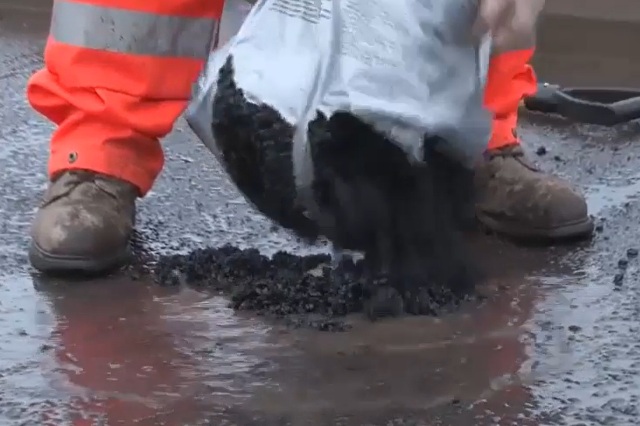
    Bromley Council is trialling Viafix cold lay asphalt for pothole patching as it more than doubles its road resurfacing budget to over £5m for its 547 miles of roads. The highly viscous mix is supplied in sacks, can be laid by a single operative in wet conditions and standing water, and follows a simple cut–clean–glue–pour–roll sequence, with each repair expected to take about 20 minutes and carrying a two‑year guarantee. Similar deployments by East Lothian, Cambridgeshire and Renfrewshire councils suggest wider potential for rapid, small‑crew maintenance workflows.

    Technical Brief

    • Viafix’s high viscosity allows placement directly into water-filled voids without pre-drying the pothole.
    • Material is supplied in sealed sacks, enabling stockpiling on vehicles and depots without hot-plant logistics.
    • One‑person gangs reduce traffic management footprint compared with typical two‑ or three‑person hot‑lay crews.
    • Cold‑lay method avoids on‑site heating, eliminating burner emissions and associated plant maintenance.
    • Councillor Bennett links recent “torrential rain” to accelerated pothole formation and worsening existing defects.
    • Viatec cites operational use by East Lothian, Cambridgeshire and Renfrewshire, indicating cross‑climate performance.
    • Wider adoption of bagged cold‑lay mixes could shift UK highway maintenance towards more reactive, point‑repair workflows.

    Our Take

    Within our 665 Infrastructure stories, very few UK local-authority pieces involve quantified performance guarantees like Bromley Council’s two‑year repair period, which signals growing confidence in cold lay asphalt products such as Viafix for front‑line maintenance rather than just temporary patching.

    A £5m‑plus resurfacing and pothole budget spread over Bromley’s 547 miles suggests a strategy of targeted, rapid interventions; the 20‑minute average repair time is likely aimed at keeping traffic management costs down, which is often where traditional hot‑mix repairs become uneconomic for small defects.

    The presence of other UK councils such as East Lothian, Cambridgeshire and Renfrewshire in the same product narrative indicates that cold lay asphalt is moving from trial status towards a multi‑authority toolkit, which can strengthen procurement leverage and standardisation of specifications across these regions.

    Geotechnical Software for Modern Teams

    Centralise site data, logs, and lab results with GEODB-io, CMRR-io, and HYDROGEO-io.

    No credit card required.

    • Save and export unlimited calculations
    • Advanced data visualisation
    • Generate professional PDF reports
    • Cloud storage for all your projects

    Prepared by collating external sources, AI-assisted tools, and Geomechanics.io’s proprietary mining database, then reviewed for technical accuracy & edited by our geotechnical team.

    Related Articles

    Panama Canal Mixshield undercrossing: design and tunnelling lessons for engineers
    Infrastructure
    in 9 months

    Panama Canal Mixshield undercrossing: design and tunnelling lessons for engineers

    A 13.46m diameter Herrenknecht Mixshield TBM has broken through into the future Balboa station on Panama Metro Line 3 after completing the first-ever TBM undercrossing of the Panama Canal at depths exceeding 60m below sea level. The 5,600kW, 26,616kNm machine, fitted with an accessible cutterhead and more than 4,500 sensors linked via the Herrenknecht.Connected platform, has achieved peak advance of 150 segment rings (about 300m) per month through mixed sandstone, tuff, breccias and basalt. Around 1.5km of the 4.5km twin-track tunnel remains to final breakthrough.

    Hudson Tunnel funding deadline: schedule and risk takeaways for project teams
    Infrastructure
    in 8 months

    Hudson Tunnel funding deadline: schedule and risk takeaways for project teams

    Federal funding for New York’s US$16bn Hudson Tunnel Project has been frozen, forcing the Gateway Development Commission to suspend works from 6 February after spending over US$1bn and employing about 1,000 site workers. A Manhattan federal judge has issued a temporary restraining order, giving the administration until 5 p.m. on 12 February to restore reimbursements or appeal, while contractors warn that demobilisation, resequencing and remobilisation will add cost and delay. Sites are now in “safe-pause” mode, with dewatering, ground support and environmental monitoring maintained, and assembly of two Herrenknecht TBMs in New Jersey likely to slip beyond the planned spring 2026 launch without funding certainty.

    Implenia/Marti JV MehrSpur Zurich–Winterthur: design and risk notes for engineers
    Infrastructure
    in 5 months

    Implenia/Marti JV MehrSpur Zurich–Winterthur: design and risk notes for engineers

    Swiss Federal Railways has awarded an Implenia/Marti 50:50 joint venture five of six MehrSpur Zurich–Winterthur lots worth just under CHF 1.7 billion, including the 8.3 km Brüttener tunnel (Lot 240) with twin 10 m diameter single-track tubes and a 1 km spur to Zurich Airport. TBM excavation will start in August 2029, with a roughly ten-year construction phase using BIM for planning and execution and extensive special foundations, earthworks and embankments. Additional works cover full redevelopment of Dietlikon station, about 6 km of new track across Dietlikon and Wallisellen sections, multiple underpasses, bridges and the Neumühle railway bridge and Storchen underpass near Winterthur.

    Related Industries & Products

    Mining

    Geotechnical software solutions for mining operations including CMRR analysis, hydrogeological testing, and data management.

    Construction

    Quality control software for construction companies with material testing, batch tracking, and compliance management.

    CMRR-io

    Streamline coal mine roof stability assessments with our cloud-based CMRR software featuring automated calculations, multi-scenario analysis, and collaborative workflows.

    HYDROGEO-io

    Comprehensive hydrogeological testing platform for managing, analysing, and reporting on packer tests, lugeon values, and hydraulic conductivity assessments.

    GEODB-io

    Centralised geotechnical data management solution for storing, accessing, and analysing all your site investigation and material testing data.