BHP Port Hedland strike: operational and supply chain risks for mine planners
Reviewed by Joe Ashwell
First reported on MINING.com
30 Second Briefing
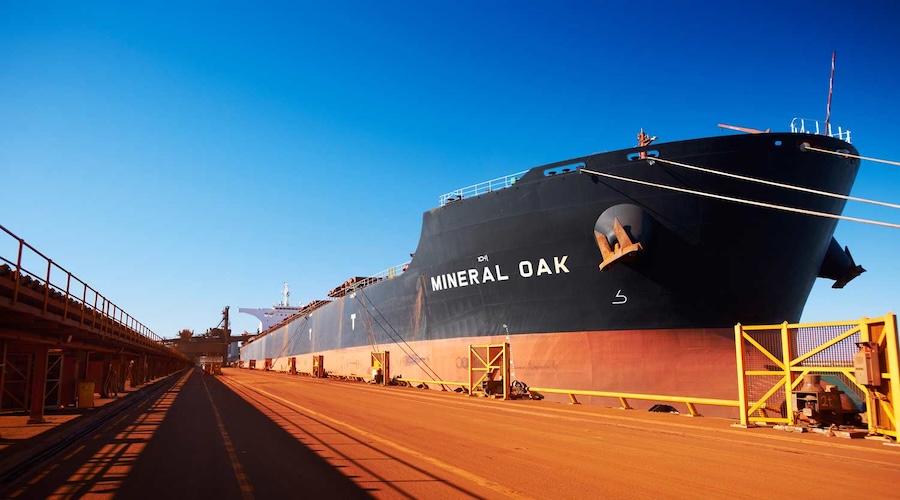
Hundreds of BHP workers at Port Hedland, responsible for port and maintenance operations, plan the hub’s first major strike in decades on 16 July, with 160–200 employees set to stop work for eight hours from 14:00 to 22:00. The action targets a new four-year enterprise agreement and threatens disruption at a facility moving about $150 million of iron ore per day, with analysts estimating roughly $80 million in BHP revenue at risk. While a single stoppage is expected to have little impact on global iron ore prices given high Chinese inventories, prolonged action could tighten Australian supply under Australia’s post‑2022 pro‑union labour regime.
Technical Brief
- Electrical Trades Union WA stresses “fair, safe and productive” operations, explicitly linking safety culture to bargaining outcomes.
- New Pilbara agreement for 1,800 Mining Area C and South Flank workers guarantees 16% wage rise over four years.
- That agreement also adds higher site allowances and compensation for delayed flights on remote FIFO rosters.
Our Take
Port Hedland’s iron ore throughput underpins BHP’s Pilbara supply chain, so even an 8‑hour stoppage there has more leverage over export schedules than disruptions at inland hubs like Mining Area C or South Flank alone, which typically have more stockpile flexibility.
In our database, BHP’s recent Chile items – including the Cerro Colorado copper restart plan and lithium export references – show the group leaning harder into South American metals, which may slightly reduce its tolerance for export risk at core Australian iron ore ports such as Port Hedland.
Prepared by collating external sources, AI-assisted tools, and Geomechanics.io’s proprietary mining database, then reviewed for technical accuracy & edited by our geotechnical team.
Related Articles


Related Industries & Products
Mining
Geotechnical software solutions for mining operations including CMRR analysis, hydrogeological testing, and data management.
CMRR-io
Streamline coal mine roof stability assessments with our cloud-based CMRR software featuring automated calculations, multi-scenario analysis, and collaborative workflows.
HYDROGEO-io
Comprehensive hydrogeological testing platform for managing, analysing, and reporting on packer tests, lugeon values, and hydraulic conductivity assessments.
GEODB-io
Centralised geotechnical data management solution for storing, accessing, and analysing all your site investigation and material testing data.