Atlas Copco battery-powered compressor in the UK: duty cycle and site planning notes
Reviewed by Tom Sullivan
First reported on The Construction Index
30 Second Briefing
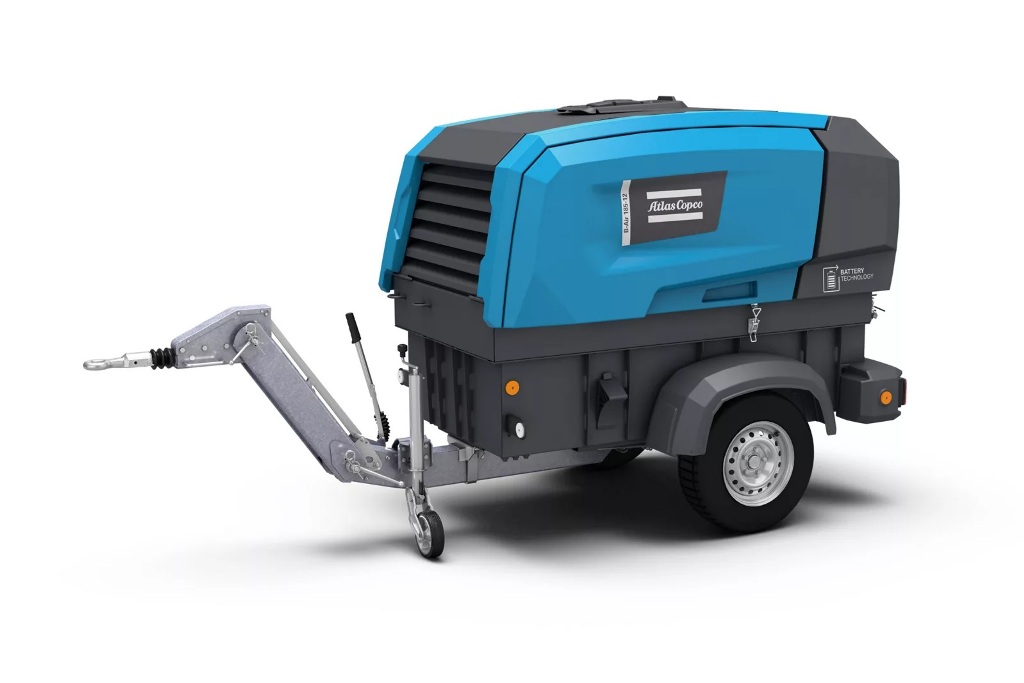
Atlas Copco’s B-Air 185-12, billed as the world’s first battery-driven portable air compressor, is now available for UK demonstrations, delivering 5–12 bar at 5.4–3.7 m³/min from a 55 kWh onboard pack with no fuel or grid connection. The 1,500 kg unit uses an electronic pressure regulation system to switch between tasks such as 6 bar hand tools, 10.3 bar sandblasting and 12 bar cable blowing, and is designed to run for a full typical shift. A permanent magnet motor with variable speed and a NEOS Xtreme IP66 inverter claims up to 70% higher energy efficiency than diesel compressors, with lower noise and zero tail-pipe emissions for urban and enclosed sites.
Technical Brief
- Atlas Copco launched the B-Air 185-12 in 2024 and brought a demo unit to the UK 18 months later.
- Unit mass is 1,500 kg, relevant for trailer selection, axle loads and site cranage.
- Pressure regulation is electronic, allowing rapid switching between 6, 10.3 and 12 bar use cases.
- Rated flow is maintained between 5.4 and 3.7 m³/min across the 5–12 bar operating envelope.
- Permanent magnet motor with variable speed drive is paired with a NEOS Xtreme inverter for control.
- NEOS Xtreme inverter is fully sealed to IP66, protecting against dust ingress and high-pressure water jets.
Our Take
Among the 31 Materials stories in our coverage, Atlas Copco is one of the few OEMs pushing fully battery-electric air systems into the UK, signalling that contractors now have viable non-diesel options for typical 5–12 bar site tasks rather than just for niche low-pressure applications.
The 55 kWh battery capacity and IP66 sealing make this compressor particularly suited to short-shift, urban or tunnelling works in the United Kingdom where noise and exhaust restrictions are tightening, but where equipment still has to tolerate water spray and fine dust.
A claimed 70% energy-efficiency gain over diesel units implies that, in high fuel-cost UK regions, whole-life operating costs could become a stronger driver than emissions branding alone, especially for rental fleets that cycle compressors intensively across multiple sites.
Prepared by collating external sources, AI-assisted tools, and Geomechanics.io’s proprietary mining database, then reviewed for technical accuracy & edited by our geotechnical team.