Geomechanics.io

  • Free Tools
Sign UpLog In

Geomechanics.io

Geomechanics, Streamlined.

© 2026 Geomechanics.io. All rights reserved.

Geomechanics.io

CMRR-ioGEODB-ioHYDROGEO-ioQCDB-ioFree Tools & CalculatorsBlogLatest Industry News

Industries

MiningConstructionTunnelling

Company

Terms of UsePrivacy PolicyLinkedIn
    AllGeotechnicalMiningInfrastructureMaterialsHazardsEnvironmentalSoftwarePolicy
    Projects
    Op-Ed
    Standard/Guideline

    Antidumping duties and China’s playbook: pricing implications for critical minerals

    February 23, 2026|

    Reviewed by Tom Sullivan

    Antidumping duties and China’s playbook: pricing implications for critical minerals

    First reported on MINING.com

    30 Second Briefing

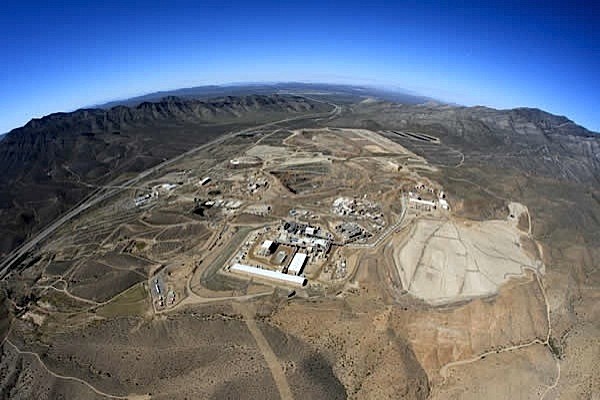
    Antidumping duties under the US Tariff Act of 1930 are proposed as a floating “price-gap” mechanism to counter China’s below-cost exports of rare earths and other USGS-designated critical minerals, with duties rising automatically as Chinese export prices fall. Erik Groves, corporate strategy and in-house counsel at Morgan Companies, argues this would extend the logic of the US Department of Defence’s floor-price agreement with MP Materials at Mountain Pass without Washington acting as buyer of last resort. Coordinated antidumping actions by the US, EU, Canada, Australia, Japan and South Korea could establish de facto price floors across multiple Western markets.

    Technical Brief

    • Predatory under-cost exports become uneconomic, as deeper price cuts trigger higher compensatory levies at the border.
    • For mine developers, such duties would effectively harden revenue assumptions against state-backed supply flooding in feasibility models.

    Our Take

    Mountain Pass and other rare earths assets feature heavily across the 141 Policy stories in our database, signalling that critical minerals policy is now being framed as much around trade-defence tools as around permitting and subsidies.

    The US$12‑billion ‘Project Vault’ stockpile proposal in the 12 Feb 2026 related piece shows Washington pairing potential antidumping measures with physical inventory strategies for rare earths and other critical minerals, which could cushion domestic players like MP Materials against future price shocks from China.

    With both Canada and Australia listed among the key countries here and in our other critical minerals coverage, any US move to use Tariff Act antidumping powers on rare earths would likely push allied producers to align standards and pricing benchmarks to keep access to the US market while avoiding being caught in China‑targeted actions.

    Geotechnical Software for Modern Teams

    Centralise site data, logs, and lab results with GEODB-io, CMRR-io, and HYDROGEO-io.

    No credit card required.

    • Save and export unlimited calculations
    • Advanced data visualisation
    • Generate professional PDF reports
    • Cloud storage for all your projects

    Prepared by collating external sources, AI-assisted tools, and Geomechanics.io’s proprietary mining database, then reviewed for technical accuracy & edited by our geotechnical team.

    Related Articles

    Europe’s ‘buy European’ plan misses minerals: strategic gaps for project teams
    Policy
    about 6 hours ago

    Europe’s ‘buy European’ plan misses minerals: strategic gaps for project teams

    Europe’s delayed “Buy European” single-market legislation, now due 4 March, is being criticised for focusing on finished goods while ignoring upstream critical minerals that underpin industrial sovereignty. Michael Wurmser, founder of Norge Mineraler, contrasts EU inaction with the US DFC-backed Orion Critical Mineral Consortium’s move to buy 40% of Glencore’s Mutanda and Kamoto copper-cobalt assets in the DRC, valuing them at about US$9 billion. He argues Europe has sizeable in‑bloc potential in copper, lithium, high‑purity alumina, phosphate and titanium that must be integrated into industrial policy.

    Chile’s right‑wing pivot on mining policy: project and permitting risks for engineers
    Policy
    about 12 hours ago

    Chile’s right‑wing pivot on mining policy: project and permitting risks for engineers

    Chile’s incoming right‑wing government under José Antonio Kast is merging the Mining and Economy ministries and handing the combined portfolio to agronomist Daniel Mas, unsettling a sector facing an estimated $105 billion in investment to 2034 and already battling a “cursed” permitting system where major projects can need 500+ permits. The shift coincides with Chile’s first critical minerals strategy, expanding focus beyond copper and lithium to 14 minerals including molybdenum, rhenium, cobalt and rare earths. Analysts warn that without faster approvals and incentives for exploration, Chile risks missing the current price cycle as copper output fell 2% in 2025 amid declining grades and ageing deposits.

    Construction Leadership Council board expansion: policy and skills lens for engineers
    Policy
    about 18 hours ago

    Construction Leadership Council board expansion: policy and skills lens for engineers

    The Construction Leadership Council board is being expanded from nine to 15 members as government scraps its separate construction advisory panel, adding civil service figures including NISTA chief executive Becky Wood and Cabinet Office markets director Clare Gibbs alongside industry sponsor for people & skills Mark Farmer. New seats are allocated to each of the four strategic workstreams and four sector groups, bringing in ICE director general Janet Young for infrastructure, HBF chief executive Neil Jefferson for house-building, NHIC chief executive Anna Scothern for domestic RMI, and Scape chief executive Mark Robinson for places, assets and commissioning. A new health, safety & wellbeing group led by Berkeley Group’s Karl Whiteman and the planned 2026 CLC Strategy and Construction Industry Workforce Plan signal tighter central government influence over construction policy and skills planning.

    Related Industries & Products

    Mining

    Geotechnical software solutions for mining operations including CMRR analysis, hydrogeological testing, and data management.

    CMRR-io

    Streamline coal mine roof stability assessments with our cloud-based CMRR software featuring automated calculations, multi-scenario analysis, and collaborative workflows.

    HYDROGEO-io

    Comprehensive hydrogeological testing platform for managing, analysing, and reporting on packer tests, lugeon values, and hydraulic conductivity assessments.

    GEODB-io

    Centralised geotechnical data management solution for storing, accessing, and analysing all your site investigation and material testing data.